Table of Contents
- Why Durable Stainless Steel Pans for Families Beat Coated Cookware
- Stainless Steel vs Non-Stick Pans for Families: What Actually Lasts
- Is Stainless Steel Cookware Non-Toxic? What Parents Should Know
- Top Durable Stainless Steel Pans and Trays for Family Cooking
- How to Clean Stainless Steel Pans Without the Fuss
- Choosing the Right Pan for Caravan Living and Small Kitchens
- Common Mistakes That Ruin Stainless Steel Cookware
- Frequently Asked Questions
Last Updated: September 13, 2026
Why Durable Stainless Steel Pans for Families Beat Coated Cookware
A scratched non-stick pan is one of the most common sights in a family kitchen, and it is also one of the most short-lived. Durable stainless steel pans for families solve the problem at the source: there is no coating to flake, peel or wear through, so the pan you buy this year still performs in five years' time.

Stainless steel cookware is kitchenware made from a steel alloy containing chromium, which forms a hard, non-reactive surface that resists rust and staining. Because that surface is the metal itself rather than a sprayed-on layer, it cannot chip into your food. This guide from The Low Tox Project walks through what actually lasts, what parents should know about coatings, and which trays and pans suit real family cooking.
The core argument is simple: coated cookware is a consumable, and stainless steel is an investment. Every scratched non-stick pan eventually ends up in landfill. A stainless steel tray gets scrubbed, dishwashed and reused for a decade or more.
Stainless Steel vs Non-Stick Pans for Families: What Actually Lasts
Non-stick pans are convenient for the first year and frustrating after that. The coating degrades with high heat, metal utensils and dishwasher cycles, and once it scratches, food sticks in exactly the places you don't want it to.
Stainless steel behaves in the opposite way. It has no coating to degrade, so its performance stays consistent. The trade-off is technique: stainless steel needs preheating and a little fat to release food cleanly.

| Factor | Stainless Steel | Non-Stick Coated |
|---|---|---|
| Coating | None | Synthetic, degrades over time |
| Lifespan | Many years with basic care | Often replaced within a few years |
| High-heat cooking | Suitable | Coating breaks down |
| Metal utensils | Safe | Scratch the surface |
| Dishwasher | Generally safe | Shortens coating life |
| End of life | Recyclable metal | Usually landfill |
For families cooking most nights, the stainless steel option usually costs less over time because you buy it once. The non-stick option costs less up front and more in replacements.
Is Stainless Steel Cookware Non-Toxic? What Parents Should Know
Stainless steel cookware is considered non-toxic because it contains no applied chemical coating, so there is nothing to flake off into food during normal cooking (foodstandards.gov.au). The alloy itself is stable at everyday cooking temperatures.
That matters because of what coatings can contain. Per- and polyfluoroalkyl substances, known as PFAS, are a group of synthetic chemicals historically used in non-stick surfaces and grease-proof packaging. Australia's PFAS information from the Department of Health and Aged Care outlines how these chemicals persist in the environment and why regulators have been reviewing their use.
For parents, the practical takeaway is straightforward. A scratched non-stick pan is the point at which coating integrity is compromised, and that is the moment most families decide to swap. Stainless steel removes the question entirely.
If nickel sensitivity is a concern in your household, look for 18/0 stainless steel, which contains no added nickel. It performs the same job with one less variable to think about.
Top Durable Stainless Steel Pans and Trays for Family Cooking
The right stainless steel setup for a family is not one pan, it is a small core set that covers roasting, baking and pizza night. Each piece below is uncoated food-grade stainless steel, dishwasher safe, and built for daily use rather than occasional show cooking.
Everyday Roasting and Baking Trays
The workhorse of the set is the Stainless Steel Oven Tray 18/8 at $47.00. It handles roast vegetables, cookies and traybakes without baking paper, then goes straight into the dishwasher. For households avoiding nickel, the Stainless Steel Oven Tray 18/0 - Nickel Free at $47.00 does the same job with no added nickel.
Smaller kitchens and caravan setups suit the Stainless Steel Small Oven Tray at $41.00, while the Stainless Steel Mini Oven Tray at $33.00 fits toaster ovens and air fryers.

One honest note: these trays are a single sheet of stainless steel rather than a bonded multi-layer construction, so some movement as the metal heats and cools is normal. It does not affect cooking performance or safety.
Pizza Pans and Slice Trays for Family Nights
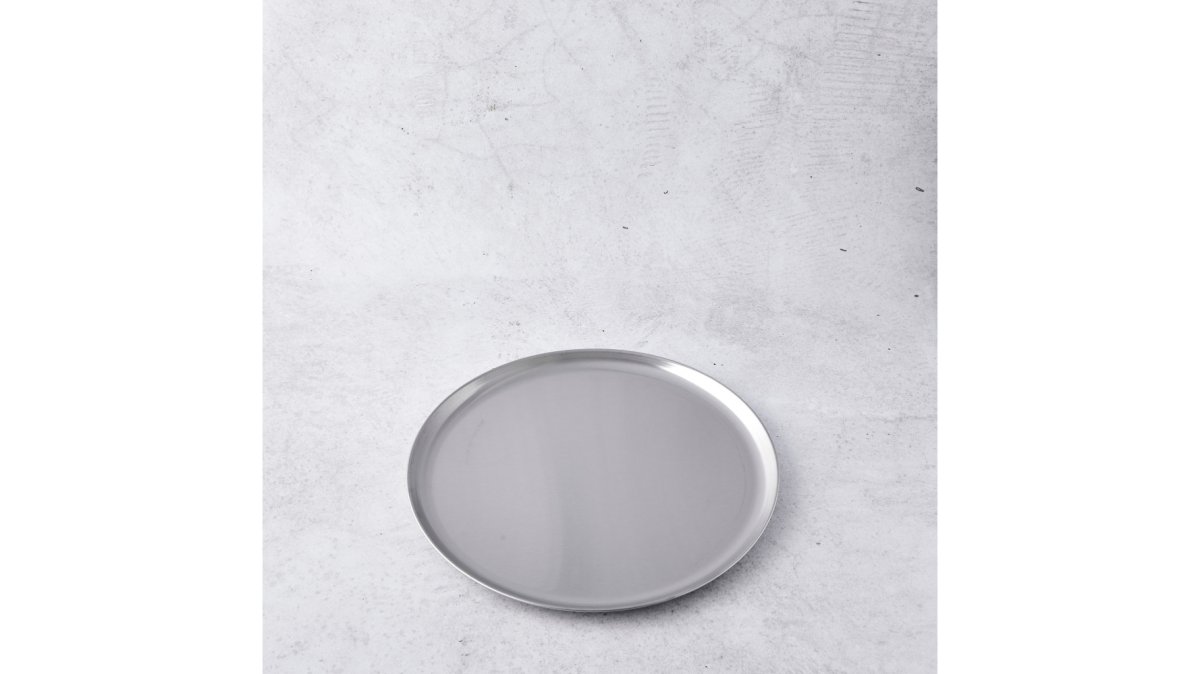
Pizza night is where stainless steel earns its keep. The Stainless Steel Pizza Pan with Holes at $45.00 lets moisture escape and heat circulate, which produces a crisp base rather than a soggy centre. If your family prefers deep-dish or heavily loaded pizzas, the solid Stainless Steel Pizza Pan at $41.00 contains the mess better.
For slices, fudge and tray bakes, the Stainless Steel Slice Tray at $43.00 has the depth to handle both sweet and savoury recipes.
Loaf and Brownie Pans for Weekend Baking
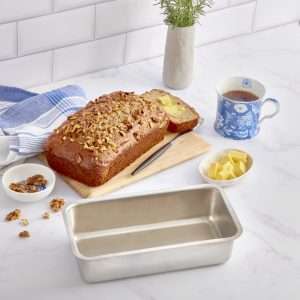
Weekend baking is the easiest place to start. The Stainless Steel Loaf Pan at $39.00 suits banana bread, sourdough and pound cake, with even heat distribution for a golden crust. The Stainless Steel Brownie Pan at $41.00 produces clean, uniform slices, and the Stainless Steel Biscuit Pan at $49.00 has raised ridges that improve airflow underneath for more even baking.
How to Clean Stainless Steel Pans Without the Fuss
Cleaning stainless steel is simpler than most people expect. Warm water, dish soap and a soft sponge handle everyday mess, and the trays are dishwasher safe.
For stuck-on residue, soak the pan in warm soapy water for ten minutes, then use a non-abrasive scourer. Avoid steel wool, which scratches the surface and makes future sticking worse. For heat discolouration, a paste of bicarbonate of soda and water lifts most marks.
The one habit worth breaking is leaving acidic foods, such as tomato or vinegar-based dishes, sitting in the pan for hours. Stainless steel is non-reactive for normal cooking, but prolonged contact can leave a dull patch. It is cosmetic, not a safety issue.
Choosing the Right Pan for Caravan Living and Small Kitchens
Portability changes the brief. In a caravan or a small kitchen, you want pieces that nest, resist denting and clean up with minimal water.
The Mini Oven Tray at $33.00 and the Small Oven Tray at $41.00 are the practical picks here. Both are compact enough for limited storage, sturdy enough to survive being packed and unpacked repeatedly, and dishwasher safe where a communal kitchen is available. The Nickel Free Oven Tray is worth considering if you are also managing sensitivity while travelling.
Food safety guidance from the Food Standards Australia New Zealand is a useful reference for anyone cooking and storing food in mobile or temporary kitchen setups.
Common Mistakes That Ruin Stainless Steel Cookware
Most stainless steel failures come down to technique, not the metal. Avoid these five habits and your pans will outlast your oven.
- Adding food to a cold pan instead of preheating first
- Using steel wool or abrasive powders on the surface
- Leaving acidic food sitting in the pan overnight
- Overheating an empty pan to the point of discolouration
- Assuming sticking means the pan is faulty rather than underheated
The preheating point is the one families get wrong most often. A common mistake is judging stainless steel after one attempt on a cold surface. Heat the pan, add fat, wait for the shimmer, then cook. The difference is immediate.
Frequently Asked Questions
Is stainless steel cookware better than non-stick for families?
For most families, yes. Non-stick coatings scratch over time and can flake into food, while uncoated stainless steel has no coating to wear off. Stainless steel also handles high heat, goes in the dishwasher, and lasts for years without needing replacement. The trade-off is that food can stick if you do not preheat properly, but a little oil or butter solves that. For everyday family cooking, stainless steel is the more durable and lower-maintenance choice.
How do I choose a durable stainless steel pan?
Look for food-grade stainless steel with no coating, a flat base that sits evenly on your stovetop, and a weight that feels solid without being too heavy to handle. Check whether it is dishwasher safe, since that saves time on busy weeknights. For baking trays, a single sheet of stainless steel is normal and may flex slightly when hot, which does not affect performance. Thicker pans resist warping better over years of use.
Are stainless steel pans safe for everyday family cooking?
Yes. Uncoated stainless steel is non-reactive, so it will not leach chemicals into food the way scratched non-stick coatings can. There are no PFAS or plastic coatings to worry about. If you want to avoid nickel entirely, look for 18/0 stainless steel, which has no added nickel. For most families, standard 18/8 food-grade stainless steel is safe for daily cooking and baking.
How do you clean stainless steel pans to keep them looking new?
Most stainless steel pans and trays are dishwasher safe, which handles everyday cleanup. For stubborn residue, soak in warm soapy water for ten minutes, then scrub with a non-abrasive pad. Avoid steel wool, which can scratch the surface. For heat discolouration, a paste of bicarbonate of soda and water applied with a soft cloth usually lifts it. Dry thoroughly after washing to prevent water spots.
Do stainless steel pans last a lifetime?
With basic care, yes. Uncoated stainless steel has no coating to chip, peel, or wear through, so the pan itself does not degrade the way non-stick does. The main things that shorten lifespan are extreme temperature shocks and harsh abrasive cleaning. Handled normally, a good stainless steel tray or pan can outlast several rounds of non-stick replacements, which makes it a cost-effective choice over time.
Scratched non-stick cookware forces a choice every year or two, and it is a choice you can stop making. The Low Tox Project offers uncoated stainless steel bakeware and kitchenware built for everyday family cooking, with no flaking, no plastic and dishwasher-safe cleaning. Choose from oven trays, pizza pans, loaf pans and brownie pans, all designed to replace coated alternatives for good. Get started with The Low Tox Project and build a kitchen set you will not need to replace next year.