Last Updated: November 21, 2026
Quick Summary
A plastic-free lunch container for kids is a lunch box made without plastic in the body or lid, most commonly from stainless steel, silicone or glass. For everyday school lunches, we recommend stainless steel because it holds its shape through drops and doesn't absorb smells or stains.
- Silicone is the lightest option but can absorb strong smells and colours over time.
- Glass is the most fragile and can chip or crack if dropped on a hard floor.
- Check for a removable silicone seal and firm latches to reduce leaks in school bags.
- Match container size to your child's appetite rather than buying the largest option.
- Test the latch with your child before school starts, as firm latches can be hard to open.
Table of Contents
- What to Look For in a Plastic-Free Lunch Container for Kids
- Stainless Steel Lunch Box for Kids: What Works and What to Watch
- Silicone Lunch Boxes for Kids: Flexible, Light and Worth Knowing the Limits
- Plastic-Free Lunch Box Ideas That Suit Real School Days
- How to Pack a Plastic-Free Lunch Box Without the Morning Chaos
- Leakproof, Cleaning and Durability: What Holds Up Over a School Year
- Choosing Your First Plastic-Free Lunch Box Setup
- Frequently Asked Questions
What to Look For in a Plastic-Free Lunch Container for Kids
If your child's lunch box comes home with a cracked lid or a mystery smell by week three, you're not imagining it.
At The Low Tox Project, we've had a lot of conversations with families making this switch, and the good news is that it doesn't need to be complicated. Our approach is simple: buy less, choose well, and pick a container that suits how your child actually eats.
A plastic-free lunch container is a lunch box made without plastic in the body or lid, most commonly from stainless steel, silicone or glass. The material is only part of the story, though. Fit, seal quality and size matter just as much as what it's made from.
Comparing Materials Honestly: Stainless Steel, Silicone and Glass
Most guides treat every plastic-free option as interchangeable. They aren't, and the differences show up in daily use.
Weight. Silicone is generally the lightest of the three, which matters for younger children carrying their own bag.
Durability and break resistance. Stainless steel generally holds its shape through drops and daily stacking.
Food contact and odour. Stainless steel doesn't absorb smells or stains, and glass is similarly easy to clean and doesn't hold flavours.
Cleaning. Stainless steel is generally easy to clean and can go on the top rack of the dishwasher, depending on the model. Glass is dishwasher-friendly in most cases.
Likely use case. Stainless steel suits everyday school lunches and families who want one container that lasts.
| Material | Weight | Durability | Odour and staining | Cleaning | Likely use case |
|---|---|---|---|---|---|
| Stainless steel | Mid | Holds shape through drops | Doesn't absorb smells or stains | Generally easy; top-rack dishwasher depending on model | Everyday school lunches |
| Silicone | Lightest | Flexible, won't shatter, can tear at corners | Can absorb strong smells and colours | Warm soapy water and thorough drying | Snacks or a younger child's box |
| Glass | Heaviest | Can chip or crack if dropped | Doesn't hold flavours | Dishwasher-friendly in most cases | Older children or home use |
What BPA-Free and Plastic-Free Actually Mean
Labels like BPA-free, non-toxic and plastic-free are marketing terms as much as material descriptions, and they don't all mean the same thing. Plastic-free generally means no plastic in the body or lid, but a container can still have silicone seals or plastic latches. BPA-free means a plastic doesn't use bisphenol A, but it doesn't automatically make that plastic a better choice than another material. If a claim matters to you, look for the material specification in the product description rather than relying on the front-of-pack wording.
Seals, Size and Compartments
Beyond material, three practical decisions shape whether a box works.
Seals. A silicone seal and secure latches are what stop yoghurt ending up in the school bag. Look for a lid that clicks shut firmly and a seal you can remove for cleaning.
Size. A container that's too big comes home half-eaten. Match the size to your child's appetite rather than buying the largest option.
Compartments. Two or three sections help with food separation, which matters for kids who don't like their crackers touching their fruit.
| Decision | What to Look For | Why It Matters |
|---|---|---|
| Seal | Removable silicone seal, firm latches | Fewer leaks in bags and school cubbyholes |
| Size | Matches your child's appetite | Less wasted food, easier packing |
| Compartments | Two or three sections | Keeps foods separate and appealing |
Stainless Steel Lunch Box for Kids: What Works and What to Watch
Stainless steel is the option we recommend most often for school-aged kids, and it's the material we know best.
The trade-offs are worth knowing. Stainless steel is heavier than plastic, and it doesn't insulate, so it won't keep food hot or cold on its own. Some children also find the metal feel unfamiliar at first.
One thing parents ask us about is the slight colour variation that can appear around latch welds. It's a normal result of manufacturing, not rust, and it doesn't affect safety or durability.
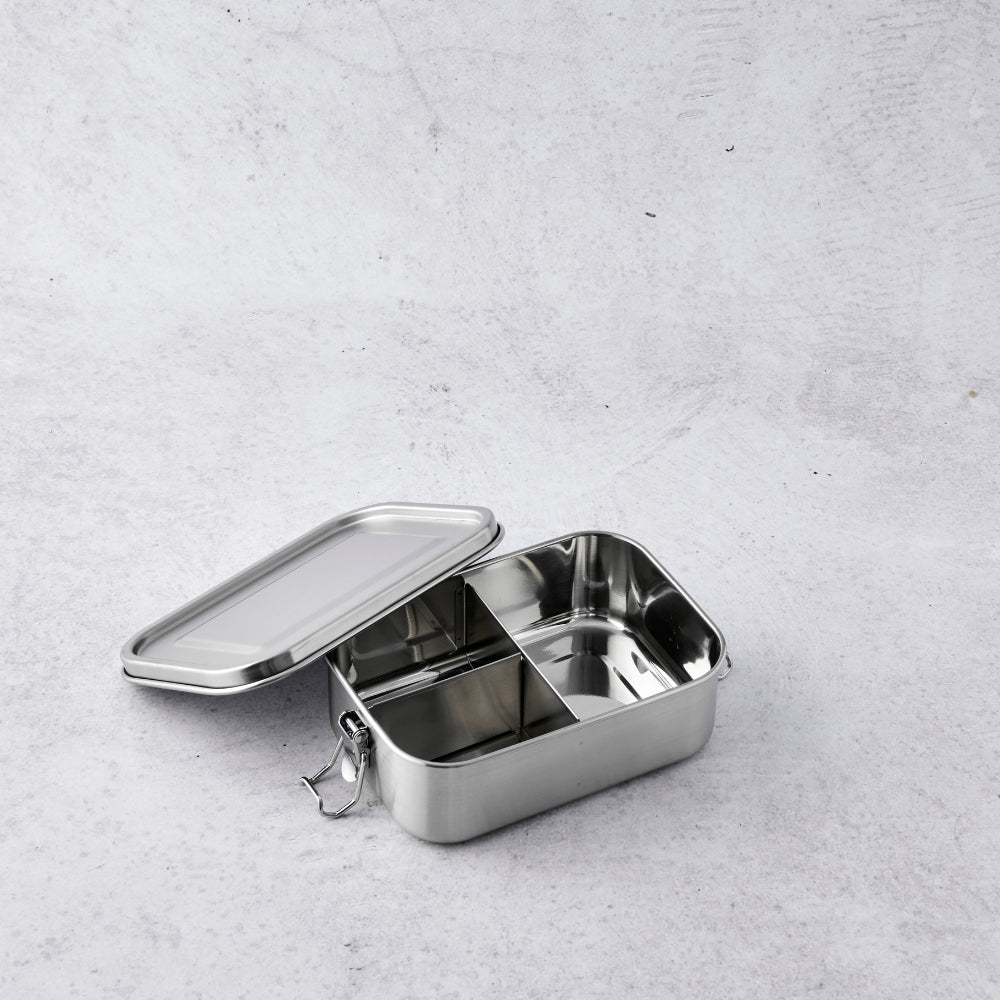
Our Stainless Steel Lunch Box 800ml Rectangle with 3 Compartments is a good starting point for school lunches, with three sections for separating food and an uncoated body with nothing to chip or peel. If you'd like a mid-sized option to compare, the Medium Stainless Steel Lunch Box 850ml keeps things simple.
Best for: everyday school lunches and families who want one container that lasts.
Silicone Lunch Boxes for Kids: Flexible, Light and Worth Knowing the Limits
Silicone lunch boxes for kids are the lightest plastic-free option, and they're popular with families whose children carry their own bags. Silicone is flexible, so it squashes into tight spaces, and it doesn't shatter if it's dropped.
The limits are real, though. Silicone can absorb strong smells and colours over time, particularly from tomato-based sauces, and it needs thorough washing to avoid holding onto flavours. Not all silicone is equal either, so check the product description rather than assuming.
We'd suggest silicone as a good second container for snacks or as a lightweight option for a younger child, rather than the only lunch box in the cupboard.
Plastic-Free Lunch Box Ideas That Suit Real School Days
The best plastic-free lunch box ideas are the ones your child will actually eat, packed in a way that survives the trip to school. A few that work well in practice:
- A sandwich cut into quarters in the largest compartment, with fruit and veggie sticks in the others
- Leftover pasta or rice in a round container, with a small dip pot for sauce
- Homemade muffins or slices baked in advance and frozen, then pulled out in the morning
- Yoghurt or hummus in a small separate container rather than loose in the box
- Cheese, crackers and sliced apple kept apart so nothing goes soft
If you're building out a whole week of swaps, our Plastic Free July swaps that actually work has more realistic ideas that don't require replacing everything at once.
How to Pack a Plastic-Free Lunch Box Without the Morning Chaos
Packing a plastic-free lunch box is easier when the container does some of the work. The trick is to choose a box with compartments, pack it the night before, and keep a small set of containers that all stack together.
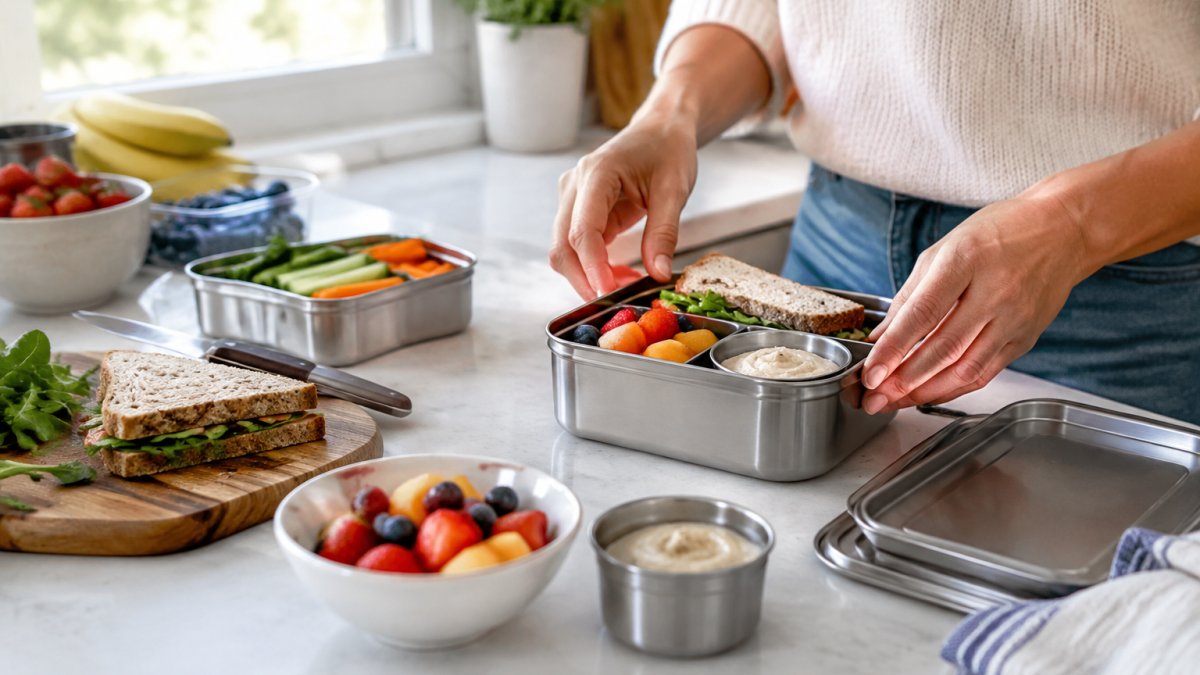
Here's how we'd do it:
- Pack the dry items first, so crackers and sandwiches go into the largest section.
- Add wet items like yoghurt or dip to a small separate container, keeping them away from anything that goes soggy.
- Leave the seal and latches to last, and check the lid clicks down properly.
- Keep a spare set of containers ready so a missing lid doesn't derail the morning.
If you're after filling ideas to go inside, our easy lunchbox ideas for busy school mornings covers practical options that don't take long to prepare.
Leakproof, Cleaning and Durability: What Holds Up Over a School Year
A leakproof lunch box for kids comes down to the seal and the latches, not the price. Silicone seals work well when they're seated properly and cleaned regularly, and removable seals are much easier to look after than fixed ones. But how do you actually judge whether a box will hold up? We use a simple, repeatable way to think about it, and it's the same approach you can use at home before you commit to a container.
A Simple Real-World Leak and Cleaning Check
Rather than trusting a label that says leakproof, try this with any box you're considering or already own. Fill the largest compartment with a thin sauce or yoghurt, close the lid firmly, and place the box on its side in a lunch bag for an hour. Then check the seal and the outside of the box.
For cleaning, a consistent routine tells you more than a single wash. Rinse the seal and lid straight after use, wash silicone in warm soapy water and dry it thoroughly, and check for odour or staining after a week of tomato-based foods.
Practical School Constraints Worth Checking
A container that works at home can still fail at school. Before you buy, check a few everyday constraints.
Lunch-bag fit. Measure your child's lunch bag and compare it with the box dimensions. A box that's slightly too tall won't sit flat and can tip, which is when leaks happen.
Food temperature. Stainless steel doesn't insulate, so it won't keep food hot or cold on its own.
Opening and carrying. Younger children and children with limited dexterity can find firm latches hard to open.
School rules. Some schools have rules about containers, nuts or specific lunch routines. A quick check with the school avoids surprises.
Durability and Spare Parts
On durability, stainless steel tends to hold its shape through drops and daily stacking. Silicone can tear at the corners over time, and glass can chip. Spare seals are worth checking, since a worn seal is a common reason a box can start leaking.
Watch out: assuming every stainless steel box is dishwasher-safe can be a mistake, so check the care instructions for each product first. If you're unsure, hand washing is the safer default.
Choosing Your First Plastic-Free Lunch Box Setup
Start with one good container rather than a whole cupboard of them.
If you'd like to browse the full range and see what fits your child's needs, our lunch and storage collection has the containers in one place.
The practical takeaway: pick a size that matches your child's appetite, check the seal before you buy, and choose a material you're happy to clean every day. That's a swap that earns its place in the cupboard.
Making the switch to plastic-free lunch containers for kids doesn't need to be a complete overhaul. Start with one well-made container, test it for a week, and build from there.
Frequently Asked Questions
Are stainless steel lunch containers suitable for young children?
They can work well, with a few practical adjustments. Stainless steel is durable and break-resistant, which suits school bags, but it is heavier than plastic and does not insulate. For younger kids, choose a smaller capacity such as a 740ml or 800ml box so it is not too heavy to carry, and check the latches are easy for small hands to open. Practise opening and closing at home before the first school day.
Are silicone lunch containers plastic-free?
Silicone is a synthetic material, not a plastic in the usual sense, and it does not contain BPA. Many silicone lunch boxes for kids are marketed as plastic-free because they replace hard plastic containers. Quality varies, so check the product listing for food-grade silicone and any stated certifications. Silicone is flexible and lightweight but can hold onto strong smells and stains over time, so it suits some foods better than others.
How do you keep food separate in a stainless steel lunch box?
Compartments are the simplest answer. A box with built-in sections, such as a three-compartment rectangle, keeps sandwiches, fruit and snacks apart without extra wrapping. For dips, dressings or yoghurt, a small 50ml stainless steel container fits inside most bento-style boxes and keeps wet items contained. If you only have a single-compartment box, reusable silicone cups or paper wraps can divide the space.
How do I clean and care for a plastic-free lunch container?
Most stainless steel lunch boxes are suitable for the top rack of the dishwasher, but always check the specific product instructions first. Wash the silicone seal and latches regularly, since food can collect there. Spare seals are available for some models, which extends the life of the box. Avoid abrasive scourers on stainless steel, and dry the seal area well between uses to keep it fresh.