Last Updated: November 20, 2026
Quick Summary
Learning how to test your cookware for toxic chemicals starts with knowing what home checks can and cannot show. Simple checks like visual inspection and identifying the material can flag wear, but only an accredited laboratory can measure substances such as PFAS or lead in a pan.
- Visual inspection is the most reliable home check, so look for flaking, deep scratches, cracks and pitting.
- A vinegar-and-water test can hint at breakdown but cannot identify which chemical is present.
- A magnet can suggest magnetic stainless steel, but it cannot reveal the steel grade.
- Home checks cannot measure PFAS, lead or cadmium, so use an accredited laboratory for measured results.
- Replace pans that are flaking or chipped, or when you cannot find any material information.
Table of Contents
- Why Cookware Testing Feels So Confusing
- What Home Tests Can and Cannot Tell You
- How to Identify What Your Cookware Is Made From
- Is Scratched Non-Stick Cookware Safe?
- Checking for PFAS in Non-Stick Cookware
- How to Test Cookware for Lead and Other Metals
- Deciding Whether to Test, Replace or Keep Using Your Pans
- Frequently Asked Questions
Why Cookware Testing Feels So Confusing
If you've ever stood in your kitchen holding a scratched non-stick pan and wondered what's actually in it, you're not the only one. Parents, home cooks and anyone trying to cook a bit more low-tox often end up with more questions than answers. The short version is that you can check some things at home, but you can't test for everything, and it's worth knowing the difference before you start.
The confusion usually comes from mixed messages. One website says a home kit will tell you everything. Another says you need a laboratory and a bill to match. Both miss the point. Home checks can help you spot obvious wear and make a sensible call, but they won't give you a precise reading of chemicals in your pans. Knowing how to test your cookware for toxic chemicals starts with understanding what each method can and can't do.
What Home Tests Can and Cannot Tell You
Most of the home tests you'll see online fall into a few categories, and each one tells you something slightly different. Knowing what each is actually doing makes it much easier to interpret the result without over-reading it.
The best-known is the vinegar-and-water test. You add a splash of white vinegar to water in the pan, bring it to a gentle simmer for a few minutes, then let it sit and look at the liquid and the surface afterwards. The idea is that an acidic solution may react with certain metals or loosen a degraded coating, so a change in colour, a metallic smell or a patchy surface can be a hint that something is breaking down. What it can't do is identify which chemical is present or measure how much of it there is. A clear result doesn't clear a pan, and a cloudy result doesn't confirm a specific contaminant.
A magnet is useful for a different reason. It can help you tell whether a pan is likely to be magnetic stainless steel, cast iron or carbon steel, but plenty of food-grade stainless steel is non-magnetic, so a magnet alone won't tell you the grade or the alloy. Use it as one clue alongside the base markings, the packaging and the manufacturer's information.
A visual inspection is the most reliable home check you have. Look for flaking coating, deep scratches that reach the base metal, cracks in ceramic glaze, pitting, discolouration that doesn't wash off, and loose or wobbly handles. Take a photo of anything you're unsure about so you can compare it in a few months and see whether it's getting worse.
What none of these tests can do is measure PFAS, lead, cadmium or other substances in the finished pan. For that you need laboratory analysis, which we cover further down. Home checks are best treated as a way to spot wear and make a sensible call about replacement, not as a way to certify a pan as free of anything.
Watch out: a vinegar test on a damaged non-stick or glazed pan can make the surface look worse than it did before, so if the pan is already flaking, skip the test and go straight to deciding whether to replace it.
Here is a quick look at what each common home check can and cannot tell you.
| Check | What it can show | What it cannot show |
|---|---|---|
| Vinegar-and-water test | Colour change, metallic smell or patchy surface | Which chemical is present or how much |
| Magnet | Possible magnetic stainless, cast iron or carbon steel | The stainless steel grade or alloy |
| Visual inspection | Flaking coating, deep scratches, cracks, pitting | Chemical content of the finished pan |
| Laboratory analysis | Measured levels of PFAS, lead or other substances | Nothing a home kit can replicate |
How to Identify What Your Cookware Is Made From
Before you can make sense of any test, you need to know what your pan is made from. Many pans have the material printed on the base or the packaging, so start there. Look for terms like stainless steel, cast iron, carbon steel, aluminium or ceramic.
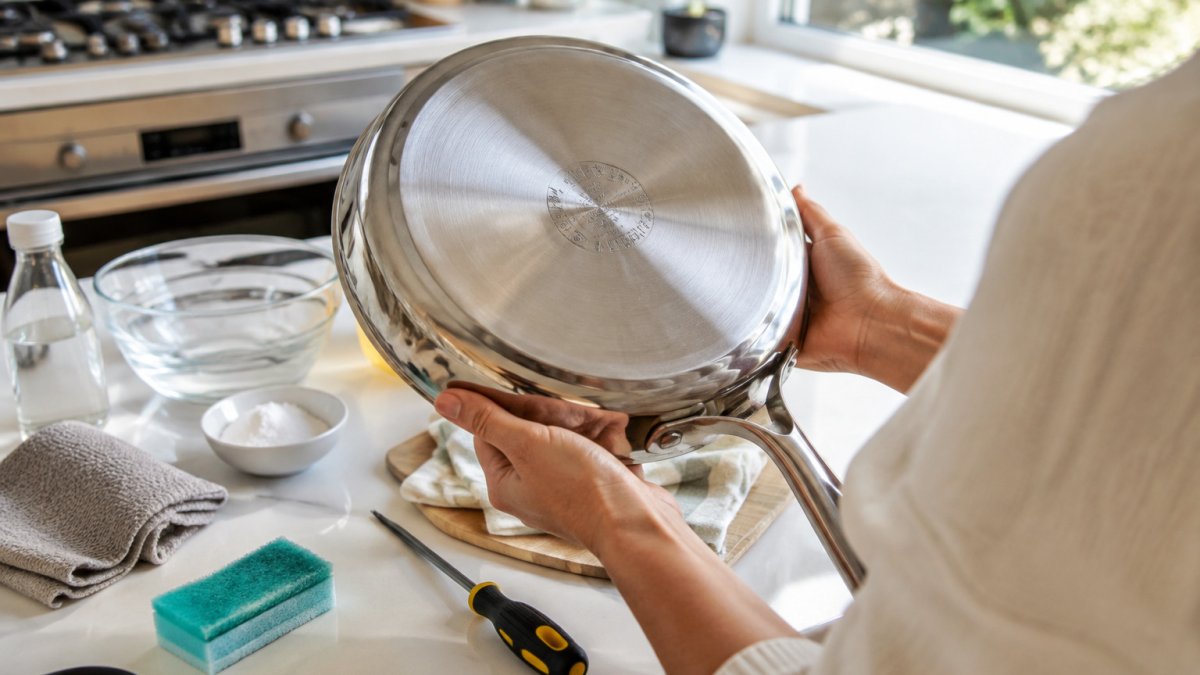
A quick magnet test can help with stainless steel. Some stainless steel is magnetic and some isn't, so a magnet alone won't tell you the grade. It just gives you a clue. Check the base, the handle and the manufacturer's information before drawing conclusions.
Hands turning over a stainless steel pan in a bright Australian kitchen, checking the base and markings, is the easiest way to start. Once you know the material, you can decide which checks make sense.
Is Scratched Non-Stick Cookware Safe?
Scratched non-stick cookware is one of the most common concerns people raise when they start looking at their kitchen. Here's the honest answer: scratches and chips are a sign the coating is wearing, and many people choose to replace worn pans for that reason alone. Damaged surfaces may affect how the cookware performs, and some people prefer not to keep using pans that are visibly breaking down.
You don't need to panic if you've got a scratched pan in the cupboard. Stop using it for high-heat cooking, check the manufacturer's care instructions, and plan a replacement when you're ready. Our article on dangers of scratched non-stick pans walks through what to watch for.
Checking for PFAS in Non-Stick Cookware
PFAS are a group of chemicals used in some non-stick coatings. You can't see or smell them, and a home test won't measure them. That's why the label and the manufacturer's information matter more than any DIY check.
Look for clear information about the coating and any certifications the manufacturer provides. If that information is missing or vague, treat it as a reason to ask questions or choose a different pan. Laboratory testing is the only way to measure PFAS in a specific product.
If you're weighing up your options, our 2026 non-toxic cookware guide compares different materials.
How to Test Cookware for Lead and Other Metals
Lead and other metals are a separate question from non-stick coatings, and the right next step depends heavily on what the pan is made from. A single test doesn't fit every piece, so it helps to sort your cookware first.
For ceramic-glazed pieces, especially older, imported, hand-painted or antique items, the glaze is the part worth scrutinising. Chips, crazing (the fine web of cracks in older glaze) and worn decorative finishes are the areas where a glaze may no longer be doing its job. For aluminium pans, particularly older or uncoated ones, the concern is usually the base metal rather than a coating. For stainless steel, cast iron and carbon steel in good condition, the more common issue is wear or damage. Glass and enamel-coated cast iron sit in a similar category: the surface is the thing to inspect.
At home, you can document what you have. Note the brand, the country of manufacture if it's marked, the approximate age, and any wording on the base. Photograph chips, cracks and worn patches. If you bought the piece recently, ask the seller or manufacturer for the material specification and any food-contact documentation. That paper trail is often more useful than a DIY test, because it tells you what the pan is supposed to be made from in the first place.
For a measured result, the realistic route is an accredited laboratory. In Australia, laboratories accredited by NATA (the National Association of Testing Authorities) are the ones to look for, and you can ask specifically whether they test food-contact materials and which methods they use. Two methods come up most often. X-ray fluorescence (XRF) screening is a non-destructive surface technique that can flag the presence of elements such as lead and cadmium in a coating or glaze, which makes it useful as a first pass. It doesn't tell you how much could migrate into food during cooking. For that you need laboratory chemical analysis, typically a migration test where the piece is exposed to a simulant under controlled conditions and the liquid is then analysed. That's the kind of result that actually speaks to food-contact exposure, and it's also the kind that a home kit can't replicate.
If a manufacturer or seller shows you a certificate, it's worth reading it properly rather than just noting that one exists. Check who issued it and whether that body is accredited, what exactly was tested (the raw material, the coating, or the finished article), whether the certificate names the specific product and batch you're buying, what method was used, and when it was issued. A certificate for a material supplier isn't the same as a certificate for the finished pan, and a certificate for one size or colour doesn't automatically cover the rest of the range.
Watch out: a home lead swab can give a false sense of security on a glazed or coated surface, because it only reacts with what it can reach and says nothing about what might migrate during cooking.
Deciding Whether to Test, Replace or Keep Using Your Pans
Once you've looked at the material and the condition, you can make a practical decision. Here's a simple way to think it through:
- Replace if: the coating is flaking, the pan has deep scratches or chips, or you can't find any material information.
- Consider testing if: the pan is older, from an unknown source, or you need a measured result for peace of mind.
- Keep using if: the pan is in good condition, made from a material you're comfortable with, and used as the manufacturer directs.
If you're replacing a worn non-stick pan, our stainless steel oven tray (nickel free) is a durable option for roasting and baking. Our 2026 guide and our note on whether stainless steel is magnetic can help you decide. For a quick look at dishwasher use, see our article on dishwasher safe stainless steel cookware.
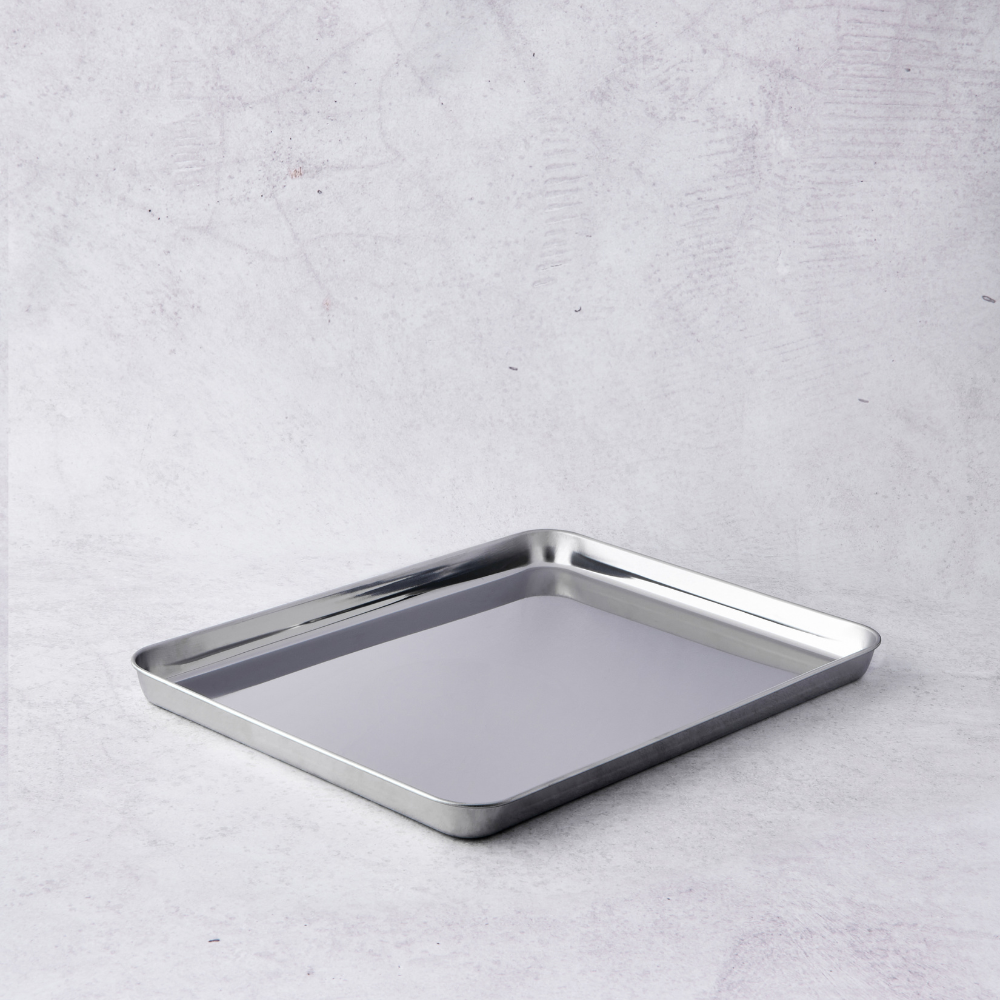
Stainless steel doesn't need seasoning. If you're using our bakeware, grease it with butter, oil or ghee before use, and follow your manufacturer's care instructions.
Frequently Asked Questions
Can you test cookware at home for toxic chemicals?
Some simple checks can tell you whether a pan is worn, scratched or damaged, which is useful to know. A home kitchen cannot, however, reliably measure chemicals like lead or PFAS in your cookware. Those results need a laboratory with proper equipment. Home checks are best used to decide whether a pan is still in good condition, and whether it is time to replace it. If you have a specific concern, an accredited laboratory is the right place to ask.
Is scratched non-stick cookware safe to use?
Scratched non-stick cookware is generally best replaced rather than kept in regular use. Once the coating is chipped or flaking, it is no longer doing its job well, and food is more likely to stick and burn. Using high heat on worn non-stick surfaces is also best avoided. If you are unsure about a particular pan, check the manufacturer's care information and consider replacing it when the surface is visibly damaged.
How do I check whether cookware contains PFAS?
Most people cannot check for PFAS at home. The most practical starting point is the manufacturer's product information, which should state the coating or materials used. Look for clear details about the product rather than vague marketing claims. If the information is missing or unclear, that is worth noting. For a definitive answer on a specific item, laboratory testing is the only reliable route.
Does stainless steel cookware leach metals into food?
Stainless steel is widely used for cookware because it is durable and easy to care for. Quality and grade can vary between products, so it helps to buy from a reputable maker who provides clear material information. Damaged or heavily worn surfaces are worth replacing as a precaution.