
Last Updated: November 22, 2026
Quick Summary
Stainless steel cooling racks are worth it for cookies and cakes because they lift the bake so air reaches the base, helping it cool evenly rather than going soft and damp. Check the material is solid stainless rather than coated, that the wire spacing suits your bakes, and that the rack is at least as wide as your tin.
- Solid stainless steel is the material to look for, not chrome-plated or coated steel.
- Wire spacing should be tight enough to stop small biscuits dropping through, yet open enough for airflow.
- A cake rack should be at least as wide as the tin, measured across the base.
- Let a cake sit in its tin for a few minutes before turning it out onto the rack.
- Wash stainless steel in warm soapy water and dry it well to help prevent water marks.
Table of Contents
- Why a Good Cooling Rack Matters More Than You Think
- What to Look for in a Stainless Steel Cooling Rack
- Choosing a Cooling Rack for Cookies
- Choosing a Cooling Rack for Cakes
- Is an Oven-Safe Cooling Rack Worth Having?
- How to Clean a Stainless Steel Cooling Rack
- Picking the Right Rack for Your Next Bake
- Frequently Asked Questions
Why a Good Cooling Rack Matters More Than You Think
Cookies and cakes often look finished on the tray, but the cooling stage decides a lot about texture, and a good set of cooling racks makes that stage far easier to get right. A rack lifts the bake off the hot surface so air can reach the underside. Without that airflow, the base can stay soft and damp, and cookies can turn stodgy.
At The Low Tox Project, we see stainless steel cooling racks as a practical, long-lasting option for home bakers who want to skip coated alternatives. The question is whether a stainless steel rack is worth the spend, and what to look for before you buy. That's what this guide covers.
What to Look for in a Stainless Steel Cooling Rack
Most buying guides tell you to look for stainless steel, a tight grid and raised feet. That's true, but it doesn't help you tell a genuinely solid rack from one that only looks the part online. Here's how we'd actually assess one, whether you're buying from us or anywhere else.
Start with the material claim itself. "Stainless steel" is used loosely, and some racks sold under that label are chrome-plated steel or a mixed-metal build with a thin coating. Look for a stated grade and a description that says the rack is solid stainless rather than coated. If the listing is vague about grade or construction, read it more carefully before you buy.
Then look at the joints. Run a finger along where the wires meet the frame, and check that the rack feels solid rather than wobbly when you press the middle.
Wire spacing is the next practical measure. Tight enough that a small biscuit doesn't drop through, but open enough that air still moves is the balance to aim for. If you bake a lot of small cookies, measure the gap rather than eyeballing it in a photo.
Raised feet do more than lift the rack off the bench. They create a gap underneath so air can move across the base of the bake, which is the whole point of cooling on a rack rather than a tray. Check that the feet sit level and that the rack stays stable when you slide a full tray of cookies onto it.
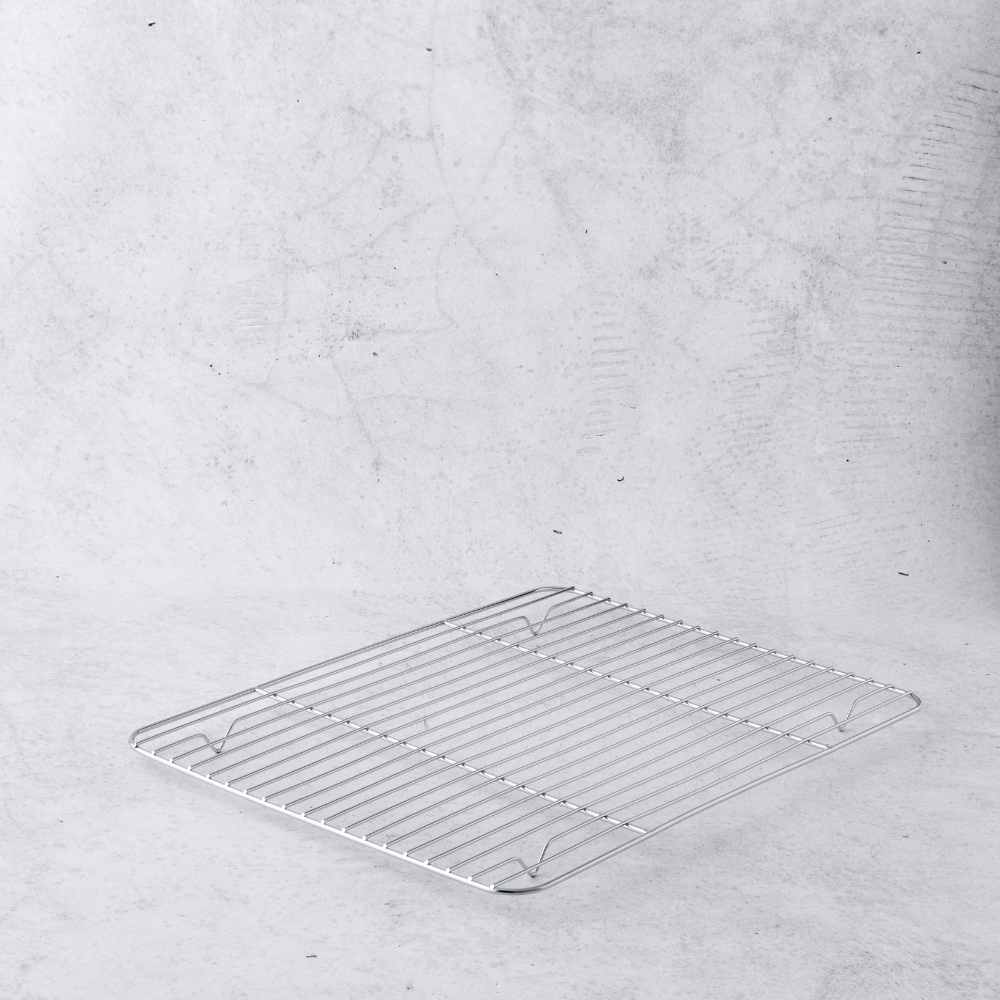
Size is the last piece. Measure your largest baking tray and your bench space before you buy. A rack should sit comfortably inside the tray's footprint if you plan to move the two together, and it should fit your cooling space without overhanging. Our Stainless Steel Cooling Rack is a useful reference when you're comparing options, but the same checks apply to any rack you're considering.
Watch out: a shiny finish and the word "stainless" in a listing don't confirm the construction, so ask the seller directly if the details are unclear.
Choosing a Cooling Rack for Cookies
Cookies are the best test of a rack's grid. Small, delicate biscuits need enough support that they don't sag or bend between wires. If you bake cookies in small batches, a smaller rack keeps your bench tidy and still gives each batch room to cool.
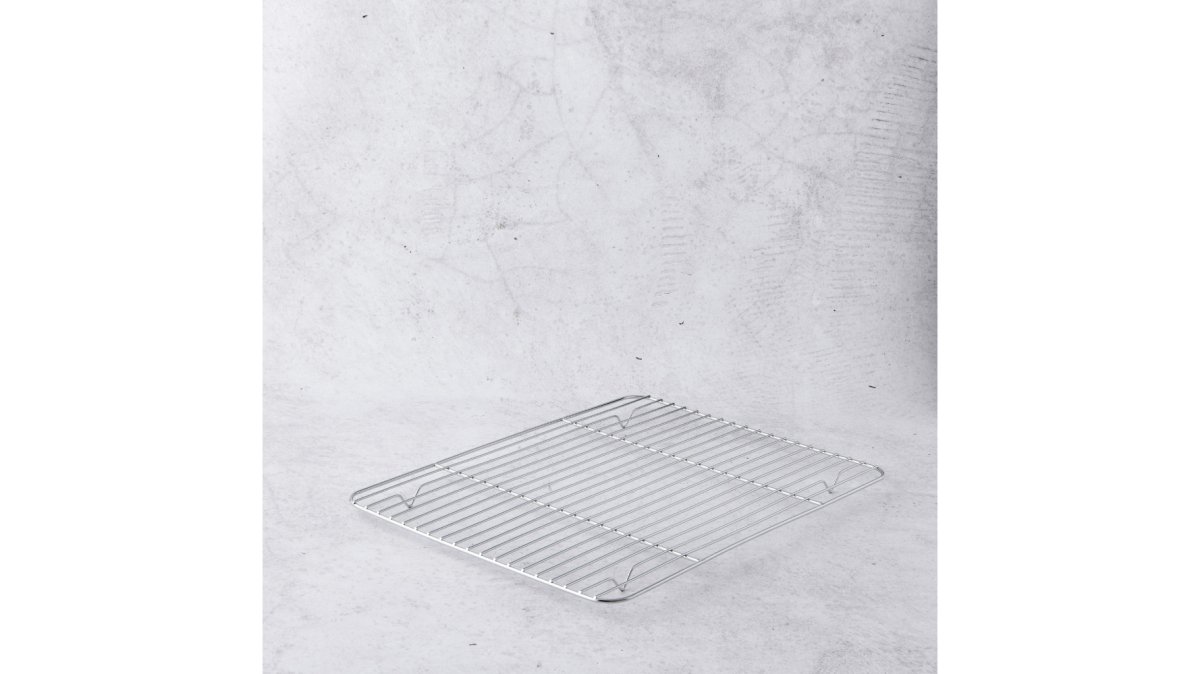
The Stainless Steel Cooling Rack Small suits a standard cookie batch or a small tray's footprint. It's a practical choice if your bakes come out in smaller quantities.
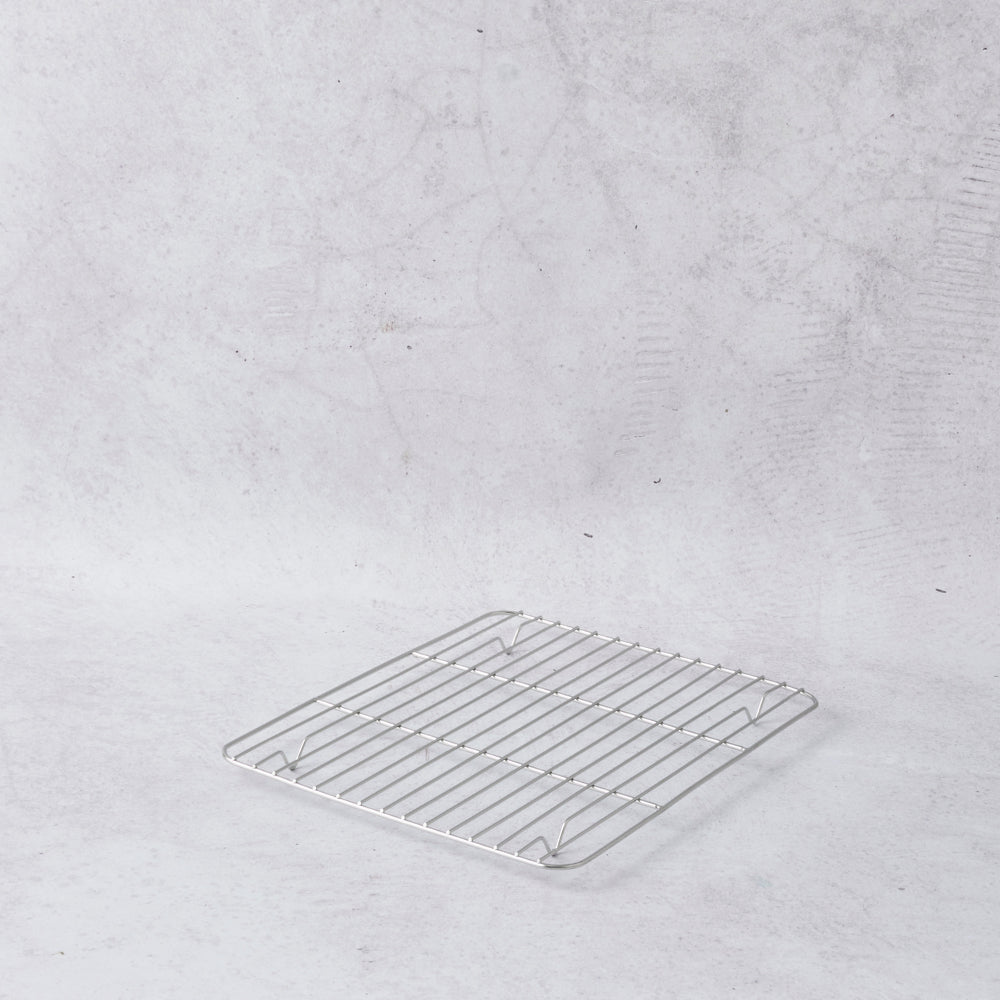
For larger batches, a full-size rack gives you more room to spread cookies out so they aren't touching.
Choosing a Cooling Rack for Cakes
Cakes put a different kind of demand on a rack than cookies do. A batch of biscuits is light and spread out; a whole cake is a single concentrated load, often still warm and fragile, sitting on a small footprint. That's why the cake-specific advice most guides skip matters more than the general buying points.
Think about weight and span first. A round or square cake tin holding a dense cake can be surprisingly heavy, and the rack has to carry that weight across its middle without bowing. A rack with a support wire running through the centre, or a tighter grid overall, spreads the load better than one with a wide open middle. If you regularly bake larger cakes, press the centre of the rack before you commit: a little give is normal, but a rack that flexes easily will sag under a full tin.
Match the rack to your tin footprint. A rack should be at least as wide as the tin so the cake sits fully supported. If your tin is larger than your rack, the cake can hang over the wires and crack or mark as it cools. Measuring your tin across the base, not the rim, gives you the number to compare against the rack's dimensions. If you're matching a rack to a specific tin, browsing the Stainless Steel Square Large Cake Tin can help you line up sizes before you choose.
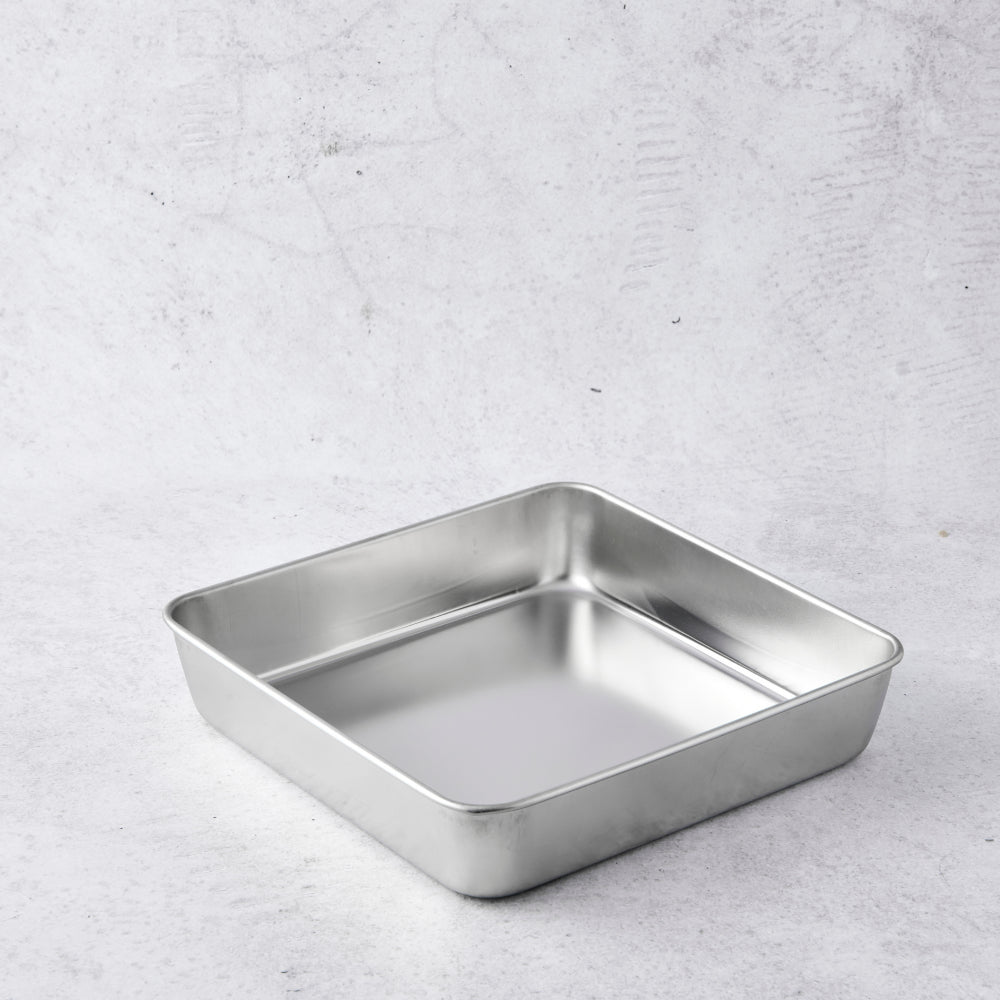
Cooling in the tin for a few minutes first is standard practice, because a cake that's just come out of the oven is soft and can tear if you turn it out immediately. Once it has firmed slightly, turning it out onto the rack lets air reach the base and sides so it cools evenly rather than sweating on a solid surface. An even grid supports the base across its whole width, which matters more for a single large cake than for small items.
Different cakes change the calculation a little. Light sponges are delicate and benefit from a finer grid so the base doesn't sink between wires; dense fruit cakes and mud cakes are heavier and reward a sturdier frame. If you bake a mix, a mid-sized rack with a tighter grid tends to cover both better than a very open one built for large items.
Watch out: a rack that's narrower than your tin, or one that flexes under load, can let a warm cake crack or tip as you move it, so check the footprint and the centre support before you turn anything out.
Cakes put a different kind of load on a rack, so these are the points to check before you turn one out.
| Check | What to look for | Why it matters |
|---|---|---|
| Footprint | At least as wide as the tin | Stops the cake overhanging and cracking |
| Centre support | Support wire or tighter grid | Spreads the weight of a dense cake |
| Flex | Little give when pressed | A rack that bows can tip a warm cake |
| Cooling in tin | A few minutes before turning out | Lets the cake firm so it doesn't tear |
| Light sponges | Finer grid | Stops the base sinking between wires |
| Dense cakes | Sturdier frame | Handles heavier fruit cakes and mud cakes |
Is an Oven-Safe Cooling Rack Worth Having?
Many stainless steel racks can be used in the oven, but check the manufacturer's guidance before using one as an oven shelf or roasting rack. Using a rack in the oven is a different job from cooling, so don't assume every rack is suited to both.
For cooling, oven safety isn't the main concern. What matters is that the rack stays flat and stable when it's holding a hot bake.
How to Clean a Stainless Steel Cooling Rack
Stainless steel is generally easy to clean. Wash it in warm soapy water, rinse well and dry thoroughly to help prevent water marks. Crumbs can sit between the wires, so a soft brush helps. Dishwasher suitability varies by product, so check the product details before putting a rack in the dishwasher.
Because stainless steel is uncoated, there's no coating that can flake off. Good cleaning habits help keep it looking good.
Picking the Right Rack for Your Next Bake
Match the rack to what you bake most often. For cookies, prioritise a fine enough grid and a size that fits your tray. For cakes, prioritise strength and a footprint that suits your tin. If you bake both, a mid-sized rack alongside a smaller one covers most jobs.
If you'd like to learn more about setting up your bakeware, read our guide to stainless steel baking sheets for home bakers. Whichever rack you choose, a stainless steel option gives you a durable, uncoated surface that's ready for the next bake.
Frequently Asked Questions
What is the best material for a cooling rack?
Stainless steel is a popular choice because it is sturdy, resists rust and holds its shape well over time. Food-grade stainless steel is uncoated, so there is no coating to chip or wear away. Grades and finishes vary between products, so it is worth checking the listing for the material details before you buy. A well-made stainless steel rack suits everyday cookies, cakes and roasting, and it sits comfortably alongside the rest of your bakeware.
Are stainless steel cooling racks better than chrome-plated racks?
They suit different needs. Stainless steel is uncoated, so there is no plating that can flake or wear off with use. Chrome-plated racks are often lighter and cheaper. If you prefer a rack without a coating, stainless steel is generally the more reassuring choice. Depending on how you bake and how often you use the rack, either can work well.
Can stainless steel cooling racks go in the oven?
Stainless steel racks are generally suitable for oven use, but it is best to check the manufacturer's instructions for the specific product and its maximum temperature. Our stainless steel cooling racks are designed to fit inside our oven trays and biscuit pans, which makes them handy for roasting as well as cooling. Always let a hot rack cool safely before handling it.
What size cooling rack is best for cookies?
It depends on how much you bake at once. A full-size rack is useful for big batches, while a smaller rack suits a single tray of biscuits or a smaller bake. Our Stainless Steel Cooling Rack is designed to fit inside our Biscuit Pan and oven trays, and the Small and Mini versions are handy when you want less bench space taken up. Think about the tray you already own and choose a rack that fits it neatly.