Table of Contents
- What Makes Uncoated Stainless Steel Bakeware Stand Out
-
10 Best Uncoated Stainless Steel Bakeware Options
- 1. Stainless Steel Brownie Pan
- 2. Stainless Steel Muffin Pan 12 Cup
- 3. Stainless Steel Square Cake Tin
- 4. Stainless Steel Loaf Pan
- 5. Stainless Steel Biscuit Pan
- 6. Stainless Steel Pie Pan
- 7. Stainless Steel Donut Pan
- 8. Stainless Steel Round Spring Cake Tins (7" and 9")
- 9. Stainless Steel Pullman Bread Pan with Lid
- How to Season Stainless Steel Pans for Better Baking
- Non-Toxic Baking Sheets: Why the Switch Matters
- Cleaning Stainless Steel Baking Trays: Simple Care Routines
- What to Look for When Choosing Stainless Steel Bakeware
- Conclusion
- External Sources
- Frequently Asked Questions
Last Updated: September 2, 2026
What Makes Uncoated Stainless Steel Bakeware Stand Out
Uncoated stainless steel bakeware has become the go-to choice for home bakers committed to eliminating toxic chemicals from their kitchens. Unlike non-stick alternatives that shed harmful coatings over time, uncoated stainless steel offers a non-reactive surface that won't leach chemicals into your food, no matter how hot your oven gets or how long you've owned the pan.
At The Low Tox Project, we've built our entire bakeware range around this principle: your kitchen tools shouldn't compromise your health. The 18/10 chromium-nickel ratio creates exceptional corrosion resistance and heat conductivity. These pans won't warp under high temperatures, won't stain from acidic batters, and last decades, not years.
Uncoated stainless steel requires a different approach than non-stick. You'll need to season your pans and adjust your baking techniques slightly. But once you understand how to work with the surface, you'll find that stainless steel actually performs better for many baking tasks, delivering crisper edges, more even browning, and superior heat distribution.
10 Best Uncoated Stainless Steel Bakeware Options
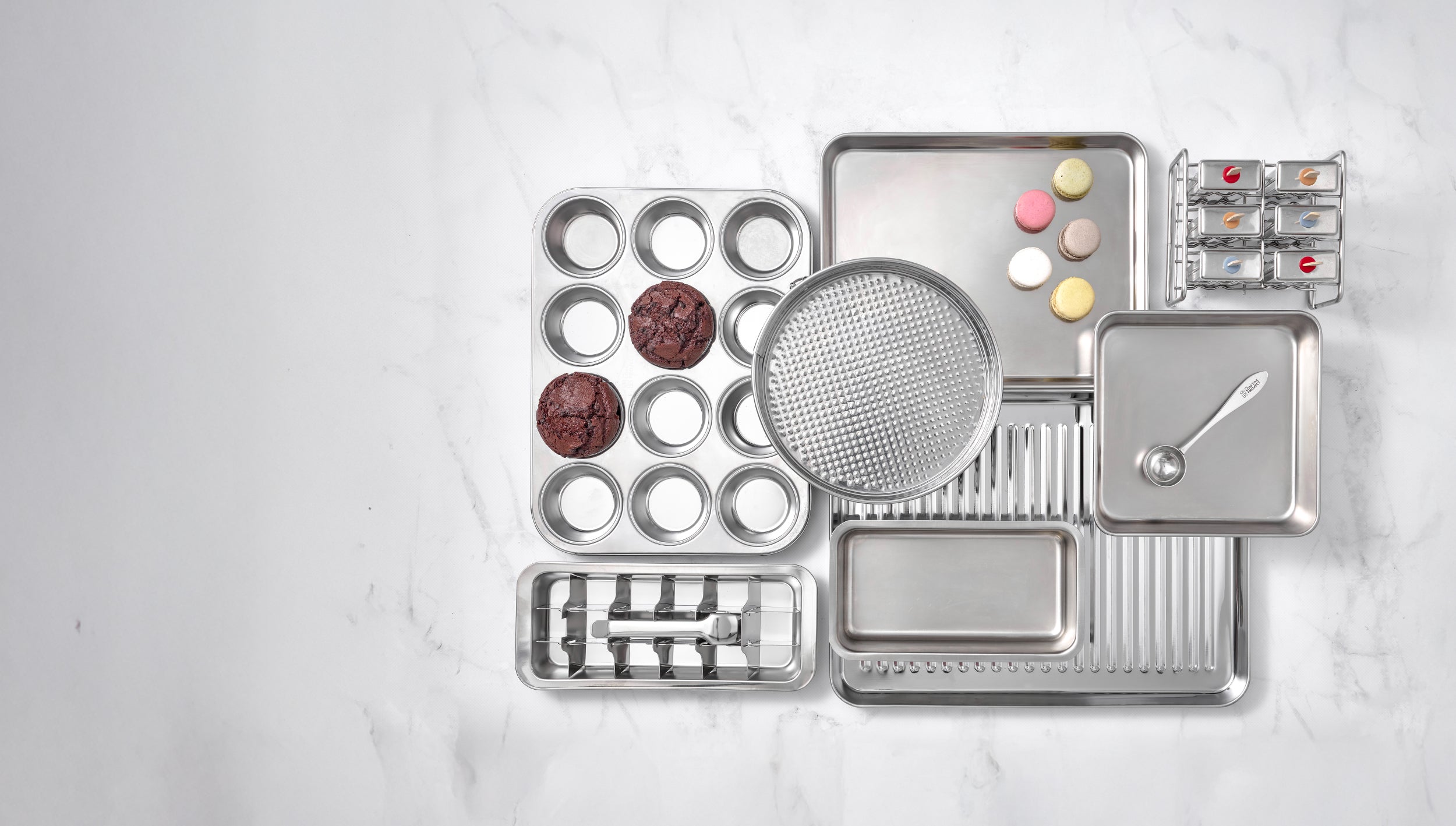
The bakeware you choose shapes every bake. Here are the ten essential pieces that should be in every low-tox kitchen.

1. Stainless Steel Brownie Pan
The brownie pan is where most bakers begin their uncoated stainless steel journey. Our Stainless Steel Brownie Pan at $41.00 delivers crisp, even edges and consistent baking across the entire surface. Food-grade stainless steel means no coating to chip or peel. Once seasoned properly, the smooth surface ensures clean release every time.

2. Stainless Steel Muffin Pan 12 Cup
The 12-cup Stainless Steel Muffin Pan ($50.00) handles everything from breakfast muffins to savoury mini quiches. Premium food-grade stainless steel with excellent heat conduction means even browning across all twelve cups with no hot spots. The heavy-gauge metal distributes heat evenly without warping.
3. Stainless Steel Square Cake Tin
The Stainless Steel Square Cake Tin at $40.00 handles brownies, sheet cakes, lasagne, and zucchini slice with equal confidence. Food-grade stainless steel resists staining from tomato-based dishes and acidic batters. The straight edges create professional-looking slices and even heat distribution ensures consistent results.

4. Stainless Steel Loaf Pan
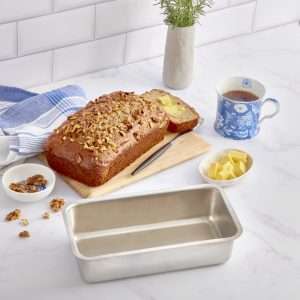
Bread bakers know the loaf pan makes or breaks your crumb structure. Our Stainless Steel Loaf Pan ($39.00) delivers even heat from all sides, creating consistent rise and golden crusts. Food-grade stainless steel won't react with acidic doughs or develop odours from repeated use.

5. Stainless Steel Biscuit Pan
The Stainless Steel Biscuit Pan ($49.00) is your everyday workhorse for cookies and biscuits. Raised ridges underneath improve airflow, supporting more consistent browning. This pan becomes more non-stick with age as every use seasons it further.
6. Stainless Steel Pie Pan
Our Stainless Steel Pie Pan ($35.00) ensures even heat distribution for golden, crispy bases, whether you're baking fruit pies, custard tarts, or savoury quiches. The rust-resistant construction won't warp, stain, or retain odours.
7. Stainless Steel Donut Pan
Our Stainless Steel Donut Pan ($47.00) creates light, fluffy donuts with even browning and consistent shape. Six donuts per batch means you can make fresh donuts for breakfast without the mess or oil of frying.
8. Stainless Steel Round Spring Cake Tins (7" and 9")
The 7" Stainless Steel Round Spring Cake Tin ($37.00) handles smaller cakes and cheesecakes, whilst the 9" version ($43.00) tackles full-sized celebrations. The springform latch releases smoothly without damaging your creation.
9. Stainless Steel Pullman Bread Pan with Lid
For serious bread bakers, the Stainless Steel Pullman Bread Pan with Lid ($120.00) creates bakery-style loaves with clean edges and uniform shape. The sliding lid creates the classic Pullman loaf, perfect for sandwich bread and toast.
How to Season Stainless Steel Pans for Better Baking
Seasoning transforms uncoated stainless steel into a naturally non-stick surface. The process builds a natural patina of polymerised oil that improves with use.
Start with a clean, dry pan. Apply a very thin layer of neutral oil (coconut, grapeseed, or vegetable oil work well). Buff away excess oil until the pan looks almost dry. Place the pan in a 200°C oven for 10 minutes, then cool completely. Repeat this process 3-4 times before your first bake.
After each use, hand-wash your pan with warm soapy water and a soft cloth. Dry immediately with a tea towel. Every time you bake, you're adding another microscopic layer to your seasoning. Within a month of regular use, your pan will perform like properly seasoned cast iron.
Non-Toxic Baking Sheets: Why the Switch Matters
The shift from coated to uncoated stainless steel bakeware addresses a real health concern: PFAS (per- and polyfluoroalkyl substances) used in many non-stick coatings. These "forever chemicals" don't break down in the environment or in your body and accumulate over time.
Uncoated stainless steel eliminates this exposure entirely. Your baking sheets contain nothing but food-grade metal, no synthetic coatings, no chemical treatments, no risk of flaking particles in your food.
Non-stick coatings degrade with use, scratches, peeling, and discolouration are inevitable. Uncoated stainless steel doesn't degrade this way. It gets better with age. A single quality stainless steel pan replaces dozens of disposable non-stick alternatives over a lifetime, reducing waste and environmental burden.
Cleaning Stainless Steel Baking Trays: Simple Care Routines
Cleaning uncoated stainless steel bakeware is straightforward. Hand-washing is preferable to preserve your seasoning, but these pans are genuinely dishwasher-safe.
For hand-washing: use warm soapy water and a soft cloth or non-abrasive brush. Dry immediately with a tea towel to prevent water spots. If batter has baked on, soak the pan in warm water for 10 minutes, then gently scrub.
For dishwasher use: load your pans normally. The hot water and detergent won't damage food-grade stainless steel. Your seasoning may lighten slightly, but it won't disappear. Dry the pans immediately after the cycle to prevent water spots.
Stainless steel won't stain from acidic foods, won't rust from moisture, and won't develop odours. If water spots appear, a quick buff with a dry cloth removes them.
What to Look for When Choosing Stainless Steel Bakeware
Not all stainless steel bakeware performs equally. Understanding what separates quality from mediocre helps you invest wisely.
Gauge thickness matters. Heavy-gauge stainless steel (typically 0.9mm or thicker) distributes heat evenly and resists warping. Thin, lightweight pans heat unevenly and can bend under thermal stress.
The 18/8 chromium-nickel ratio is the gold standard. This composition delivers superior corrosion resistance, heat conductivity, and durability. Check product specifications for this detail.
Smooth, polished surfaces perform better than textured ones. A smooth finish seasons more evenly, releases more easily, and cleans more thoroughly.
Raised edges or rimmed designs improve airflow. Many quality baking trays include a small lip around the perimeter, improving air circulation underneath and supporting more even browning.
Dishwasher-safe confirmation matters for busy families. The Low Tox Project's entire range is dishwasher-safe, eliminating the choice between convenience and care.
| Feature | Why It Matters | What to Look For |
|---|---|---|
| Gauge thickness | Prevents warping, ensures even heat | 0.6mm or thicker |
| Chromium-nickel ratio | Durability and heat conductivity | 18/8 is optimal |
| Surface finish | Seasoning and release performance | Smooth, polished interior |
| Oven-safe rating | Handles high-temperature baking | 180°C or higher |
| Dishwasher-safe | Practical for everyday use | Manufacturer confirmation |
| Edge design | Improves browning consistency | Raised rim or lip |
Conclusion
The shift from coated to uncoated stainless steel bakeware represents a commitment to baking without compromise. You're choosing durability that lasts decades, safety that never falters, and performance that improves with every use.
The Low Tox Project's complete range of uncoated stainless steel bakeware, from the Brownie Pan to the Pullman Bread Pan with Lid, eliminates the guesswork. Each piece is crafted from food-grade stainless steel, designed for everyday cooking, and built to last. Shop All Products and start baking with confidence.
External Sources
According to research on PFAS in non-stick cookware, per- and polyfluoroalkyl substances accumulate in the body over time and persist in the environment indefinitely.
The Stainless Steel Industry Association technical guide confirms that 18/10 chromium-nickel stainless steel delivers superior corrosion resistance and thermal conductivity compared to lower-ratio compositions.
Australian Consumer Law guidance on product durability supports consumer expectations that kitchenware marketed as durable should withstand regular use for many years without degradation.
Frequently Asked Questions
Q: Will uncoated stainless steel bakeware work as well as non-stick for everyday baking?
Yes. Uncoated stainless steel bakeware performs equally well for everyday baking when properly seasoned and cared for. The non-reactive surface distributes heat evenly, which actually improves browning and crust development on biscuits and bread. With a light oil coating before use, food releases cleanly. Unlike non-stick pans that degrade over time, stainless steel maintains its performance for decades, making it a long-term choice for families committed to a low-tox kitchen.
Q: How do you prevent food from sticking to uncoated stainless steel bakeware?
The most effective method is seasoning: lightly coat the pan with neutral oil (coconut or grapeseed work well) before adding your batter or dough. Preheat the pan so the oil creates a non-stick barrier. For savoury items like focaccia, brush the pan generously with oil. Parchment paper also works reliably for cookies and brownies. Avoid cooking spray, which can build up over time. With consistent seasoning, uncoated stainless steel becomes naturally non-stick with use.
Q: What makes uncoated stainless steel safer than non-stick bakeware?
Non-stick coatings contain PFAS (per- and polyfluoroalkyl substances), chemicals linked to health concerns that can leach into food at high temperatures. Uncoated stainless steel is inert and food-grade, meaning nothing leaches into your bakes. There's no flaking or degradation over time. For families concerned about chemical exposure, especially those with young children, uncoated stainless steel eliminates this risk entirely while delivering reliable baking performance.
Q: Is 18/8 stainless steel better than 18/0 for baking?
18/8 stainless steel (18% chromium, 8% nickel) is more corrosion-resistant and slightly more durable than 18/0 (no nickel). However, both grades perform excellently for baking. The 18/8 ratio provides marginally better heat conductivity and resists staining more effectively, particularly if you bake acidic items like fruit pies regularly. For most home bakers, either grade is suitable; 18/8 is a premium choice if durability and stain resistance are priorities.
Q: How should you clean burnt-on residue from stainless steel bakeware?
Soak the pan in warm water for 15-20 minutes to loosen burnt bits. Use a soft sponge or cloth with a mild abrasive paste (baking soda and water) to gently scrub the affected area. Avoid steel wool or harsh scouring pads, which can scratch the surface. For stubborn residue, make a paste with cream of tartar and lemon juice and let it sit for 10 minutes before scrubbing. Rinse thoroughly and dry. All our stainless steel bakeware is dishwasher-safe, which also works well for routine cleaning.