Why Stainless Steel Pans Require Different Cleaning
Stainless steel cookware demands a different approach than non-stick alternatives. Unlike coated surfaces that can flake and degrade, stainless steel is durable and built to last, but it shows water spots, heat stains, and burnt-on residue more visibly. Understanding why stainless steel reacts the way it does helps you clean it properly without causing damage.
Stainless steel is an alloy containing chromium and nickel, which create a protective oxide layer on the surface (peer-reviewed research). This layer resists corrosion but can be affected by mineral deposits in water, acidic foods, and high heat. When you heat stainless steel, the metal expands and contracts, sometimes creating rainbow-coloured heat tints that are purely cosmetic but can alarm new users.
At The Low Tox Project, we recommend stainless steel cookware specifically because it eliminates concerns about PFAS and other toxic coatings found in non-stick alternatives (the EPA). The material is food-grade, safe for everyday cooking, and responds well to simple natural cleaning methods. Most importantly, proper cleaning actually extends the life of your pans rather than degrading them.
The key difference is this: stainless steel pans aren't fragile. You can clean them more aggressively than non-stick cookware, but you still need to use the right tools and techniques to maintain their appearance and functionality.
Daily Cleaning Methods for Stainless Steel Pans
Immediate Cleaning After Cooking
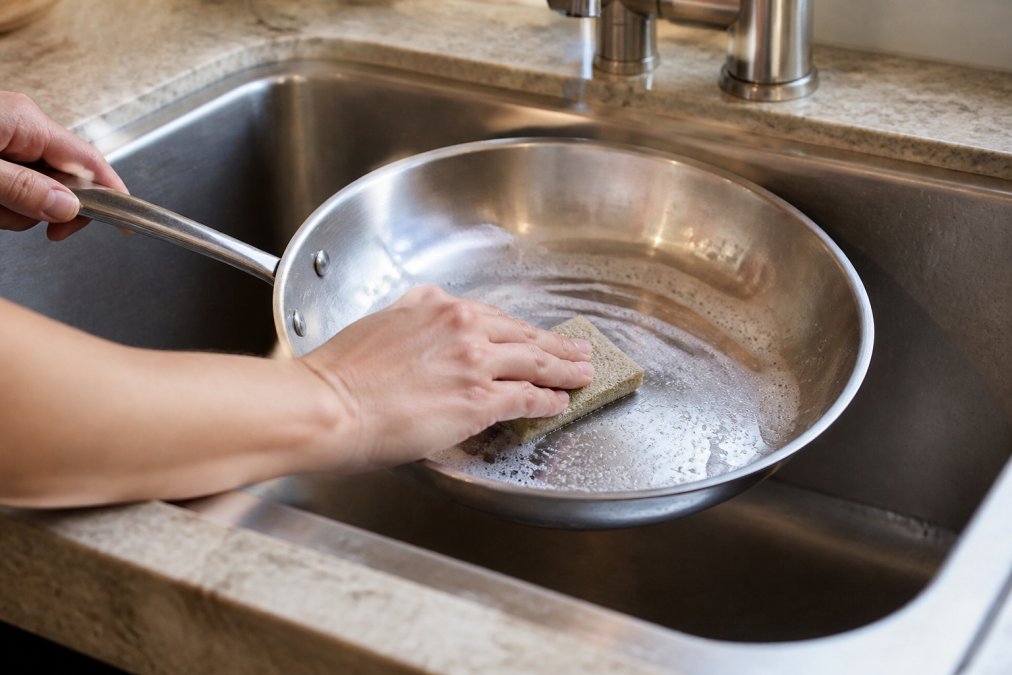
The best time to clean stainless steel pans is right after cooking, while residual heat makes removal easier. Allow the pan to cool slightly, handling a scalding pan isn't safe, then rinse under warm running water.
For light residue, use a soft non-abrasive sponge with warm soapy water. Apply gentle circular motions to avoid scratching. Most food particles rinse away easily at this stage. Dry the pan immediately with a soft cloth to prevent water spots from forming.
If food has stuck slightly, fill the pan with warm water and a squirt of dish detergent. Let it soak for 5-10 minutes, then scrub gently with a non-scratch nylon pad. This softens residue without requiring aggressive scrubbing. Rinse thoroughly and dry.
The reason immediate cleaning matters is simple: burnt-on food becomes harder to remove as it cools and hardens. Cleaning while the pan is still warm reduces the time and effort needed later.
Removing Water Spots and Mineral Deposits
Water spots and mineral deposits are the most common complaint about stainless steel pans. These appear as white, cloudy patches or rainbow-coloured marks and are caused by minerals in your water reacting with the steel surface.
To remove water spots, use white vinegar. Dampen a soft cloth with vinegar and wipe the affected area. The acidity in vinegar dissolves mineral deposits without harming the stainless steel (peer-reviewed research). For stubborn spots, let the vinegar sit for a few minutes before wiping.
Alternatively, make a paste from baking soda and a small amount of water. Apply it to the spots and gently rub with a non-scratch sponge, moving in the direction of the grain if your pan has a brushed finish. Rinse thoroughly and dry immediately.
Hard water areas experience more mineral buildup than soft water regions. If you live in a hard water area, keeping white vinegar on hand makes maintenance much easier. A quick wipe after each use prevents spots from accumulating.
How to Remove Burnt Stains from Stainless Steel
The Baking Soda and Vinegar Method
Burnt stains are stubborn but removable with the right approach. The combination of baking soda and white vinegar creates a gentle abrasive paste that lifts burnt food without scratching the steel.
Sprinkle baking soda directly onto the burnt area of the pan. Add just enough white vinegar to create a thick paste, the mixture will fizz slightly as the two ingredients react. Let it sit for 10-15 minutes. This waiting period allows the paste to work on breaking down the burnt residue.
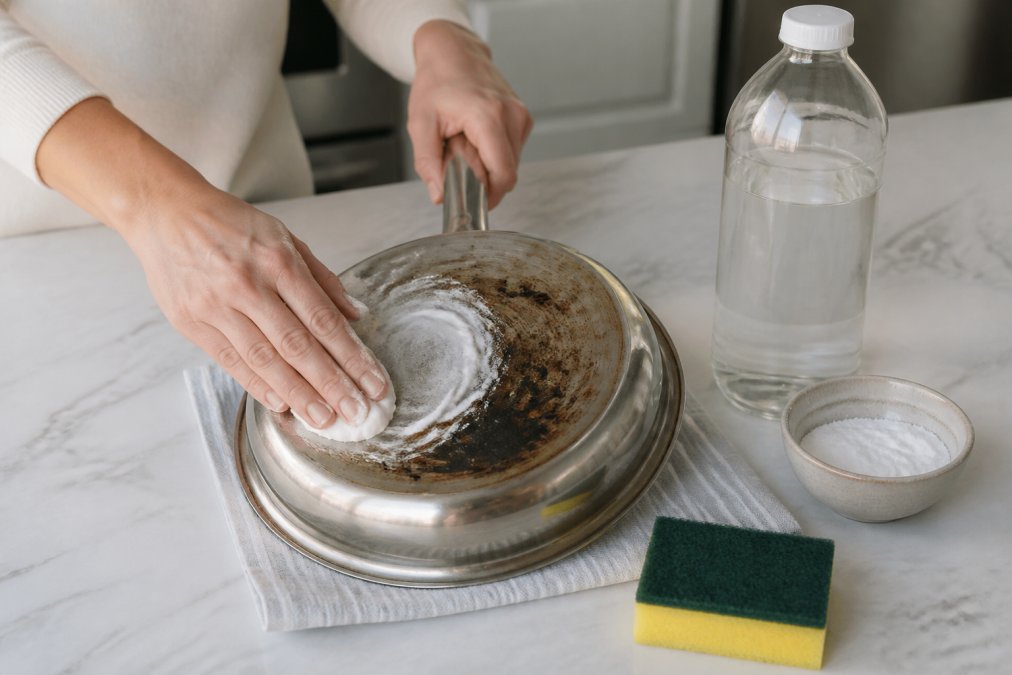
Using a non-scratch nylon pad or soft sponge, scrub the burnt area with circular motions. You'll notice the paste darkening as it lifts the burnt food. Continue scrubbing for 2-3 minutes, adding a tiny bit more vinegar if the paste dries out. Rinse thoroughly with warm water and dry immediately.
For very stubborn burnt stains, repeat the process rather than scrubbing harder. A second application often succeeds where aggressive scrubbing might scratch the surface. This method works because the mild acidity of vinegar combined with the gentle abrasive action of baking soda removes burnt residue without damaging the chromium oxide layer that protects your pan.
Soaking Technique for Stubborn Residue
When burnt food is severely stuck, soaking is more effective than scrubbing. Fill the pan with water and add a few tablespoons of baking soda. Bring the water to a simmer on the stovetop for 10-15 minutes. The heat and baking soda work together to loosen stuck-on bits.
Allow the pan to cool slightly, then pour out the water. Use a non-scratch sponge to gently scrub away the loosened residue. Most burnt food will come away easily. If some remains, repeat the soaking process rather than using abrasive force.
This soaking method is particularly effective for food that has burnt onto the base or sides of the pan during cooking. The combination of heat and baking soda penetrates the burnt layer, making removal gentler on the pan's surface.
Best Natural Cleaners for Stainless Steel
White Vinegar Solutions
White vinegar is the workhorse of stainless steel cleaning. It's food-safe, affordable, and highly effective at removing mineral deposits, water spots, and light burnt residue.
Create a simple cleaning solution by mixing equal parts white vinegar and water in a spray bottle. Spray the solution onto the pan, let it sit for a minute or two, then wipe with a soft cloth. This solution works for daily maintenance and light staining.
For heavier mineral deposits, use undiluted white vinegar. Dampen a cloth with vinegar and rub the affected area. The acidity dissolves mineral buildup without scratching the surface. Rinse thoroughly after use to remove any vinegar smell.
Vinegar is particularly useful for pans that show rainbow heat tints. These coloured marks are harmless oxidation caused by high heat, but vinegar helps restore the original steel appearance. Wipe the pan with vinegar-dampened cloth, moving in the direction of the grain if your pan has a brushed finish.
Baking Soda Paste
Baking soda is a mild abrasive that removes stains without scratching stainless steel. It's especially useful for burnt-on food and discoloration that vinegar alone won't lift.
Mix baking soda with just enough water to form a thick paste. The consistency matters, too wet and it runs off the pan, too dry and it doesn't spread evenly. Apply the paste to stained areas and let it sit for 5-10 minutes.
Scrub gently with a non-scratch nylon pad or soft sponge, using circular motions. Baking soda works gradually, so patience produces better results than aggressive scrubbing. Rinse thoroughly and dry immediately to prevent water spots.
For regular maintenance on stainless steel pans, many people keep both white vinegar and baking soda in their kitchen. These two natural cleaners handle nearly every cleaning situation without requiring commercial products or harsh chemicals.
Preventing Food Sticking on Stainless Steel
A common objection to stainless steel cookware is that food sticks more than on non-stick surfaces. This concern is valid but easily addressed with proper technique. Stainless steel pans require preheating and appropriate oil use, but once you develop the habit, cooking becomes straightforward.
Preheat your pan for 1-2 minutes over medium heat before adding oil or butter. A properly preheated pan creates a temporary non-stick surface. Test readiness by flicking a drop of water onto the surface, if it beads and rolls, the pan is ready. If it spreads flat, it needs more heat.
Add fat, oil, butter, or ghee, and let it heat until it shimmers. This layer prevents direct contact between food and the steel surface. Use enough fat to coat the base of the pan generously. The amount varies by cooking method, but err on the side of more rather than less when learning.
Allow food to develop a light golden crust before attempting to move it. This crust naturally releases from the pan when properly formed. Trying to move food too early is the main cause of sticking. Patience during the first minute of cooking makes the difference between frustration and success.
For stainless steel pans used regularly, a light seasoning layer develops over time. This is similar to cast iron seasoning but less pronounced. Each time you cook with fat, a microscopic layer builds up, gradually improving the non-stick properties. This is why stainless steel pans actually improve with use rather than degrade.
Tools and Supplies to Use and Avoid
Safe Cleaning Tools
Non-scratch nylon pads are your best tool for cleaning stainless steel pans. These soft pads remove burnt food and stains without damaging the surface. They're inexpensive, durable, and last for many cleaning cycles.
Soft natural sponges also work well for daily cleaning. Choose sponges without rough or abrasive sides. The soft side cleans effectively without scratching, while rough sides can damage the protective chromium oxide layer.
Soft-bristled brushes designed for cookware are another option. Look for brushes specifically labeled as non-abrasive or safe for stainless steel. These work well for scrubbing burnt residue from the interior of the pan.
Microfibre cloths are excellent for drying and polishing stainless steel. They absorb water efficiently and leave fewer lint particles than paper towels. A good microfibre cloth is a worthwhile investment for maintaining your pans.
What Not to Use on Stainless Steel
Steel wool and scouring pads are the primary tools to avoid. These abrasive materials scratch the protective oxide layer and leave visible marks on the surface. Once scratched, stainless steel becomes more susceptible to corrosion and discolouration.
Harsh commercial cleaners containing bleach or ammonia can damage stainless steel and leave chemical residues. These products are unnecessary when natural alternatives like vinegar and baking soda work effectively.
Chlorine-based products are particularly problematic. Chlorine attacks the chromium oxide layer and can cause pitting, small holes in the surface that compromise the pan's integrity. Always rinse thoroughly if any chlorine-containing product accidentally contacts your pan.
Abrasive scrubbing motions, even with soft tools, can damage the surface over time. The key is patience and gentle pressure. Allowing soaking time or using chemical action through vinegar and baking soda reduces the need for mechanical scrubbing.
Maintenance Tips to Keep Pans Looking New
Regular maintenance prevents problems from developing and keeps your stainless steel pans looking their best. A few simple habits make a significant difference in long-term appearance and performance.
Dry your pans immediately after washing. Water sitting on stainless steel creates mineral deposits and water spots. Keeping a dedicated cloth for pan drying takes just a moment and prevents most spotting issues.
Store pans in a dry location. Moisture in cupboards or drawers can lead to corrosion over time. If you stack pans, place a cloth between them to prevent surface contact and scratching.
Avoid storing acidic foods in stainless steel pans for extended periods. While stainless steel is food-safe, prolonged contact with vinegar, citrus juice, or tomato-based sauces can cause discolouration. Transfer leftovers to glass or ceramic containers for storage.
For pans with a brushed finish, occasionally wipe them in the direction of the grain. This maintains the appearance and prevents the pan from looking dull. Use a soft cloth dampened with white vinegar for this maintenance.
If your pan develops a dull appearance over time, it's not damaged, it's simply lost its polish. A quick polish with vinegar and a soft cloth restores shine. This is purely cosmetic and doesn't affect the pan's cooking performance.
The Low Tox Project's stainless steel cookware is designed for this kind of simple, sustainable maintenance. Because the material is uncoated and built to last, proper care means your pans will serve your family for decades.
Switching from scratched non-stick cookware to stainless steel eliminates exposure to PFAS and other toxic coatings, but only if you're confident the pans will actually work for everyday cooking. The Low Tox Project's stainless steel bakeware and kitchenware removes that doubt, our pans are dishwasher safe, durable, and designed specifically for families transitioning to a low-tox lifestyle. With proper cleaning techniques and simple maintenance, these pans deliver safe, reliable cooking without the frustration of sticking food or complicated care routines. Shop All Products and discover cookware that truly works.