Table of Contents
- The Real Lifespan and Cost of Cheap Non-Stick Pans
- Is Stainless Steel Non-Toxic for Everyday Cooking?
- Comparing Durability: Clad Construction vs Surface Degradation
- Are High-End Stainless Steel Pans Worth the Cooking Performance?
- How to Cook with Stainless Steel Without Sticking
- The Cost-Per-Use Breakdown: Investment Piece vs Disposable
- Maintenance Protocols and Energy Efficiency
- Conclusion: Making the Switch to a Lifetime Warranty
- Frequently Asked Questions
Last Updated: September 6, 2026
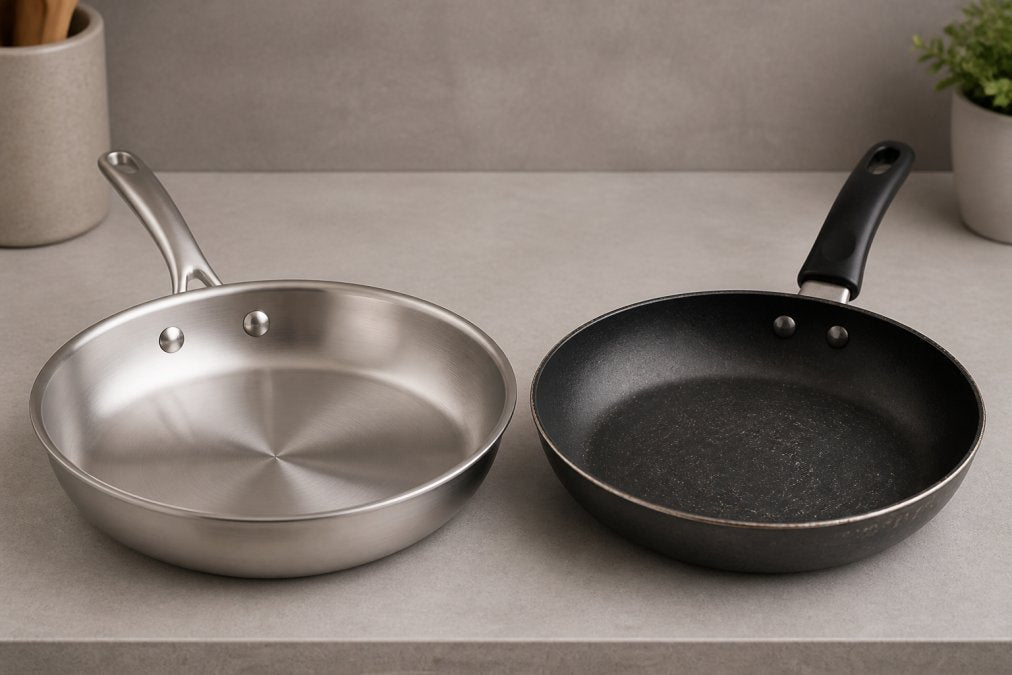
The average household replaces a cheap non-stick frying pan every couple of years once the coating starts scratching and flaking. Over a decade, that "budget" choice quietly becomes a significant expense and a steady source of PFAS entering your family's meals. Whether high-end stainless steel pans are worth the investment comes down to cost-per-use, cooking performance, and what you are willing to put into your body.
The financial math is only half the story. Cheap non-stick pans are essentially disposable cookware with a hidden environmental and health cost. High-end stainless steel pans are an investment piece designed to outlast every other pot in your kitchen. Below, we'll break down the durability, safety, and cooking performance differences, then show you how to make the transition without food sticking. But first, here is what most guides get wrong: they assume stainless steel is difficult to cook with. It is not. It just cooks differently, and once you understand the why, the how becomes second nature.
The Real Lifespan and Cost of Cheap Non-Stick Pans
Most budget non-stick pans lose their coating integrity within one to two years of regular use. The non-stick pan lifespan is shortened dramatically by high heat, metal utensils, and dishwasher cycles, all of which accelerate surface degradation. Once the coating scratches, it can flake into food, and the pan's performance drops off a cliff.
The common advice is to replace a scratched pan immediately, and that is correct. What is rarely discussed is the cumulative cost. A $30 pan replaced every two years costs $150 over a decade, with zero residual value. A quality stainless steel pan may cost more upfront but can be used for many years to come without a decrease in performance and can be passed on to others. This is the core tension: paying for performance once versus paying for mediocrity repeatedly.
Is Stainless Steel Non-Toxic for Everyday Cooking?
Stainless steel is widely regarded as a non-reactive surface that does not require chemical coatings to perform. Unlike PTFE-based non-stick pans, which can release toxic fumes if overheated, uncoated stainless steel contains no PFAS, PFOA, or other synthetic polymers. When you cook on stainless steel, your food only touches a stable alloy of iron, chromium, and nickel.
For parents worried about PFAS in cookware, this matters enormously. The concern is not just about ingestion; it is about cumulative exposure from multiple sources across the day. By removing coated pans from your rotation, you eliminate one of the most common household sources of these compounds. Stainless steel does not need a coating because its surface is naturally resistant to sticking when heated correctly, and it will never degrade into your dinner.
Comparing Durability: Clad Construction vs Surface Degradation
The durability gap between these two cookware types is not subtle. Cheap non-stick pans rely on a thin coating applied over a lightweight aluminium base, and that coating is the product. Once it wears away, the pan is functionally useless. In contrast, high-end stainless steel pans use clad construction, where multiple layers of metal are bonded together under extreme pressure to form a single sheet. But not all clad is created equal, and understanding the difference between a 3-ply and a 5-ply pan is the key to justifying the price gap between a $50 pan and a $300 pan.
A typical tri-ply pan sandwiches an aluminium core between two layers of stainless steel. The stainless steel alloy provides a durable, non-reactive cooking surface, while the aluminium core delivers the thermal conductivity that distributes heat evenly. This structure gives you warp resistance, superior heat retention, and a cooking surface that will not scratch, flake, or react with acidic foods. The maintenance is straightforward: wash it, dry it, and it looks as good as the day you bought it.
However, the thickness and quality of the aluminium core vary dramatically between manufacturers. A budget 'tri-ply' pan might have a 1.5mm aluminium core, while a premium brand like uses a core that is 3mm or thicker, often with an additional layer of aluminium or copper for even faster heat response. This is where the 5-ply construction comes in. By alternating layers of stainless steel and aluminium (e.g., steel-aluminium-steel-aluminium-steel), manufacturers can create a pan that heats more evenly and retains heat longer, eliminating the hot spots that plague thinner, cheaper alternatives.
For the home cook, this translates to a tangible difference: a 5-ply pan will sear a steak with a more consistent crust and hold its temperature better when you add cold vegetables. A thin 3-ply pan will drop in temperature more quickly, leading to steaming rather than searing. This is the technical reason why a high-end pan feels 'worth it' in the hand and on the stove, it is about the mass of metal working for you.
This construction also explains the difference in weight and heat retention. A heavier pan with more aluminium mass will take slightly longer to reach temperature, but it will hold that heat far more effectively, which is crucial for techniques like reverse searing or finishing a dish in the oven. The pan becomes a thermal battery, not just a cooking surface.
Are High-End Stainless Steel Pans Worth the Cooking Performance?
This is where the investment argument becomes undeniable. High-end stainless steel pans are worth the investment for anyone who values browning, searing, and flavour development, because the material itself enables techniques that non-stick pans physically cannot perform.
Heat Distribution and Searing Capabilities
Non-stick pans are notoriously poor at high-heat cooking. Most are not rated for searing temperatures, and heating an empty non-stick pan can damage the coating. Stainless steel, however, excels at the Maillard reaction, the chemical process that creates a golden-brown crust on meat and vegetables. A properly preheated stainless steel pan delivers the intense, even heat needed for restaurant-quality browning that a coated pan simply cannot achieve.
Reactivity to Acidic Foods
Tomatoes, vinegar, wine, and citrus are staples of everyday cooking. Non-reactive stainless steel handles these ingredients beautifully, allowing you to deglaze the pan after searing to build a pan sauce. The same ingredients would degrade a non-stick coating over time and can react with bare aluminium or cast iron. With stainless steel, you can go from stovetop sear to oven finish without changing pans, provided the pan is oven-safe.
How to Cook with Stainless Steel Without Sticking
Learning how to cook with stainless steel without sticking is the single biggest hurdle for new owners, and it is easier than the internet suggests. The secret is the "water droplet test." Heat the pan over medium for two to three minutes, then flick a few drops of water onto the surface. If the water dances and beads into spheres, the pan has reached the right temperature. If it sizzles and evaporates instantly, it is not hot enough yet.
Once the pan passes the test, add your oil, swirl to coat, and add your food. The food will release naturally when it is ready to flip. A common mistake is turning food too early; if it resists, give it another minute. This technique becomes automatic within a week. The payoff is a pan that is dishwasher-safe and requires no special oils.
The Cost-Per-Use Breakdown: Investment Piece vs Disposable
The cost-per-use calculation transforms how you view this purchase. A premium stainless steel pan used four times a week for 20 years delivers hundreds of meals per dollar spent. A cheap non-stick pan used the same amount delivers far fewer meals before it degrades, and each replacement resets the environmental cost of manufacturing and shipping another disposable product.
This is the heart of the durability and cost of high-end stainless steel pans in Australia: they are not a purchase, they are an heirloom. They do not dent from regular caravan travel, they survive moves without damage, and they hold their value. When you account for the avoided replacements, the avoided exposure to degrading coatings, and the improved cooking results, the investment piece wins on every axis.
Factor |
Cheap Non-Stick Pan |
High-End Stainless Steel Pan |
|---|---|---|
Typical Lifespan |
1-2 years |
Decades with proper care |
Surface Degradation |
Coating scratches and flakes |
None; uncoated surface |
Cooking Limit |
Low to medium heat only |
High-heat searing and oven-safe |
Cleaning |
Often hand-wash only |
Dishwasher-safe |
Cost Over 10 Years |
Multiple replacements |
One purchase |
Residual Value |
None |
Lifetime warranty, heirloom quality |
Maintenance Protocols and Energy Efficiency
Stainless steel maintenance is simpler than most people fear, but it does require a different protocol than non-stick. The #1 reason people return to non-stick is frustration with stuck-on food and the dreaded rainbow-coloured heat tint. Both are easily managed with the right techniques.
For everyday cleaning, a warm soapy wash is sufficient. For stubborn residue, deglaze the pan with a little water while it is still warm, then wipe clean. Avoid thermal shock by letting the pan cool before running it under cold water, which protects against warping. Most high-quality stainless steel is dishwasher-safe.
The Heat Tint Protocol
Heat tint (the blue or rainbow discolouration on the cooking surface) is not damage; it is a thin layer of oxidation that forms when the pan is heated above 200°C. While harmless, it can be unsightly. To remove it, use a dedicated stainless steel cleaner like Bar Keepers Friend, which contains oxalic acid. Apply a small amount to a damp cloth, rub in the direction of the grain, and rinse thoroughly. This simple protocol, done once a month, will keep a high-end pan looking new for decades.
The Stuck-On Food Protocol
For burnt-on residue, the most effective method is a two-step process. First, fill the pan with water and a splash of white vinegar, then bring it to a simmer for 5-10 minutes. This loosens the carbonised food. Second, use a stainless steel scrubber or a wooden spatula to scrape away the residue. Avoid steel wool, which can scratch the surface. This method is faster and more effective than any abrasive cleaner alone.
The Energy Efficiency Angle
There is also an energy efficiency angle that rarely gets mentioned. Stainless steel pans with a thick aluminium core heat up quickly and distribute that heat evenly, meaning you can cook on a lower burner setting than you would need with a warped, lightweight non-stick pan that develops hot spots. Over years of daily cooking, that efficiency saves energy and reduces time at the stove.
More importantly, the thermal mass of a high-end pan means you can turn the heat off a minute or two before your food is done and let the residual heat finish the cooking. This 'carry-over cooking' technique is impossible with a thin, cheap pan that loses heat instantly. For an induction cooktop, which is becoming the standard in Australian kitchens, the flat, thick base of a quality stainless steel pan also ensures maximum magnetic contact, reducing energy waste from poor coupling.
By mastering these two simple protocols, you eliminate the frustration that drives most people back to disposable non-stick pans. The pan becomes a low-maintenance workhorse, and the energy savings add to the long-term cost-per-use argument.
Conclusion: Making the Switch to a Lifetime Warranty
The choice between replacing cheap non-stick pans every two years and investing in high-end stainless steel is a choice between short-term convenience and long-term health, budget, and cooking quality. Stainless steel pans are worth the investment because they remove PFAS from your kitchen, perform better at high heat, and cost less per meal over their lifetime.
At The Low Tox Project, we stock uncoated stainless steel cookware that is dishwasher-safe, built to last, and designed for everyday family cooking. No flaking, no plastic, and no special techniques required beyond a simple preheat. If you are ready to stop buying disposable pans and start cooking with confidence, explore our range and make the switch that pays for itself meal after meal. Get started with The Low Tox Project and cook on a surface you can trust.
Frequently Asked Questions
Do chefs prefer stainless steel pans?
Most professional chefs choose stainless steel for its responsiveness to heat changes and its ability to create a proper sear. Unlike non-stick, stainless steel handles high heat without surface damage and produces the browning needed for the Maillard reaction. It is also non-reactive, so acidic foods like tomatoes won't alter flavour. While it requires a small learning curve for techniques like deglazing, its durability and culinary performance make it the standard in professional kitchens.
What is the average lifespan of stainless steel cookware?
A well-made stainless steel pan with heavy-gauge, tri-ply construction can last decades, often a lifetime. The material is warp-resistant and does not degrade with normal use. In contrast, the non-stick pan lifespan is typically only two to three years before the coating begins to scratch and lose its release properties, at which point the pan needs replacing.
How much money can you save by switching to durable cookware?
The savings come from cost-per-use. If you replace a cheap non-stick pan every two years, the costs accumulate. A single high-end stainless steel pan costs more upfront, but because it lasts for decades, its cost-per-use drops significantly over time. You also avoid the hassle and waste of frequently disposing of damaged pans, making it a more sustainable and economical choice in the long run.
Will food stick to stainless steel without special techniques?
Food will stick if the pan isn't preheated correctly. The key is the 'Leidenfrost effect': heat the pan on medium for a few minutes until a drop of water beads and rolls around. Then add oil and your ingredients. This simple technique creates a natural release. Once you master this, stainless steel is as easy to clean as non-stick, and it is dishwasher-safe, unlike most coated pans.