Last Updated: November 13, 2026
Quick Summary
A stainless steel mini muffin pan suits bite-sized bakes such as mini muffins, brownie bites and mini quiches. Stainless steel has no coating, so grease each cavity well before baking. Mini bakes cook much faster than full-sized ones, so check them early.
- Mini muffins usually take about 10 to 14 minutes in a mini pan.
- Brownie bites often need around 8 to 12 minutes, depending on how fudgy you like them.
- Grease each cavity with butter, oil or ghee, since stainless steel isn't naturally non-stick.
- Fill each cavity about two-thirds full to leave room for rise.
- Stainless steel holds heat, so bakes can keep cooking briefly after leaving the oven.
Table of Contents
- Why a Stainless Steel Mini Muffin Pan Is Worth Considering for Bite-Sized Treats
- What You Can Bake in a Mini Muffin Pan (Beyond Muffins)
- Stainless Steel Versus Aluminium and Non-Stick: How Mini Pans Compare
- How to Grease a Stainless Steel Muffin Pan So Your Bakes Release Cleanly
- Mini Muffin Baking Time and Temperature Adjustments
- Caring for Your Stainless Steel Muffin Pan Over Time
- Choosing Your Next Bake Pan and Getting Started
- Frequently Asked Questions
Why a Stainless Steel Mini Muffin Pan Is Worth Considering for Bite-Sized Treats
If you've ever wondered whether a stainless steel mini muffin pan for bite-sized treats is worth having, you're in good company. Many home bakers reach for one when they want small, portion-friendly bakes that work for lunchboxes, birthday parties or a quick afternoon treat. At The Low Tox Project, we've put together this guide to help you decide whether it suits your kitchen and how to get the best results from it.
Stainless steel is a sensible choice for bakeware because it doesn't rely on a coating. A mini muffin pan made from it can be a practical everyday piece. It's worth knowing, though, that stainless steel behaves differently from non-stick, so it's helpful to understand that before you start baking.
The sections below cover what you can bake in a mini pan, how it compares with aluminium and non-stick, and seven practical tips to help your bakes come out well.
What You Can Bake in a Mini Muffin Pan (Beyond Muffins)
The name suggests muffins, but a mini pan is far more versatile. The small cavities suit bite-sized bakes that cook quickly and are easy to portion. Mini muffins and mini cupcakes are the obvious starting points, and they're a favourite for kids' lunchboxes and party platters.
Brownie bites are another popular choice. Because they're smaller than a full tray of brownies, they're easy to share and simple to portion. Mini quiches and savoury bites also work well, so you can use the same pan for sweet and savoury cooking.
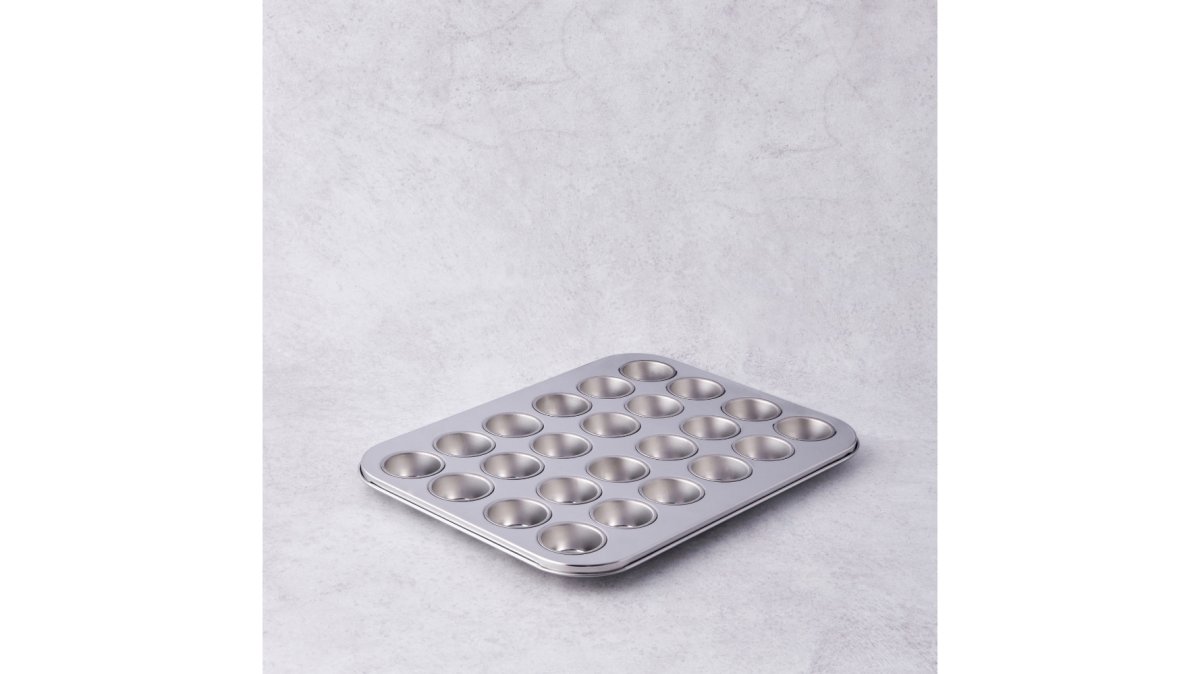
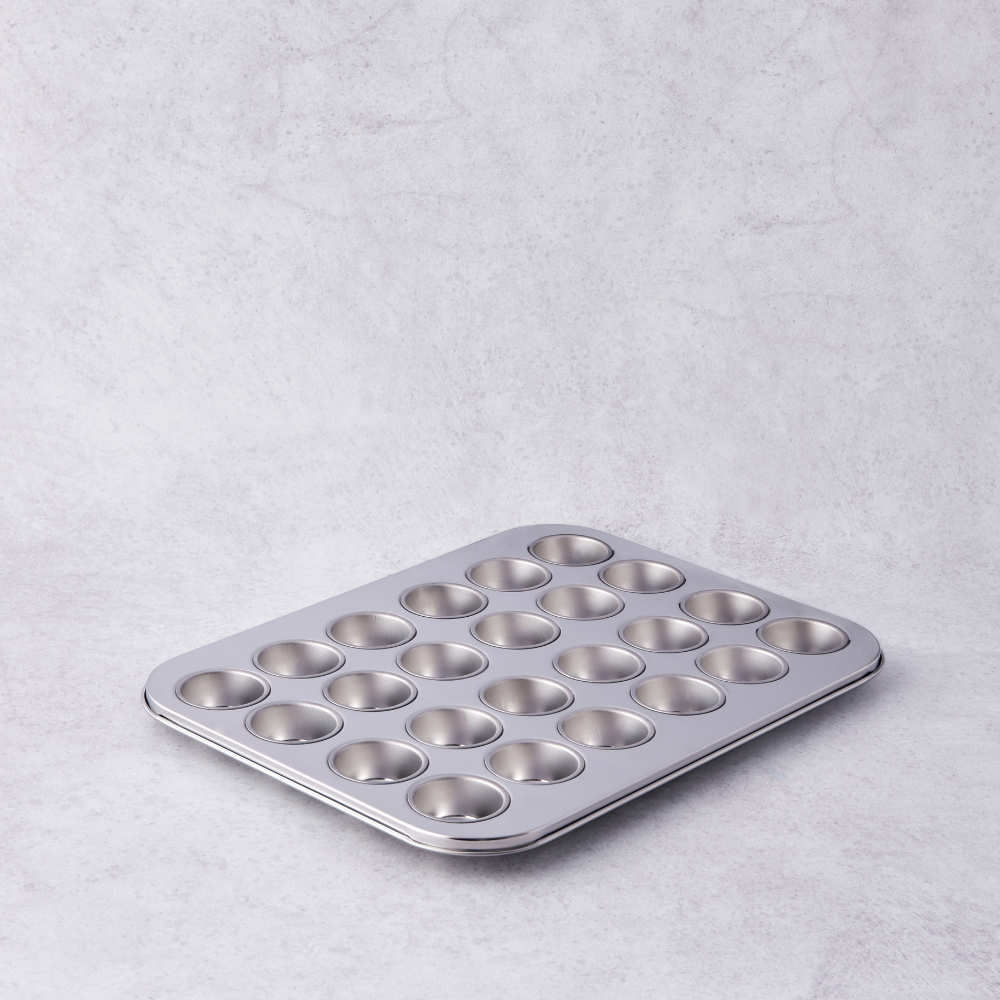
Our stainless steel mini muffin pan is designed with bite-sized bakes in mind.
Stainless Steel Versus Aluminium and Non-Stick: How Mini Pans Compare
Most mini muffin pans you'll see are made from one of three things: stainless steel, aluminium, or a metal base with a non-stick coating. Each behaves differently in the oven, and the differences matter more in a mini pan than a full-sized one because small portions are less forgiving. Here's how they actually compare in everyday use.
Stainless steel doesn't rely on a coating, so there's no coating to scratch or flake. If you want to compare stainless steel baking sheets for home bakers, that guide looks at how they stack up against other materials. The trade-off is that stainless steel heats more slowly than aluminium, so rotating the pan halfway through baking can help bakes brown more evenly. Because stainless steel isn't naturally non-stick, we recommend greasing each cavity before baking.
Much aluminium bakeware also comes with a non-stick coating, which brings us to the third option.
A practical way to think about it: if you bake mini treats occasionally and want the easiest release, non-stick has appeal. If you're weighing whether higher-end stainless steel bakeware is worth the investment, we've covered that separately. If you bake regularly, want one pan that lasts and don't mind greasing, stainless steel is the more durable choice. Aluminium sits in between on durability but offers the best heat response of the three.
On grades, you'll often see stainless steel described as 18/8 or 18/10. Those numbers refer to the chromium and nickel content, and both grades are widely used in kitchenware. The exact properties can vary between products, so check the listing for the item you're considering rather than assuming all stainless steel performs the same.
If you want independent guidance on comparing cookware materials, Australian consumer guidance on choosing cookware is a useful starting point.
How to Grease a Stainless Steel Muffin Pan So Your Bakes Release Cleanly
Greasing is the step that makes the biggest difference with stainless steel. Because the surface isn't coated, a thin layer of fat helps your bakes lift out cleanly. We recommend greasing each cavity with butter, oil or ghee before adding your batter.
Use a pastry brush or a folded kitchen roll to coat every cavity, including the edges where batter tends to stick. For delicate bakes like brownie bites, a light dusting of flour after greasing can help too. Let the pan cool for a few minutes after baking before you try to remove the treats, as this gives them time to firm up and release more easily.
If you're using paper liners, these work well with stainless steel and can make cleanup even easier. Whichever method you choose, greasing is the step that keeps sticking under control.
Mini Muffin Baking Time and Temperature Adjustments
Mini bakes cook faster than full-sized ones, and the difference is bigger than most recipes let on. A standard muffin recipe that takes 20 to 25 minutes in a full pan will usually take roughly half that in a mini pan, so somewhere in the 10 to 14 minute range for many batters. Brownie bites are often quicker again, closer to 8 to 12 minutes depending on how fudgy you like them. Treat those as starting points, not rules, because your oven, pan and batter all shift the numbers.
A reliable approach is to keep the oven temperature your recipe specifies (most muffin and brownie recipes sit around 180°C fan-forced or 190°C conventional) and shorten the time rather than lowering the heat. Lowering the temperature extends baking and can dry out small portions. If your first batch browns too quickly on the base, move the pan to a higher rack or place a baking tray on the shelf below to deflect some heat, rather than dropping the oven temperature.
For doneness, a skewer or toothpick inserted into the centre of a middle cavity is still the simplest test. A clean skewer, or one with a few moist crumbs, usually means the bakes are ready. For brownie bites you may want a little more moist crumb on the skewer for a fudgier result. For mini quiches and savoury bites, a slight wobble in the centre is fine because they firm up as they cool.
Scaling a full-size recipe down to a mini pan is mostly about volume, not maths. A standard 12-cup muffin pan holds roughly 80 to 100 ml per cavity, while a mini pan cavity typically holds around 15 to 30 ml depending on the pan. That means a recipe written for 12 full muffins will usually fill 36 to 48 mini cavities, so you'll often need to bake in batches or halve the recipe. Filling each cavity about two-thirds full leaves room for rise and keeps the tops from spilling over.
Watch out: stainless steel holds heat after the pan comes out of the oven, so bakes can keep cooking for a minute or two on the bench. If your first batch came out slightly dry, pull the next one out a minute earlier and let the residual heat finish the job.
Keep a simple note of what worked for each recipe, including the time, the rack position and how full you filled the cavities. After two or three batches you'll have a reference that's tuned to your own oven and pan, which is more useful than any generic timing chart.
Mini bakes cook much faster than full-sized ones, so the timings below are a useful starting point.
| Bake | Approximate time | Doneness cue |
|---|---|---|
| Mini muffins | 10 to 14 minutes | Skewer comes out clean |
| Brownie bites | 8 to 12 minutes | Skewer with a few moist crumbs |
| Mini quiches | Varies by recipe | Slight wobble in the centre |
| Full muffin recipe in mini pan | About half the full-size time | Check a few minutes early |
| Fill level per cavity | About two-thirds full | Leaves room for rise |
Caring for Your Stainless Steel Muffin Pan Over Time
Wash the pan after each use with warm water and a gentle detergent. Soaking for a short time can loosen stuck-on batter, and a soft brush or sponge will do the rest.
Always follow the care advice in your product's instructions, particularly for dishwasher use.
For more general guidance on looking after kitchen equipment, Australian food safety information on cleaning kitchen equipment is a useful reference.
Choosing Your Next Bake Pan and Getting Started
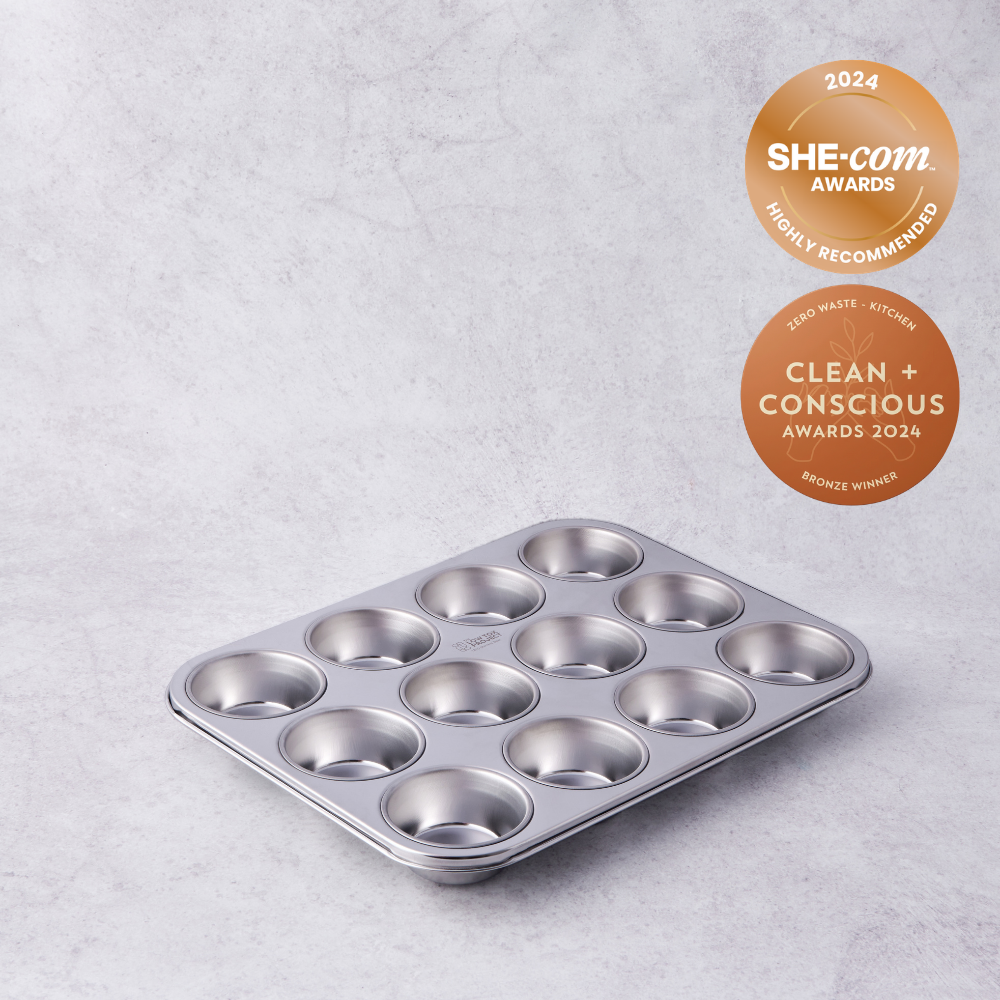
If you're ready to try a mini pan, our stainless steel mini muffin pan is a good place to start. It suits a range of bite-sized bakes, and it's built for everyday baking. If you also bake full-sized muffins or cupcakes, our 12-cup stainless steel muffin pan is a practical companion, with the same greasing approach.
Start with one simple recipe, grease the pan well, and check your bakes a few minutes early. You'll quickly get a feel for what works in your kitchen. Once you've found your rhythm, the pan becomes a reliable tool for everything from weekday lunchbox treats to weekend baking.
Ready to start baking? Explore the Stainless Steel Mini Muffin Pan for bite-sized treats, or see the Stainless Steel Muffin Pan 12 Cup if you want a bigger option.
Frequently Asked Questions
What can you bake in a mini muffin pan?
Plenty more than mini muffins. Many home bakers use a stainless steel mini muffin pan for cupcakes, brownie bites, mini quiches, tarts and small savoury bites such as frittata portions. The cavities give you neat, portion-sized treats that are handy for lunchboxes, kids' parties and sharing. Start with a recipe you already know, since batter thickness and cavity size both affect how a bake sets. Fill each cavity about two-thirds full so the mixture has room to rise without spilling over the edges.
How do you stop mini muffins sticking to a stainless steel pan?
The most reliable approach is to grease every cavity thoroughly with butter, oil or ghee before adding the batter. Give the pan a few minutes to cool after baking before you lift the bakes out, as they release more easily once they have set slightly. Running a thin spatula around each edge also helps. Because stainless steel is uncoated, a little extra preparation at the start usually makes the difference between a clean release and a stuck-on bake.
How long do mini muffins take to bake?
Most mini muffins bake in roughly 10 to 15 minutes, though timing depends on your batter, oven and the size of each cavity. Check them a few minutes before the time in your recipe is up. A skewer inserted into the centre should come out clean or with a few moist crumbs. Because mini portions are small, they can go from golden to overdone quickly, so it is worth checking early on your first bake and noting what works in your oven.
How do you clean a stainless steel mini muffin pan?
Let the pan cool first, then wash it in warm soapy water with a soft cloth or sponge. Stubborn residue can be soaked for a short time before gently scrubbing. Our stainless steel muffin pans are listed as dishwasher safe, though it is still worth following your product's care guidance and avoiding abrasive pads that can mark the surface over time.