If you’ve recently made the switch to stainless steel cookware, you’ve probably come across advice about seasoning your pans before using them. But is it actually necessary? And what’s the difference between seasoning a pan and simply greasing it before cooking?
The good news is that stainless steel doesn’t require the same seasoning process as cast iron. However, there’s an important distinction between seasoning and greasing, particularly when it comes to stainless steel bakeware.
Here’s what you need to know about seasoning stainless steel pans, preventing food from sticking and getting the best results from your cookware.

Do you need to season stainless steel pans?
The short answer is no. Stainless steel doesn’t need to be seasoned in the same way as cast iron or carbon steel. Cast iron relies on seasoning to create a protective layer that helps prevent rust and improves food release. Stainless steel, on the other hand, contains chromium, which forms a naturally occurring protective oxide layer that helps resist corrosion.
Some people choose to season their stainless steel frying pans to help reduce sticking, but it’s an optional technique rather than an essential step.
Unlike cast iron, stainless steel doesn’t generally develop or retain seasoning in quite the same way. Any oil-based layer you create may be temporary and can wear away during cooking or cleaning.
At The Low Tox Project, we believe using stainless steel should be straightforward. For most everyday cooking and baking, learning how to prepare your pans properly will make a bigger difference than seasoning them. And that brings us to something important: while our stainless steel bakeware doesn’t need traditional seasoning, we always recommend greasing it with butter, oil or ghee before use.
Seasoning vs greasing stainless steel: What’s the difference?
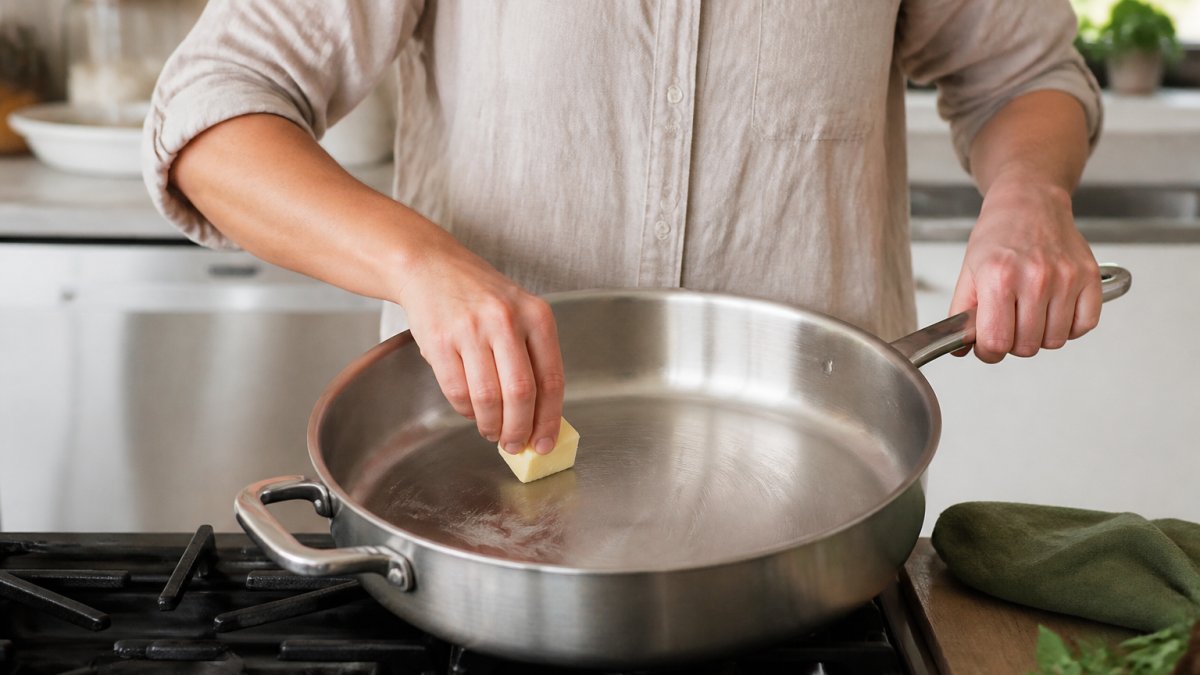
These two terms are sometimes used interchangeably, but they’re actually quite different. Seasoning involves heating a thin layer of oil on a metal surface. When heated sufficiently, some of the oil’s components undergo a process called polymerisation, creating a thin film on the metal.
This is commonly done with cast iron and carbon steel cookware, where repeated seasoning can help build a more durable cooking surface. Greasing, on the other hand, simply means applying butter, oil or ghee to the cooking surface before adding your ingredients.
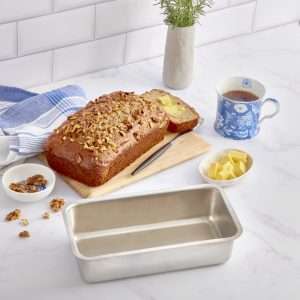
Greasing creates a barrier between the food and the stainless steel, reducing sticking and making it easier to remove your food once cooked. For our stainless steel bakeware, greasing is an important part of preparing your pans. Whether you’re baking muffins, roasting vegetables or making a loaf of bread, we recommend greasing the cooking surface with butter, oil or ghee before adding your ingredients.
It’s a simple step, but one that can make a big difference to your results. Our glass oil spray bottles make this step easy.

How to season stainless steel pans
You might have seen tutorials recommending heating oil in a stainless steel frying pan to create a seasoned surface.
While some people use this technique, stainless steel doesn’t require traditional seasoning like cast iron or carbon steel. Seasoning methods can also vary depending on the pan’s construction, the type of oil and the heat source being used. Heating oil incorrectly can lead to excessive smoke, burns or even a cooking oil fire.
For these reasons, we recommend following your cookware manufacturer’s instructions rather than experimenting with high-temperature seasoning methods. The good news is that you don’t need to season stainless steel to enjoy cooking with it.
For stovetop cooking, using the appropriate temperature and cooking fat can help reduce sticking. For stainless steel bakeware, we always recommend greasing the cooking surface with butter, oil or ghee before adding your ingredients. It’s a simple approach that doesn’t require any special preparation.
What’s the best oil or fat for greasing stainless steel?
When it comes to greasing stainless steel cookware and bakeware, you don’t need anything fancy. Butter, ghee and good-quality cooking oils are all great options.
The best choice will depend on what you’re making and the cooking temperature. Some fats are better suited to higher temperatures, while others add a lovely flavour to your baking.
Here are a few of our favourites:
|
Oil or fat |
Approximate smoke point |
Best for |
|---|---|---|
|
Ghee |
230–250°C |
Roasting, baking and higher-temperature cooking |
|
Refined avocado oil |
250–270°C |
Roasting, baking and everyday cooking |
|
Extra virgin olive oil |
160–210°C |
Everyday baking, roasting and moderate-temperature cooking |
|
Butter |
150–175°C |
Muffins, cakes, bread and other baked goods |
|
Refined coconut oil |
200–230°C |
Baking and roasting |
Smoke points are approximate and can vary depending on the quality and processing of the oil or fat.
Our recommendation? Choose a fat that suits your recipe and cooking temperature. Butter and ghee are popular choices for baking, while olive oil and avocado oil are versatile options for everyday cooking.
For all our stainless steel bakeware, we recommend greasing the cooking surface with butter, oil or ghee before adding your ingredients. Make sure you cover the base, sides and corners to help prevent sticking.
And remember, greasing isn’t the same as seasoning. There’s no need to heat your bakeware to create a seasoning layer. Simply grease your pan before use, and you’re ready to get cooking.
How to prevent food sticking to stainless steel
One of the biggest adjustments when moving from non-stick cookware to stainless steel is learning how the metal responds to heat. Stainless steel doesn’t have a non-stick coating, so a few simple changes to your cooking and baking routine can make a noticeable difference.
For stovetop cooking, getting the temperature right, using an appropriate amount of cooking fat and allowing food time to release naturally can all help. For stainless steel bakeware, proper greasing is particularly important. We always recommend greasing the cooking surface with butter, oil or ghee before adding your ingredients.
Make sure you cover the entire surface, including the corners and edges. Some recipes, particularly delicate baked goods, may benefit from more thorough greasing.
Want more tips? Read our latest guide for more on preventing food from sticking.
Is it safe to use metal utensils on stainless steel?
Yes! One of the things we appreciate about stainless steel is its durability. Unlike coated non-stick cookware, stainless steel doesn’t have a non-stick surface coating that can peel or flake away. This means metal utensils can generally be used without the same concerns about damaging a non-stick coating.
However, metal utensils can still leave fine scratches on stainless steel. These marks are usually cosmetic and don’t necessarily affect how your cookware performs.
Common mistakes when using stainless steel cookware
If you’re finding stainless steel a little tricky, a few common habits might be contributing.
Not greasing your bakeware properly
This is one of the most common reasons food sticks to stainless steel bakeware. We always recommend greasing our pans with butter, oil or ghee before use. Make sure you cover the entire cooking surface, including corners and edges. Remember, stainless steel is uncoated, so greasing is an important part of preparing your pan for baking.
Using too much heat
High heat isn’t always necessary when cooking with stainless steel. In fact, excessive heat can sometimes make sticking or burning worse. For stovetop cooking, start with moderate heat and adjust as needed. When baking, follow the recommended oven temperature for your recipe and make sure your bakeware is suitable for that temperature.
Not allowing enough cooking time
Food that hasn’t developed a crust may resist being moved. When frying proteins, give them a little time before attempting to flip or turn them. For baked goods, allow the appropriate cooling time before attempting to remove them from the pan.
Expecting stainless steel to behave like non-stick cookware
Stainless steel doesn’t have the same food-release properties as a coated non-stick pan. There’s a small learning curve, but once you’re familiar with it, you may find you don’t miss your old cookware.
How to clean and maintain stainless steel cookware
One of the benefits of stainless steel is that it’s relatively easy to maintain. For everyday cleaning, warm water, mild dishwashing liquid and a soft sponge are usually all you need. If food has stuck to the surface, soaking the pan in warm, soapy water can help loosen residue. For more stubborn marks, a suitable stainless steel cleaner or a little bicarbonate of soda may help. You might also notice rainbow-coloured marks appearing on your cookware after heating. These are generally caused by changes to the thin oxide layer on the stainless steel surface when exposed to heat. They’re usually cosmetic rather than a sign that your cookware is damaged.
Stainless steel doesn’t rely on seasoning to protect its surface, so there’s no need to maintain a seasoned layer. Regular cleaning with warm, soapy water is generally all that’s needed to keep your cookware in good condition. For more cleaning advice, read our guide to cleaning stainless steel cookware.
EXPLORE OUR STAINLESS STEEL RANGE TODAY
Frequently asked questions
Is it necessary to season stainless steel pans?
No. Unlike cast iron and carbon steel, stainless steel doesn’t require traditional seasoning before use. Some people choose to season their stainless steel frying pans to help reduce sticking, but it’s optional. For everyday cooking, using the right temperature and an appropriate amount of cooking fat is generally more important.
What’s the difference between seasoning and greasing stainless steel?
Seasoning involves heating oil to create a thin layer on the metal’s surface, while greasing means applying butter, oil or ghee before cooking or baking. Stainless steel doesn’t require traditional seasoning, but we always recommend greasing our stainless steel bakeware before use to help prevent food from sticking.
What is the best oil or fat to use with seasoning stainless steel?
Butter, ghee, extra virgin olive oil and avocado oil are all good options for cooking and baking with stainless steel. The best choice depends on your recipe and cooking temperature.
For our stainless steel bakeware, we always recommend greasing with butter, oil or ghee before use to help prevent sticking.
If you’re specifically looking to season a stainless steel frying pan, follow the cookware manufacturer’s instructions, including their recommendations for suitable oils and temperatures.
How often should you season stainless steel pans?
Stainless steel doesn’t require regular seasoning, so there’s no need to maintain a seasoned layer as you would with cast iron. If you choose to season your stainless steel frying pan, always follow the manufacturer’s recommendations.
Can you ruin a stainless steel pan by seasoning it?
Stainless steel is durable, but incorrect seasoning techniques can cause problems. Overheating a pan or using too much oil can leave stubborn residue, cause discolouration or potentially damage certain cookware components. Heating oil excessively can also create a fire risk.
We recommend following your cookware manufacturer’s instructions rather than experimenting with high-temperature seasoning methods.
Do you need to season stainless steel baking trays?
No. Stainless steel baking trays don’t need traditional seasoning. However, we always recommend greasing our stainless steel bakeware with butter, oil or ghee before use.
Make sure you cover the entire cooking surface, including corners and edges, to help prevent food from sticking and make cleaning up easier.
Why does food stick to stainless steel?
Stainless steel doesn’t have a non-stick coating, so food can stick if the cooking temperature isn’t quite right, there’s insufficient cooking fat or ingredients are moved before they’re ready to release.
For stainless steel bakeware, proper greasing is particularly important. We recommend applying butter, oil or ghee to the entire cooking surface before adding your ingredients.
Getting comfortable with stainless steel
Switching to stainless steel can take a little getting used to, especially if you’ve spent years cooking with coated non-stick pans. But there’s no need to overcomplicate things.
Stainless steel doesn’t require traditional seasoning like cast iron. For our bakeware, the key is to grease your pan with butter, oil or ghee before use, follow the recommended cooking temperatures and give your food time to cook properly.
Once you’ve got the hang of it, stainless steel is wonderfully versatile and easy to care for. At The Low Tox Project, we love stainless steel because it’s durable, practical and doesn’t rely on a non-stick coating.
Our range of stainless steel bakeware is designed for everyday use, from roasting vegetables and baking bread to preparing family favourites.