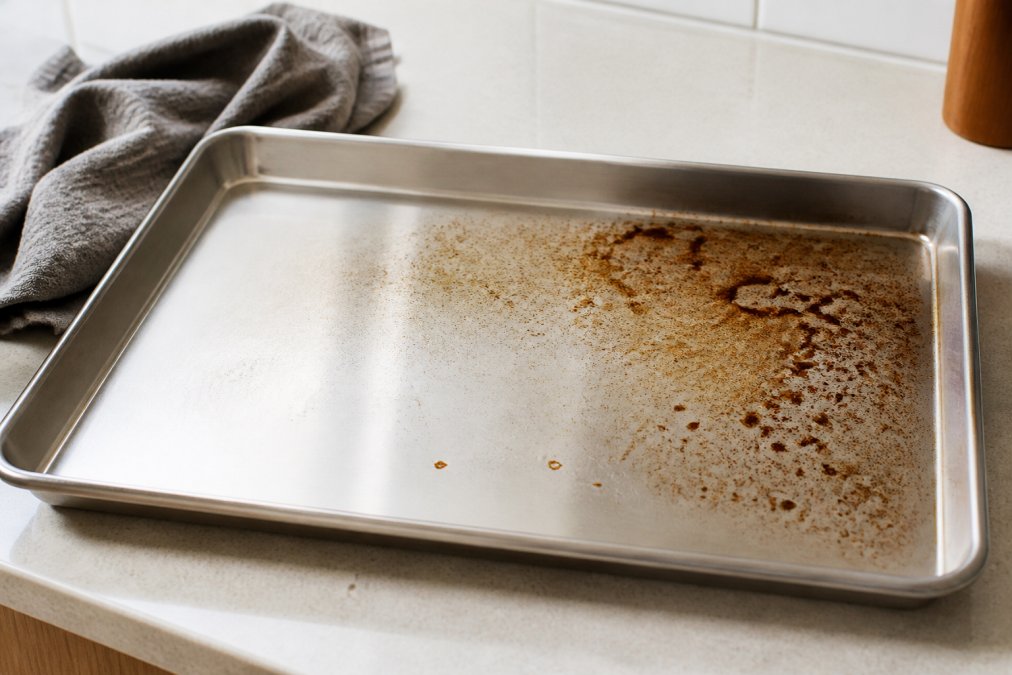
We’ve all been there. You’ve finished roasting dinner, taken everything out of the oven and discovered a few stubborn marks left behind on your baking tray. Or perhaps you’ve noticed your stainless steel tray has started developing brown or golden patches after repeated use. The good news? Most everyday food residue and grease can be removed with a little warm water, dishwashing liquid and some patience.
And those darker marks? They’re not necessarily a sign that anything is wrong with your tray. Here’s how to clean burnt stainless steel trays, tackle stubborn residue and keep your bakeware in good condition.
Why do burnt stains appear on stainless steel trays?
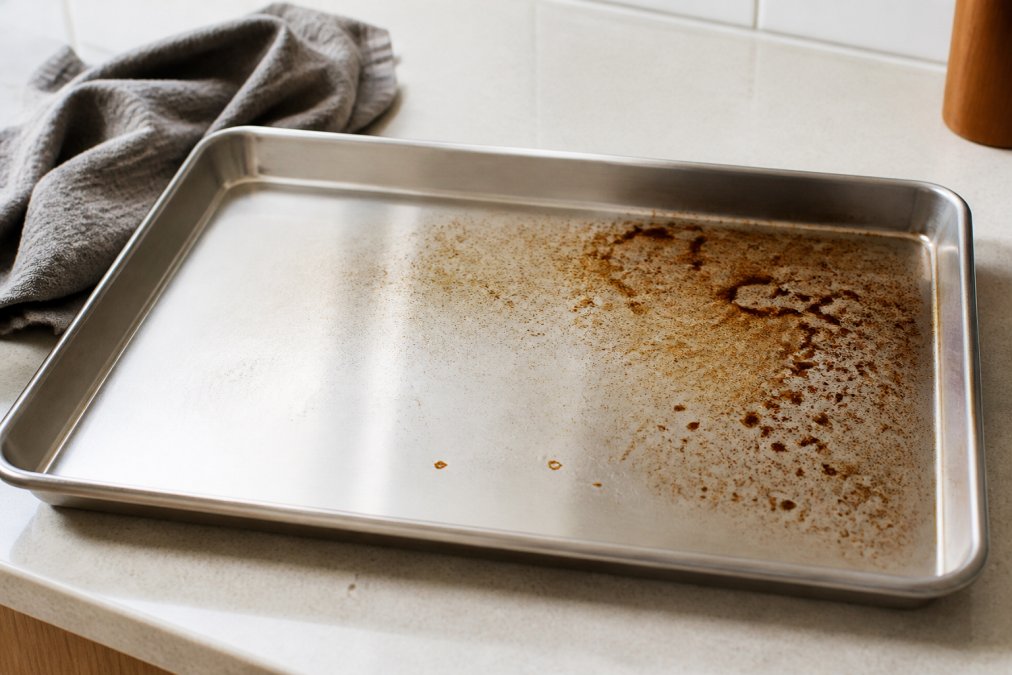
Stainless steel is a durable, uncoated material, but that doesn’t mean food and grease can’t stick to its surface. When food is exposed to high temperatures, sugars, proteins and fats can brown, caramelise or burn onto the metal. Cooking oils and fats can also leave behind a thin layer of residue that becomes more noticeable after repeated heating. Over time, you might notice brown, golden or rainbow-coloured marks appearing on your stainless steel bakeware. These marks aren’t necessarily all caused by the same thing.
- Burnt-on food: Food residue that has become stuck to the surface during cooking.
- Baked-on grease: Cooking fats and oils that have formed a stubborn film after repeated heating.
- Heat discolouration: Changes in the appearance of the stainless steel surface caused by exposure to heat.
- Water spots: Mineral deposits left behind when water evaporates.
Understanding the difference can help you choose the most appropriate cleaning method. And remember, stainless steel doesn’t need to look perfectly polished to perform well. Some cosmetic changes are a normal part of using and enjoying your bakeware.
What you’ll need to clean burnt stainless steel trays
You probably already have most of these items in your kitchen.
For everyday cleaning, we recommend starting with:
- Warm water
- Mild dishwashing liquid
- A soft sponge or cleaning cloth
- A clean tea towel
For more stubborn marks, you might also find these useful:
- Bicarbonate of soda (bicarb)
- White vinegar
- A soft-bristled cleaning brush (avoid steel wool)
How to remove burnt-on food from stainless steel trays
If you’ve got food stuck to your baking tray, start with the simplest approach. There’s no need to reach for specialised cleaning products straight away.
Step 1: Allow your tray to cool
Once you’ve finished cooking, allow your stainless steel tray to cool until it’s safe to handle. Avoid placing a hot tray directly into cold water.
Step 2: Soak in warm, soapy water
Fill your sink with warm water and add a little dishwashing liquid. Submerge the tray, or add enough water to cover the affected areas. Leave it to soak for around 15–20 minutes.
This helps soften dried food residue and makes it easier to remove. For particularly stubborn food, you may need to soak it a little longer.
Step 3: Gently remove the residue
Using a sponge or soft cleaning brush, work over the affected areas to loosen the food. If there are larger pieces stuck to the surface, a wooden or plastic scraper can help lift them away. There’s no need to use excessive force. If the food isn’t coming away easily, try soaking the tray again.
Step 4: Rinse and dry
Once the residue has been removed, rinse your tray thoroughly with clean water. Dry with a clean tea towel to help minimise water spots. For most everyday cooking and baking, that’s all you need.
Still have some stubborn marks? Bicarb soda can be useful for tackling residue that doesn’t come away with regular washing.
How to clean stainless steel trays with bicarbonate of soda
Bicarb soda is your best friend for maintaining burnt stainless steel trays. It's non-toxic, affordable, and incredibly effective. The powder works by raising the pH of burnt residue, which weakens the bond between food and metal. Consistent application of this gentle abrasive ensures that your equipment remains pristine, a principle that applies equally when you maintain stainless steel grates.
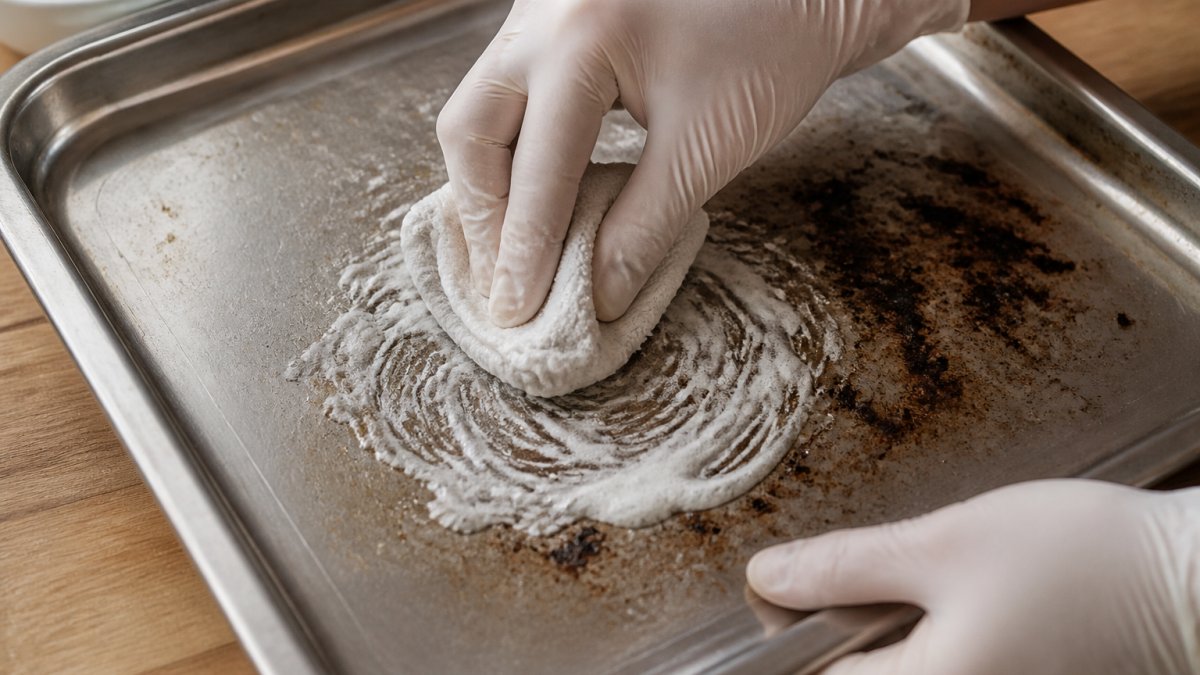
Step 1: Make a paste
Mix a small amount of bicarbonate of soda with enough water to create a paste. You don’t need precise measurements. Just aim for a consistency that’s easy to spread.
Step 2: Apply to the affected area
Spread the paste over the burnt or stained sections of your stainless steel tray. There’s no need to cover the entire surface unless you’re cleaning a larger area.
Step 3: Leave it for a few minutes
Allow the paste to sit for approximately 10–15 minutes. This gives the water time to soften some of the residue before cleaning.
Step 4: Gently clean
Using a damp sponge or soft cloth, gently rub the affected area. Bicarbonate of soda provides a mild abrasive action that can help lift residue from the surface. Avoid applying excessive pressure, particularly if you’re trying to preserve a polished finish.
Step 5: Rinse thoroughly
Wash away the bicarbonate of soda with warm water and a little dishwashing liquid. Rinse well and dry with a clean cloth. If some marks remain, you can repeat the process or try a stainless steel cleaning product suitable for your bakeware.
Can you use vinegar to clean stainless steel trays?
Yes. White vinegar can be useful for removing certain types of marks from stainless steel, particularly water spots and mineral deposits. However, it’s important to understand that vinegar isn’t necessarily the best option for every cleaning problem. Because vinegar is acidic, it can help dissolve some mineral deposits. It’s generally less effective at removing thick layers of burnt-on grease or food.
How to use vinegar on stainless steel
If you’re dealing with water spots or light mineral marks:
- Mix equal parts white vinegar and water.
- Apply a small amount to a soft cloth.
- Gently wipe the affected area.
- Rinse thoroughly with clean water.
- Dry with a clean tea towel.
Avoid leaving vinegar sitting on stainless steel for extended periods, and don’t use it on cookware if the manufacturer advises against acidic cleaners.
How to remove burnt grease from baking trays
Baked-on grease can be a little more stubborn than everyday food residue. When cooking oils and fats are repeatedly exposed to heat, they can form a thin, hardened layer on the metal. You might notice this as brown or golden patches, particularly around the edges and corners of your tray. If regular washing isn’t removing the marks, try the steps above with bicarb soda.
If that still doesn't work, look for a stainless steel cleaner like Bar Keepers Friend to help remove stubborn stains.
Which cleaning method should you use?
|
What you’re cleaning |
Recommended approach |
|---|---|
|
Everyday food residue |
Warm water and dishwashing liquid |
|
Burnt-on food |
Soak, then clean with a sponge or soft brush |
|
Stubborn food residue |
Bicarbonate of soda paste |
|
Baked-on grease |
Dishwashing liquid, followed by bicarbonate of soda if needed |
|
Water spots |
Diluted white vinegar |
|
Rainbow discolouration |
Diluted white vinegar may help |
|
Persistent marks |
A suitable stainless steel cleaning product like Bar Keepers Friend |
Remember, not every mark needs to be removed. If your tray is clean, free from food residue and functioning as intended, some cosmetic discolouration is perfectly normal.
Can burnt stains permanently damage stainless steel?
Not necessarily. One of the things we appreciate about stainless steel is its durability. Unlike coated non-stick bakeware, stainless steel doesn’t have a non-stick surface coating that can peel or flake away. This means that ordinary cooking marks, light scratches and some discolouration don’t necessarily affect how your tray performs. However, severe overheating can damage cookware, and persistent corrosion, pitting or structural changes should be assessed rather than ignored. For everyday use, the occasional stubborn stain is generally more of a cleaning issue than a reason to replace your tray.
Our approach? Focus on keeping your bakeware clean and in good working condition rather than worrying about every cosmetic mark.
Common mistakes when cleaning burnt stainless steel
Stainless steel is relatively easy to care for, but a few habits are worth avoiding.
Washing a hot tray in cold water
Sudden temperature changes can contribute to warping. Always allow your tray to cool before washing.
Using excessive force when scrubbing
Stainless steel is durable, but abrasive cleaning tools can leave scratches. Fine scratches are generally cosmetic, although they may affect the appearance of polished surfaces. Start with a sponge or soft brush and increase the cleaning effort only if needed.
Mixing cleaning products unnecessarily
Combining different cleaning products doesn’t always make them more effective. For example, bicarbonate of soda and vinegar largely neutralise one another when mixed. Never mix bleach with vinegar or other acidic cleaning products, as this can release dangerous gases.
Expecting every mark to disappear
Stainless steel can develop discolouration through regular heating and use. While some marks can be removed, others may be more persistent. A perfectly polished finish isn’t essential for everyday cooking.
Forgetting to grease your tray before use
This is an important one. While greasing won’t prevent every burnt mark, it can help reduce food sticking during cooking. At The Low Tox Project, we always recommend greasing our stainless steel bakeware with butter, oil or ghee before adding your ingredients. Make sure you cover the cooking surface, including corners and edges. A little preparation can make both cooking and cleaning easier.
How to keep your stainless steel trays in good condition
You don’t need an elaborate cleaning routine to care for stainless steel bakeware. A few simple habits can help keep your trays in good condition for years to come.
- Grease before use. Apply butter, oil or ghee to the cooking surface before adding your ingredients to help prevent sticking.
- Allow your tray to cool. Avoid sudden temperature changes when washing.
- Clean after use. Warm, soapy water and a sponge are usually all you need.
- Soak stubborn residue. Give stuck-on food time to soften rather than scrubbing aggressively.
- Dry after washing. This helps minimise water spots and keeps your tray looking its best.
And remember, some marks and scratches are simply part of using stainless steel. Your bakeware doesn’t need to look brand new to continue doing its job.
Frequently asked questions
What is the best way to clean a badly burnt stainless steel tray?
Start by allowing the tray to cool, then soak it in warm, soapy water for approximately 15–20 minutes. Use a sponge or soft brush to loosen the burnt residue. For stubborn marks, try a paste made from bicarbonate of soda and water. Apply it to the affected area, leave it for 10–15 minutes, then gently clean and rinse thoroughly. If residue remains, a suitable stainless steel cleaning product may help.
Can you use bicarbonate of soda to clean burnt stainless steel?
Yes. Bicarbonate of soda is a useful option for removing stubborn food residue and some burnt marks from stainless steel. Mix it with a little water to form a paste, apply to the affected area and gently rub with a damp sponge or soft cloth. Rinse thoroughly afterwards. Because bicarbonate of soda is mildly abrasive, avoid excessive scrubbing if you want to preserve the appearance of your tray.
Does vinegar remove burnt marks from stainless steel?
White vinegar can help remove certain marks, particularly water spots and mineral deposits. However, it may not be as effective for thick layers of burnt food or grease. For those, start with warm, soapy water and consider bicarbonate of soda for stubborn residue.
How do you restore the shine to a stained stainless steel tray?
Start by cleaning the tray thoroughly with warm water and dishwashing liquid. For water spots or light mineral deposits, a small amount of diluted white vinegar may help. Rinse and dry with a clean, soft cloth. Keep in mind that some heat discolouration and surface marks may remain, and these don’t necessarily affect the tray’s performance.
Can you use steel wool on stainless steel baking trays?
Steel wool can scratch stainless steel and may leave behind particles that can contribute to rust staining. For everyday cleaning, we recommend starting with a sponge or soft cleaning brush. If you need something stronger, choose a cleaning product or tool that’s specifically suitable for your stainless steel bakeware.
Why does my stainless steel tray have brown stains?
Brown marks can develop when cooking oils, fats or food residue are exposed to high temperatures. These marks are often caused by baked-on grease rather than damage to the stainless steel itself. Try cleaning the affected area with warm, soapy water, followed by bicarbonate of soda if needed.
Do I need to replace a stainless steel tray if it’s stained?
Not necessarily. Stainless steel is a durable material, and cosmetic marks don’t automatically mean your tray needs replacing. If the surface is clean, free from significant corrosion or damage, and the tray is functioning as intended, some discolouration is generally nothing to worry about.
A little care goes a long way
Burnt food and stubborn marks are part of everyday cooking, and they don’t necessarily mean there’s anything wrong with your stainless steel bakeware. In most cases, warm water, dishwashing liquid and a little patience will do the trick. For more stubborn residue, bicarbonate of soda or a suitable stainless steel cleaner can help.
And while we all appreciate a shiny baking tray, remember that stainless steel is made to be used. A few marks along the way are perfectly normal. At The Low Tox Project, our stainless steel bakeware is designed for everyday cooking and baking, without relying on a non-stick coating.