
Last Updated: November 7, 2026
Quick Summary
A lightly scuffed ceramic pan is generally still fine to cook with, but a peeling, flaking or bare-metal pan should be retired. Look closely at the coating, and when in doubt follow the manufacturer's care guidance. Keeping scratched ceramic pans on medium heat and using gentle utensils can help them last.
- Fine scuffs and a dulled surface are usually cosmetic and generally fine for everyday cooking.
- If your fingernail catches on a mark, the coating has been cut and needs gentler handling.
- Dark, grey or silvery patches may mean exposed base metal, so stop cooking in that pan.
- Peeling, flaking or lifting edges are the clear signal to replace the pan.
- Use medium heat, wooden or silicone utensils and mild washing-up liquid to extend the pan's life.
Table of Contents
- Why a Scratch on Your Ceramic Pan Makes You Pause
- What Ceramic Cookware Coatings Are Actually Made From
- Ceramic Coating Peeling: What Different Types of Damage Mean
- Can Coating Flakes End Up in Your Food?
- When to Replace Ceramic Pans Rather Than Keep Cooking
- How to Care for Ceramic Cookware So It Lasts Longer
- Ceramic vs Stainless Steel Cookware: Choosing Your Next Pan
- Frequently Asked Questions
Why a Scratch on Your Ceramic Pan Makes You Pause
You've spotted a scratch on your favourite ceramic pan, and now you're wondering whether it's still safe to cook with. It's a fair question, and one plenty of home cooks ask. At The Low Tox Project, we get asked it often, so we've put together a calm, practical guide to help you decide.
The short answer is that the type and depth of the damage matter. Some wear is cosmetic. Other damage means it's time to stop. We'll walk you through how to tell the difference.
Keep in mind that the right answer depends on the pan, the coating and how it has been treated. Your cookware manufacturer's care instructions are always the best place to start.
What Ceramic Cookware Coatings Are Actually Made From
Ceramic cookware in the everyday sense usually means a metal base, often aluminium, with a coating applied to the cooking surface. That coating is typically a silica-based layer, sometimes described as a sol-gel finish, which is cured onto the metal to give a smoother, easier-release surface than bare metal. It is not the same as a traditional PTFE non-stick coating, and it is not the same as solid ceramic cookware, which is ceramic material throughout.
That distinction matters for safety questions. A scratch on a coated pan may expose the metal base. A chip on a solid ceramic pan is a chip in the body of the pan itself. Some products are marketed as "ceramic" but are really ceramic-coated metal, so it is worth checking before you apply any advice you read online.
How to check what your pan is actually made from
The most reliable source is the pan itself and its paperwork. Look at the base for a material stamp, check the product page or box for wording like "ceramic-coated aluminium" or "ceramic", and read the care leaflet that came with it. Manufacturers sometimes list coating composition, heat limits and dishwasher suitability there, and those instructions should guide how you use and clean the pan.
If the paperwork is long gone, the brand's current product page is the next best stop. Formulations change over time, so a claim you read a few years ago may not reflect what is on the shelf now.
Why overheating deserves its own mention
Coating wear from scratches is one issue. Overheating is another, and the two get muddled together. Ceramic-style coatings have recommended heat limits, and cooking far above them, or heating an empty pan on high, can degrade the coating faster and may affect how it performs. Most manufacturers publish a maximum temperature or advise against high-heat use, so check yours rather than guessing.
Separating what is known from what is speculated
A lot of what circulates online about scratched ceramic pans mixes established points with speculation. The sensible approach is to avoid cooking on a surface that is visibly breaking down, keep the pan within its heat limits, and follow the manufacturer's guidance.
Ceramic Coating Peeling: What Different Types of Damage Mean
Not all damage is the same, and a blanket yes or no does not help much when you are standing at the stove holding the pan. What matters is what you can actually see and feel. Here is how we would sort it, from the marks you can live with to the ones that mean the pan has done its dash.
Superficial marks and a dulled surface
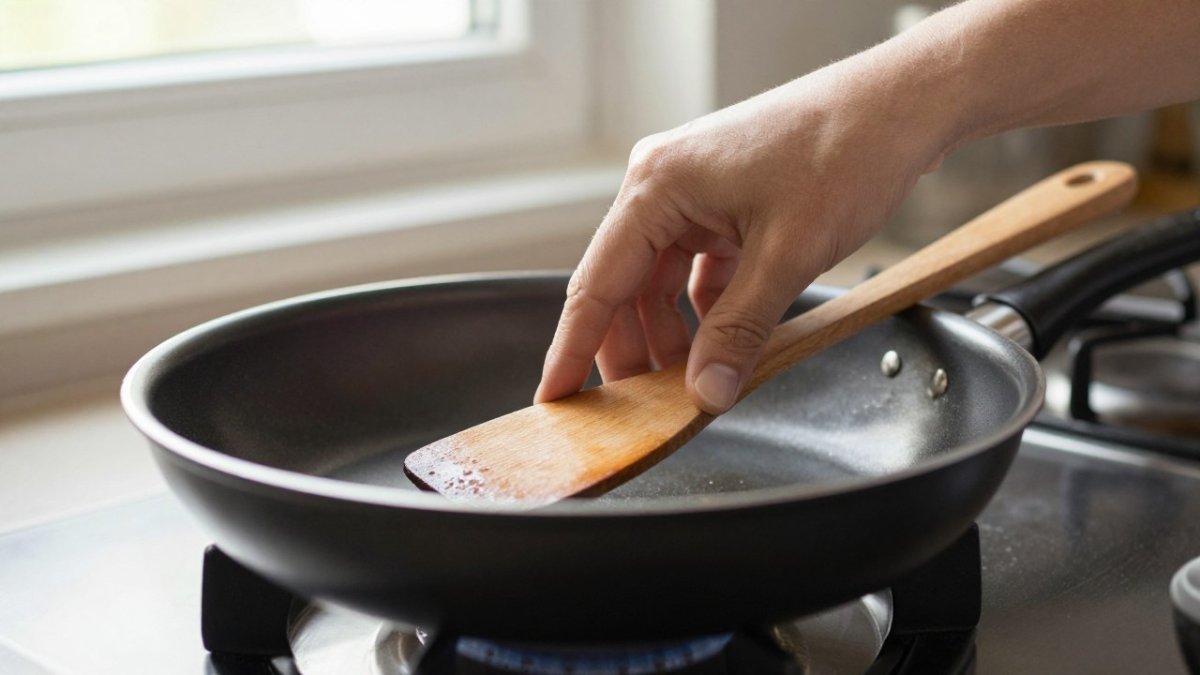
Fine lines, faint scuffs and a surface that has lost its shine are the most common thing we hear about. They usually come from metal utensils, stacking pans without a liner, or scrubbing with an abrasive pad. The coating is still continuous, just cosmetically worn. The pan is generally fine for everyday cooking, though release may become less reliable over time. Switch to wooden, silicone or plastic utensils, wash by hand with a soft sponge, and keep an eye on it.
Scratches you can feel with a fingernail
Run a fingernail gently across the mark. If it catches, the coating has been cut rather than just marked. A shallow scratch that does not reach the base metal is usually still usable, but it is a signal to change how you treat the pan. Avoid metal tongs and whisks, do not cut food in the pan, and stop using abrasive cleaners. Expect the non-stick performance to fade faster in that spot.
Worn patches where the colour has changed
Dark, grey or silvery patches where the surface used to be smooth are a step up in seriousness. This can be thinning coating or exposed base material. If you can see a different colour or texture underneath, treat it as exposed base and stop cooking with it. A damaged surface is harder to clean, and food residue sitting in worn spots is not something you want to cook on repeatedly.
Peeling, flaking and lifting edges
This is the clear stop signal. Coating that is lifting at the rim, blistering, or coming away in flakes means the bond between coating and base has failed. Flakes can end up in food. It's best to retire the pan at this point rather than trying to cook around the bad patch.
Watch out: a pan that looks fine in the middle but has a ring of wear near the rim is easy to miss, so tilt it towards the light and check the whole surface, not just the centre.
Warping and an uneven base
A pan that rocks on the hob or has a domed base is a separate problem from coating damage, but it matters. An uneven base heats unevenly, which can push one area hotter than the rest and wear the coating faster. If the warp is significant, the pan will not sit flat and is worth replacing for practical reasons even if the coating looks intact.
How to tell solid ceramic from ceramic-coated
One source of confusion is that solid ceramic cookware (ceramic through and through, often heavier and more brittle) and ceramic-coated metal pans get lumped together. The safety advice is not identical. A chip on a solid ceramic pan is a chip in the body of the pan. A chip on a coated pan may expose the metal underneath. Check the product description or the base of the pan to work out which one you have before applying any of the above.
Can Coating Flakes End Up in Your Food?
It's possible for small pieces of a damaged coating to come away during cooking or cleaning. That's why a peeling pan is a clear signal to stop using it. Most people won't swallow a noticeable amount, but the aim is to avoid eating anything you can see coming off the surface.
If you do notice a flake in your food, remove it and check the pan. If you're worried about swallowing a fragment or feel unwell, speak to your doctor for advice. Keep the pan out of reach of children while you decide what to do with it.
We don't want to alarm you. Our aim is to help you spot damage early and make a sensible call.
When to Replace Ceramic Pans Rather Than Keep Cooking
A good rule of thumb is to replace a pan once the coating is peeling, flaking or exposing bare metal. If the pan is still intact but badly worn and sticking constantly, it may be time to replace it for practical reasons too.
Consider replacing your pan if:
- The coating is visibly peeling or flaking
- Bare metal is showing through
- Food sticks no matter how much oil you use
- The pan warps and sits unevenly on the hob
When you do replace it, think about what you need from the next pan. Durability, easy cleaning and a surface you trust can all shape your choice.
How to Care for Ceramic Cookware So It Lasts Longer
A little care goes a long way. Here are a few habits that can help your ceramic pans last:
- Use medium heat rather than high heat, since high heat can wear coatings faster
- Choose wooden, silicone or plastic utensils
- Let the pan cool before washing it
- Wash gently with a soft sponge and mild washing-up liquid
- Store pans with a protective liner or cloth between them
Always follow the manufacturer's instructions for your specific pan. Some products are dishwasher safe and others are not, so check before you pop it in.
A few everyday habits make a noticeable difference to how long your ceramic pans keep their surface.
| Habit | Why it helps | Note |
|---|---|---|
| Medium heat rather than high | High heat can wear coatings faster | Check the maker's heat limit |
| Wooden, silicone or plastic utensils | Avoids cutting into the coating | Metal can scratch the surface |
| Let the pan cool before washing | Sudden temperature change stresses the coating | Wait until it is cool to touch |
| Mild washing-up liquid and a soft sponge | Gentle on the surface | Avoid abrasive cleaners |
| Protective liner or cloth when stacking | Stops pans rubbing together | Helps prevent scuffs |
| Follow the manufacturer's instructions | Dishwasher suitability varies | Check before loading the dishwasher |
Ceramic vs Stainless Steel Cookware: Choosing Your Next Pan
If you're thinking about a replacement, stainless steel is one option to consider. It doesn't rely on a coating, so there's no surface to scratch or flake. That makes it a practical choice for people who want something durable and easy to care for.
Stainless steel does have its own quirks. Food can stick if the pan isn't preheated or greased properly, and it doesn't offer the same easy-release surface as a well-maintained non-stick pan. For bakeware, we always recommend greasing with butter, oil or ghee before use.
Our stainless steel pizza pans with holes and other bakeware are built for everyday baking and roasting. If you're deciding which material suits your kitchen, think about how you cook, how you clean and how much care you're happy to give your pans.
Frequently Asked Questions
Is it safe to use a scratched ceramic pan?
It depends on the type and extent of the damage. Deeper scratches, flaking or areas where the base metal shows are a different story, and it is sensible to stop using the pan in that state. If you are unsure, check the care instructions from the manufacturer, who will know the specific coating used on their cookware.
Should I throw away a ceramic pan if the coating is scratched?
Not necessarily. A pan with light surface scratches can usually keep going for everyday cooking, provided the coating is still bonded and nothing is peeling. Once the coating is flaking, chipping or has worn through to the base metal, most people choose to replace it. Keeping an eye on the condition of the surface over time is a practical way to decide, and there is no need to replace everything you own at once.
How can I tell if a ceramic pan is damaged beyond use?
Look for coating that is lifting, flaking, bubbling or missing in patches, and for areas where the metal underneath is showing. Food that sticks more than it used to can also be a sign the surface is wearing down. Running your fingers gently across the surface can help you spot rough or raised areas. If the pan has reached this stage, it is generally time to replace it rather than try to repair it.
How do you prevent ceramic cookware from scratching?
Using wooden, silicone or plastic utensils rather than metal ones makes a real difference over time. Avoid abrasive scourers and harsh cleaners, and let the pan cool before washing it. Stacking pans with a cloth or paper towel between them can also help protect the surface. Most people find that gentle habits like these are enough to keep a pan in good shape for longer.