
Table of Contents
- Why Non Toxic Bakeware Matters for Your Family
- Quick Comparison: Best Non Toxic Stainless Steel Bakeware
- Stainless Steel vs Non-Stick Bakeware: What Actually Changes in Your Kitchen
- Is 304 Stainless Steel Safe for Baking? Breaking Down the Grades
- How to Clean Stainless Steel Baking Sheets and Pans Without the Scrub Fatigue
- The Pans Worth Owning: A Closer Look at Our Range
- Frequently Asked Questions
Last Updated: September 16, 2026
Why Non Toxic Bakeware Matters for Your Family
If you've looked at a scratched non-stick pan and wondered what's flaking into dinner, you're not being paranoid. Once the coating is compromised, there's no way to know what's transferring into your food, which is why the search for the best non toxic stainless steel bakeware has gone mainstream. Does stainless work as well as what you're replacing?
The Problem With Scratched Non-Stick Surfaces
Metal utensils, stacking, and high heat all take a toll, and once the coating scratches, the pan's best days are behind it. Many cooks keep using them because replacing a whole set feels expensive. The fix: replace pans one at a time, starting with whatever you use most.
Quick Comparison: Best Non Toxic Stainless Steel Bakeware
Here's how the core pieces compare at a glance, so you can prioritise your first swap.
| Pan | Price | Best For | Key Trait |
|---|---|---|---|
| Brownie Pan | $41.00 | Slices, brownies, small savoury bakes | Straight edges, even bake |
| Loaf Pan | $39.00 | Bread, banana loaves, pound cake | Even heat distribution |
| Square Cake Tin | $40.00 | Cakes, lasagne, zucchini slice | Rust and warp resistant |
| Muffin Pan 12 Cup | $50.00 | Muffins, cupcakes, mini quiches | Excellent heat conduction |
| Pie Pan | $35.00 | Sweet pies, quiches | Sloped edges, easy release |
| Donut Pan | $47.00 | Baked donuts | Quick release, easy cleanup |
| Round Spring Tin 7" | $37.00 | Cheesecake, small sponge | Springform latch |
| Round Spring Tin 9" | $43.00 | Celebration cakes | Smooth side release |
| Large Square Tin | $43.00 | Big batches, family trays | Dishwasher safe |
| Pullman Bread Pan | $120.00 | Sandwich loaves, sourdough | Sliding lid for flat tops |
Stainless Steel vs Non-Stick Bakeware: What Actually Changes in Your Kitchen
Stainless steel is uncoated metal that conducts heat directly; non-stick relies on a coating that degrades. That changes three things: how food releases, how you clean up, and how long the pan lasts. Expect to grease or line your pans at first, and to adjust your prep habits rather than fight the pan. In exchange you get bakeware that resists rust, warping, and staining, and won't shed a coating into your food.

Is 304 Stainless Steel Safe for Baking? Breaking Down the Grades
Yes, 304 stainless steel is a food-grade alloy considered safe for baking, which is why it's the default material for most quality bakeware. But "304" is a specific alloy recipe, not a marketing label.
What the Numbers Actually Mean
Stainless steel is an alloy of iron, chromium, and usually nickel. The grade number describes the recipe:
- 304 (also called 18/8 or 18/10), roughly 18% chromium and 8-10% nickel (Cutlery Stainless Steel Grades). The standard food-grade stainless used for bakeware, cookware, and commercial kitchen surfaces; it resists rust, staining, and warping across home-oven temperatures.
- 316 (also called 18/10/3), 304 plus 2-3% molybdenum, which improves resistance to chlorides and acids. Marketed as "surgical grade" or "marine grade," it offers little practical advantage over 304 for baking unless you bake heavily with acidic or salty ingredients.
- 430, chromium but little or no nickel. Magnetic, cheaper, and more prone to corrosion. Sometimes used for bakeware bases or cladding, but not the workhorse grade.
- 200-series alloys, nickel replaced partly with manganese. Cheaper, more variable in quality, and the grade most often found in unlabelled imports. This is where "mystery metal" concerns come from.
Why Chromium and Nickel Matter, and What "Leaching" Actually Means
Chromium is what makes stainless steel stainless: in the presence of oxygen it forms a microscopic, self-repairing oxide layer that blocks corrosion. That passive layer is why the metal doesn't rust, and why the chromium isn't sitting there waiting to jump into your food.
- The food is acidic (tomato, lemon, vinegar, rhubarb, fruit fillings).
- The food is salty.
- The pan is new and has not yet built up a passive layer through use.
- The pan is scratched, pitted, or has been scoured with steel wool.
- The food sits in the pan for a long time after baking.
Is Nickel-Free Stainless Steel Necessary?
For most households, no. Standard 304 is the sensible default. Nickel-free stainless exists for people with a confirmed nickel allergy or sensitivity; if that's you, it's worth seeking out. If not, chasing the most technical label distracts from what matters, grade, thickness, and construction.
Surgical-Grade Stainless Steel, Explained
"Surgical grade" is a marketing phrase, not a regulated standard. It usually means 316 or 316L stainless, used in medical implants for corrosion resistance and biocompatibility. A 316 tray doesn't bake better than a 304 one or make food meaningfully safer without a nickel sensitivity. Pay for 316 if you want maximum corrosion resistance; don't pay a premium because "surgical" sounds safer.
What to Look For Instead of Buzzwords
- A stated grade, 304 or 316 on the packaging or product page.
- A stated thickness, thicker gauge resists warping and dents; flimsy metal buckles at high heat.
- Food-contact compliance, look for a clear statement that the material is suitable for food contact, which in this market is typically framed around compliance with the Australia New Zealand Food Standards Code and the food-contact material requirements administered by Food Standards Australia New Zealand.
- No non-stick coating, uncoated is the point. If it says "easy release" or "non-stick," read the fine print.
Food contact materials and articles
How to Clean Stainless Steel Baking Sheets and Pans Without the Scrub Fatigue
Most stainless bakeware doesn't fail because it's dirty, it fails because it was never given a chance to release. Sticking and cleaning are the same problem, and the fix starts before the pan goes in the oven.
Why Food Sticks to Stainless (and Why That Is Fixable)
Stainless has no non-stick coating, so release depends on a barrier you create. There are three, and you can combine them:
- Fat, butter, oil, or a baking spray containing actual oil rather than just lecithin. Fat fills the microscopic pores in the metal and stops proteins and starches from bonding.
- Parchment or a silicone mat, for anything delicate (cakes, fish, sticky glazes), lining is the correct technique, not cheating.
- A seasoned patina, repeated bakes with fat build a thin, polymerised layer that behaves a little like a well-used cast-iron pan. It is not a coating and does not flake, but it improves release over time.
How to Season a Stainless Baking Pan
Seasoning stainless is simpler than seasoning cast iron:
- Wash and dry the pan thoroughly.
- Rub a thin film of a high-smoke-point oil (rice bran, grapeseed, or refined olive) across the interior with a paper towel. Thin is the operative word, puddles go sticky.
- Bake at roughly 200°C for about an hour.
- Turn the oven off and let the pan cool inside.
- Repeat two or three times before first use, then re-season as release weakens.
This isn't a permanent coating but a maintenance habit, and the biggest reason some people find stainless easy and others infuriating.
Preheat and Grease: The Two Rules That Solve Most Sticking
- Preheat the pan before the batter or dough goes in. A cold stainless surface grabs; a hot one releases. For baking sheets, five to ten minutes in the oven is enough.
- Grease generously for the first several bakes, then dial back as the patina builds. Under-greasing a new pan is the most common reason people give up on stainless.
- Let baked goods rest a few minutes before turning out. Proteins set as they cool, and the pan releases more cleanly than straight from the oven.
Cleaning Without Scratching the Surface You Just Built
Scratches aren't just cosmetic, they create sites where food bonds harder and corrosion can start. Clean accordingly:
- Soak for 5-10 minutes in warm soapy water as soon as the pan is cool enough to handle. Residue that has not carbonised lifts easily; residue baked on for a day does not.
- Use a non-abrasive scourer or a nylon brush. Never steel wool on a surface you want to keep.
- For baked-on residue, make a paste of bicarbonate of soda and water, apply, leave 10-15 minutes, then wipe. For stubborn spots, soak in warm water with a scoop of bicarb.
- For discolouration (the blue-brown heat tint stainless develops), a bicarb paste or dedicated stainless cleaner restores the finish. The tint is cosmetic and does not affect performance.
- Dry fully before storing to avoid water spots and protect the passive layer.
Dishwasher Safe vs Hand Wash: The Honest Trade-Off
Most uncoated stainless bakeware is dishwasher safe, but two caveats matter:
- Detergent and high heat are abrasive over time. Frequent cycles dull the finish and can accelerate the breakdown of a seasoned patina.
- Some pieces should always be hand washed, springform tins (latch and seams), Pullman pans with sliding lids, and anything with a rolled or welded joint where water can sit.
A Note on Longevity
Stainless steel is one of the few bakeware materials that improves with use rather than degrading. A well-cared-for pan can outlast several rounds of coated non-stick replacements, a practical and environmental argument for the swap. The care routine above is the difference between a pan you keep for a decade and one you resent by month three.
The Pans Worth Owning: A Closer Look at Our Range
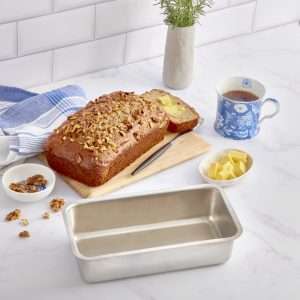
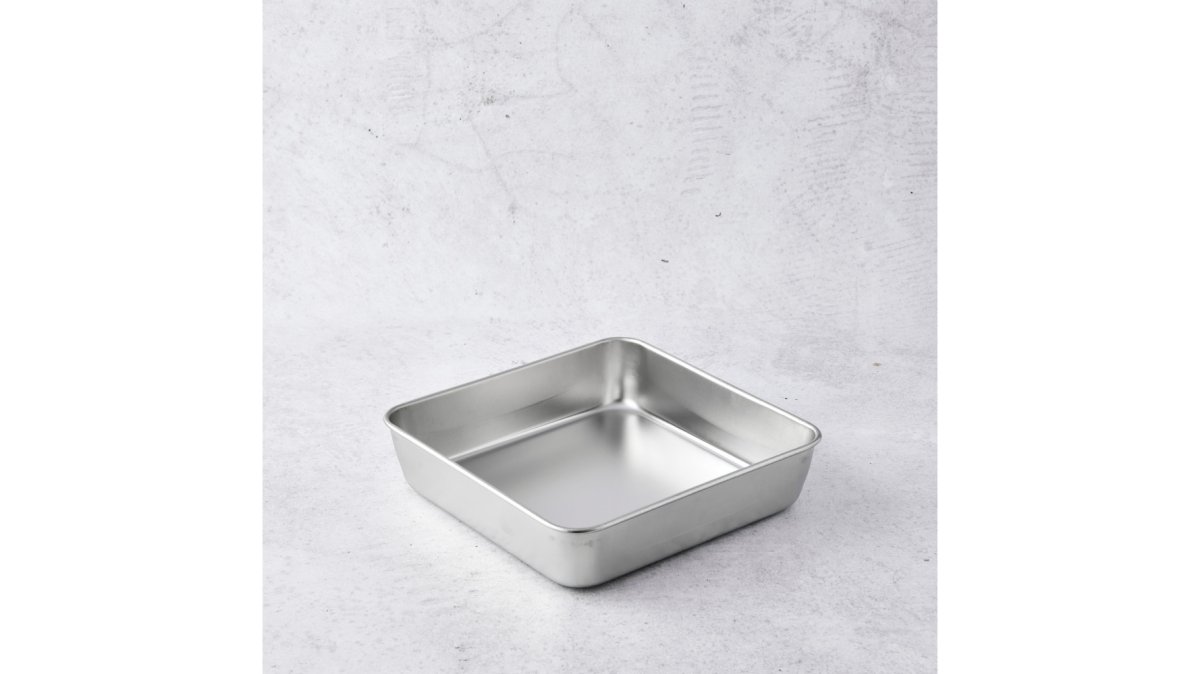
Everyday bakes cover most of what a family makes, so start there. The Brownie Pan ($41.00) handles slices, brownies, and small savoury bakes with straight edges for uniform portions. The Loaf Pan ($39.00) is built for bread, banana loaves, and pound cakes. For one workhorse, the Square Cake Tin ($40.00) covers cakes, lasagne, and zucchini slice, and resists rust, warping, and staining.

Specialty Shapes: Muffin, Donut, Pie, and Springform
Specialty tins earn their place once the basics are covered. The Muffin Pan 12 Cup ($50.00) delivers consistent muffins, cupcakes, and mini quiches. The Donut Pan ($47.00) lets you bake rather than fry. The Pie Pan ($35.00) has sloped edges for clean slicing and easy release. The Round Spring Tins ($37.00 for 7", $43.00 for 9") release celebration cakes without flipping or crumbling, and the Pullman Bread Pan with Lid ($120.00) gives sandwich loaves a flat top.

Frequently Asked Questions
What is the best non-toxic stainless steel cookware?
The best options are uncoated, food-grade stainless steel pans with no non-stick coating, no PFAS, and no plastic handles that can degrade. Look for heavy-gauge construction that resists warping, a smooth surface free from flaking, and dishwasher-safe convenience. The Low Tox Project range covers brownie pans, loaf pans, muffin trays, and more, all made from durable stainless steel with no chemical coatings, so you get even baking without the toxin worries.
Is stainless steel baking tray non-toxic?
Yes, stainless steel baking trays are considered non-toxic because they are coating-free and do not leach harmful chemicals like PFAS or PFOA when heated. Unlike scratched non-stick surfaces that can flake into food, stainless steel is inert and non-reactive. Choosing food-grade stainless steel means you avoid the heavy metals and chemical coatings that are the main concern with older or damaged bakeware.
Which stainless steel is the most non-toxic?
Grades 304 and 316 are the most commonly recommended for food contact. Grade 304 is a food-grade stainless steel that resists corrosion and is safe for baking. Grade 316 contains molybdenum, which adds extra corrosion resistance, and is often called surgical-grade. For most home bakers, 304 is perfectly safe and durable. If you have a known nickel sensitivity, you may prefer nickel-free options, but for general use, 304 stainless steel is a reliable, non-leaching choice.
How do I prevent food from sticking to stainless steel bakeware?
Sticking is the main frustration with stainless steel, but it is manageable. Preheat your oven fully, grease the pan generously with butter or oil, and consider lining with baking paper for sticky bakes like brownies. For muffins, the pan's surface becomes more non-stick with regular use and proper seasoning. Avoid turning food too early; let it set before flipping. With a little practice, stainless steel releases cleanly and you avoid the chemical coatings altogether.
How do I clean stainless steel baking sheets without scratching them?
Soak the pan in warm soapy water for 10 to 15 minutes, then wash with a soft sponge or nylon brush. For baked-on residue, make a paste with bicarbonate of soda and water, apply it, and let it sit before scrubbing gently. Avoid steel wool and harsh abrasive cleaners, which can scratch the surface. Most stainless steel bakeware from The Low Tox Project is dishwasher-safe, so on busy days you can skip the hand wash entirely.