Last Updated: November 16, 2026
Quick Summary
A good stainless steel cooling rack should fit inside the baking tray you use most, so measure your tray and oven before buying. Check that the material and care instructions are clearly stated, and choose wire spacing and feet that suit the bakes you make. Getting the size right saves the most frustration.
- Measure your oven at the shelf level you use, allowing a little clearance for sliding the rack in and out.
- Measure the inside of your most-used baking tray, since the rack should sit within its walls.
- Check the listing states the material clearly and confirms whether the rack is dishwasher-safe.
- Closer wire spacing suits small items like biscuits, while wider spacing suits larger pieces.
- Raised feet let air circulate underneath, helping baked goods cool evenly and stay crisp.
Table of Contents
- Why a Stainless Steel Cooling Rack Is Worth Getting Right
- Check Whether the Rack Is Oven-Safe Before You Buy
- Measure Your Oven Tray and Oven Before Choosing a Size
- Matching a Cooling Rack to Your Baking Tray
- Wire Spacing, Sturdiness and Airflow
- Using Your Rack for Cooling, Roasting and Everyday Cooking
- Cleaning, Care and Making Your Next Step
- Frequently Asked Questions
Why a Stainless Steel Cooling Rack Is Worth Getting Right
Most of us have stood at the bench with a tray of biscuits sitting on a flat surface, watching the bottoms go soft. A good stainless steel cooling rack fixes that. Air can move underneath the bake, so it cools evenly and stays crisp. The trouble is that racks come in plenty of shapes and sizes, and a rack that doesn't suit your oven or tray can make the whole exercise frustrating.
At The Low Tox Project, we've put together these seven steps to help you choose a stainless steel cooling rack that fits your kitchen and the way you cook. There's no need to buy a full set of new bakeware to get started. Work through the steps, pick the right size, and you'll have a rack you reach for again and again.
Check Whether the Rack Is Oven-Safe Before You Buy
Before you look at size, check the basics. The maximum temperature will depend on the specific product, and the way you use it matters as much as the number on the box. Look at the product listing or packaging for any stated temperature limit, and keep your baking inside that range.
A few things to check:
-
The material is stated clearly. Look for a description of uncoated stainless steel rather than a vague "metal" label. If the listing names a grade, that's a good sign the maker is being specific about what you're buying.
-
Care instructions match how you'll use it. If you plan to put it in the dishwasher, check that the listing says so.
If the product details are unclear, we'd suggest choosing a rack where the information is easy to find. A rack that's transparent about its specs is a safer bet than one you have to guess about.
Measure Your Oven Tray and Oven Before Choosing a Size
This is the step most people skip, and it's the one that saves the most frustration. Grab a tape measure and check three things:
- The internal width and depth of your oven. Measure between the side walls, not the outside of the appliance, and measure front to back at the shelf position you actually use.
- The size of the baking tray you use most. Measure the inside of the tray, across the base and up the sides, because the rack needs to sit within the walls rather than perch on top of them.
- The space you have for storage. A full-size rack takes up more room than a mini one, and a rack that doesn't store easily tends to stay in the cupboard.
Measure in millimetres or centimetres so you're comparing like with like. Write the numbers on your phone so you have them when you shop.
The part that catches people out is the oven itself. Most ovens have side rails, shelf runners or a fan housing at the back that eat into the usable space, so the gap you can actually slide a rack into is often a centimetre or two smaller than the cavity suggests. Measure at the shelf level you'll use, then subtract a little clearance so the rack slides in and out without scraping. If your oven has a protruding door handle or a control panel that sits proud of the cavity, check that a loaded rack can still be lifted clear when you pull it out.
For tray fit, the rack should sit inside the tray with its feet resting on the base and its edges sitting just inside the walls. A rack that overhangs the tray can tip when you lift it, and one that's too small slides around as you move it. Lay the rack in the tray before you use it and check it sits flat with no wobble.
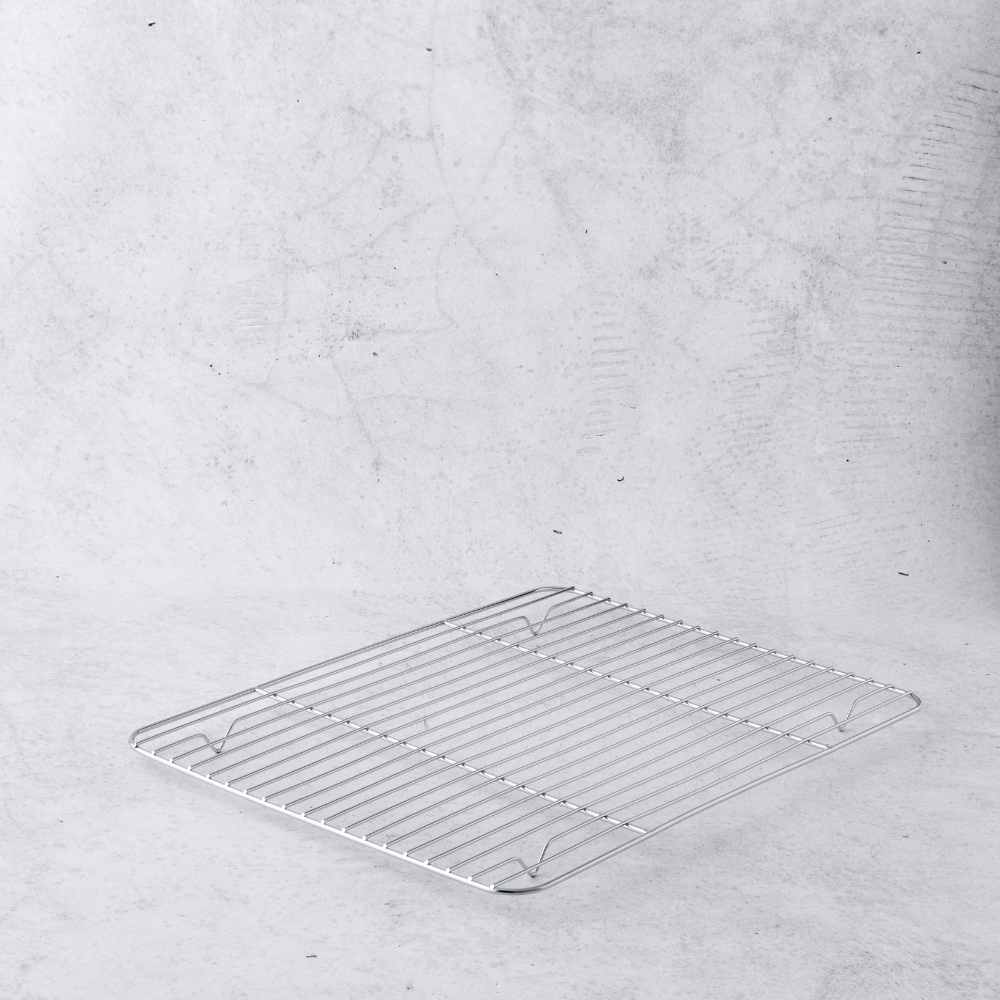
Our range includes a full-size rack, a small rack and a mini rack. Our full-size Stainless Steel Cooling Rack ($25.00 AUD) is designed to fit inside our Biscuit Pan, 18/8 Oven Tray and 18/0 Oven Tray. Our Stainless Steel Cooling Rack Small ($23.00 AUD) suits our small oven tray, and the Stainless Steel Cooling Rack Mini ($21.00 AUD) is built for our mini oven tray. Check the product listing to confirm the fit before you buy, and if you're between sizes, measure your most-used tray first and choose the rack that matches it.
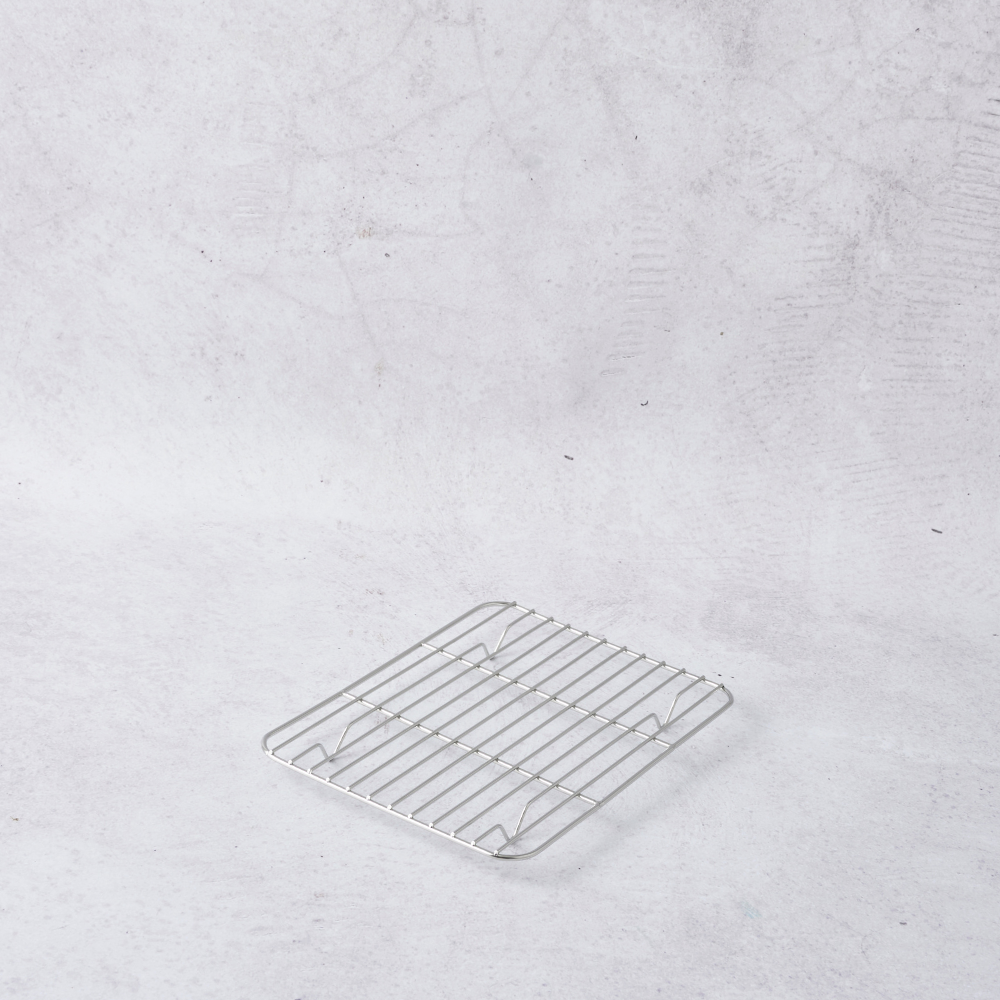
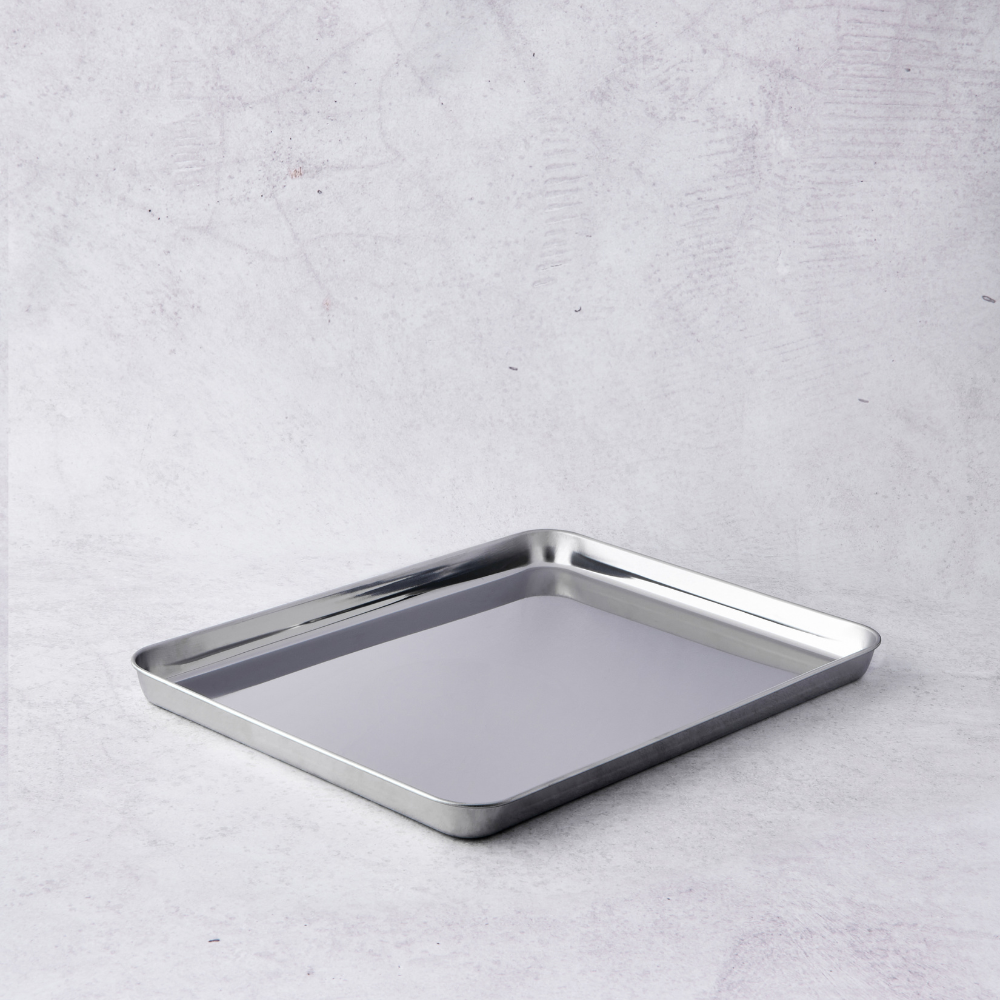
Price of cooling racks by size (AUD)
Matching a Cooling Rack to Your Baking Tray
Once you know your tray size, the matching becomes easier. A rack that fits inside the tray you already use means you can cool, roast and bake without juggling mismatched pieces.
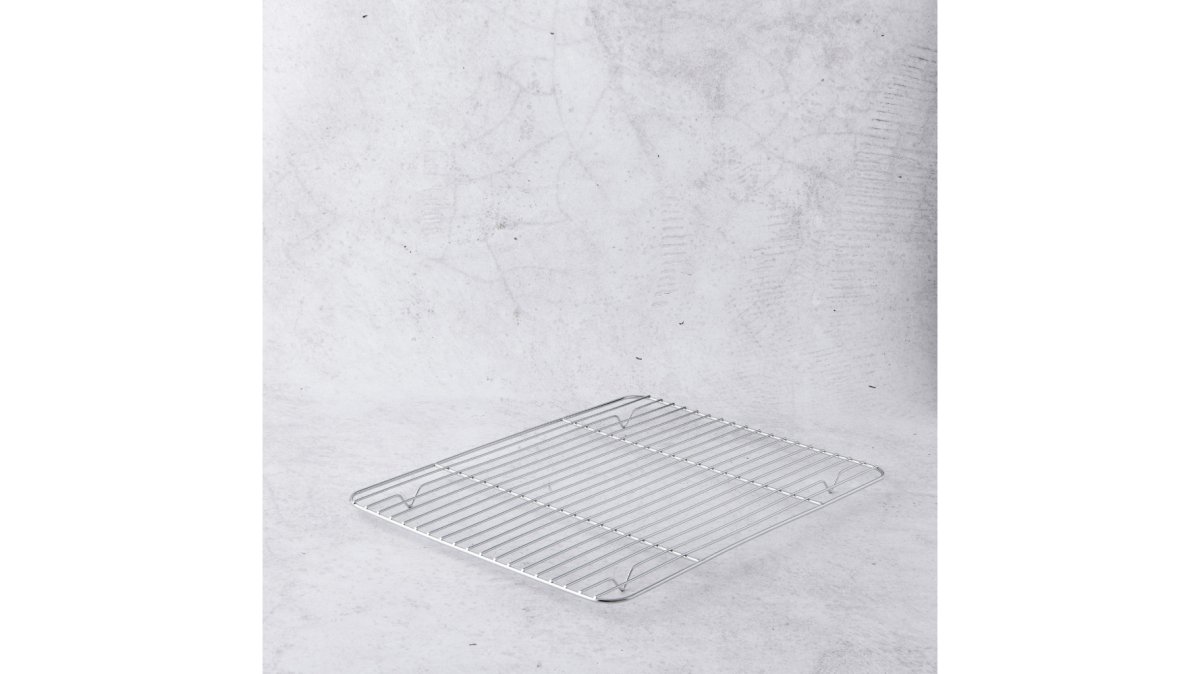
Lay the rack into the tray and check it sits flat with no wobble.
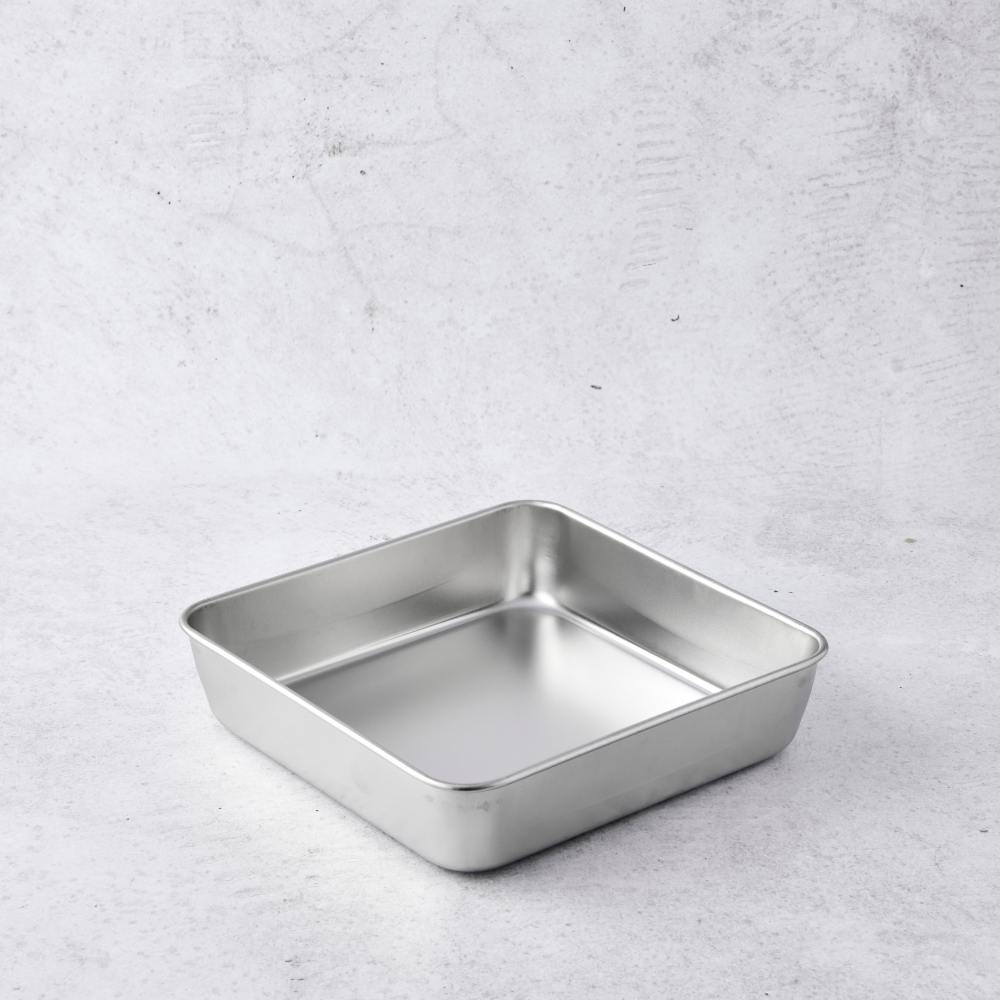
Our Stainless Steel Oven Tray 18/8 ($47.00 AUD) is designed to be used with our cooling rack. We've also noted that flat stainless steel sheets can warp a little as they heat and cool. This is normal for a single sheet of steel, though it isn't ideal. If you notice more movement than you'd like, get in touch with us.
Wire Spacing, Sturdiness and Airflow
Wire spacing affects how air moves under your bake. Closer wires suit small items like biscuits, while wider spacing can work for larger pieces such as roast vegetables. Look at the product photos to get a sense of the grid.
Sturdiness matters too. A rack that flexes under a heavy tray of food is harder to handle safely. Choose one that feels solid in your hands before it goes in the oven. It's still worth checking the frame and the feet.
Airflow comes down to the feet and the gap beneath the rack. Raised feet let air circulate, which helps baked goods cool more evenly and keeps the base from going soggy.
Using Your Rack for Cooling, Roasting and Everyday Cooking
Cooling is the obvious job, but a rack can do more. Cookies, biscuits and cakes can cool more evenly when air reaches the underside. You can also use the rack for roasting, lifting meat or vegetables so the heat circulates around them.
For a quick, everyday option, a mini cooling rack suits smaller bakes, slices or a few cookies. It's handy when a full-size rack feels like overkill.
If you bake bread as well, you might find our guide on how to bake bread in a loaf pan useful for planning your baking workflow.
Cleaning, Care and Making Your Next Step
Wash it in warm soapy water, or pop it in the dishwasher if the product details say it's dishwasher-safe. Avoid abrasive pads that can mark the surface.
Once you've measured your oven, matched your tray and checked the specs, you're ready to choose. Start with the rack that fits the tray you use most, and add a second size later if you need it. Buy less, choose well, and you'll have a rack that lasts.
Frequently Asked Questions
Can you put a stainless steel cooling rack in the oven?
It's worth checking the product details before you place a cooling rack inside an oven. Our Stainless Steel Cooling Rack is made from food-grade stainless steel and is designed to fit inside our Biscuit Pan, 18/8 Oven Tray and 18/0 Oven Tray. Stick to the temperature guidance from the product information for your specific rack.
How do I know if a cooling rack is oven-safe?
Look for the product description, which should state the material and any heat or oven use. Stainless steel is a common choice for oven use, but grades and coatings vary. If a rack has a non-stick coating or plastic feet, check the manufacturer's temperature limit before using it in the oven. When in doubt, ask the seller directly before putting it in a hot oven.
What size cooling rack fits a standard oven tray?
The best approach is to measure your tray's internal base and check the rack's dimensions against it, leaving a little space around the edges for airflow. Our Stainless Steel Cooling Rack is designed to fit inside our biscuit pan, 18/8 oven tray and 18/0 oven tray, while our Small and Mini racks suit the matching smaller trays. Measuring before you buy saves you from a rack that's too big to sit neatly.