
The coffee you reach for every morning. The oats you scoop out for breakfast. The flour that somehow ends up all over the shelf. These are the pantry staples we think are worth giving a proper home.
Stainless steel canisters are sturdy enough for everyday use, easy to wash between refills and handy for keeping light off things like coffee, tea and spices. Add a snug-fitting lid and you’ve got a practical way to store the dry goods you reach for week after week.
Why we like stainless steel for pantry storage
It’s made for everyday handling. Pantry canisters get pulled off shelves, shuffled around and occasionally knocked off the bench. Stainless steel won’t shatter on impact, which makes it a practical choice for a busy kitchen or a caravan pantry.
It keeps light off your ingredients. The solid steel sides block light, which is particularly handy for coffee, loose-leaf tea and spices you like to keep within reach on the bench.
It’s easy to clean between refills. A wash with warm water, mild dishwashing liquid and a soft cloth will usually take care of flour dust, coffee grounds and crumbs. Once the canister is dry, it’s ready for its next refill.
Stainless steel vs glass pantry containers: which suits your shelf?
Both materials have real strengths, and the right choice often comes down to where the container lives and who's using it. Stainless steel is lighter and far less likely to break, while glass lets you see at a glance what's running low. Many kitchens end up with a mix of both.
Where Stainless Steel Has the Edge
Stainless steel wins on durability and handling. It doesn't shatter, it's lighter to lift down from a high shelf, and it blocks light, which can help protect oils, coffee and spices from fading over time. It also won't stain from turmeric or tomato-based spice blends the way some materials can. For households with young children or busy shared kitchens, that toughness matters.
Where Glass Still Makes Sense
Glass is the better pick when visibility is your priority. If you bake often and need to spot the last of the flour at a glance, borosilicate glass does that job well. It's also non-reactive and easy to wipe clean. The catch is weight and breakage risk, especially on high shelves or in a caravan.
|
Feature |
Stainless Steel |
Glass |
|---|---|---|
|
Breakage risk |
Low |
Higher |
|
Weight |
Lighter |
Heavier |
|
Visibility of contents |
None |
Clear |
|
Light blocking |
Yes |
No |
|
Best for |
Families, caravans, high shelves |
Bakers who need to see stock levels |
What does an airtight seal do?
Our canisters have a fitted silicone ring inside the lid. When you close it, the ring presses against the rim to help limit the air and moisture that can get in. It’s a small detail that comes in handy for the dry goods you open and close all week, from breakfast cereal to baking staples.
When you’re refilling a canister, give the rim a quick wipe if there’s any flour or crumbs on it so the lid can sit evenly.
How the Silicone Seal Works
A precision-fit silicone ring sits inside the lid and presses against the rim when closed, creating a barrier against air and moisture. Our canisters use a BPA-free silicone seal for this job. The mechanism is simple: the lid compresses the ring against the rim, and the ring's elasticity does the sealing. That elasticity is also the wear point.
Which stainless steel canister size should you choose?
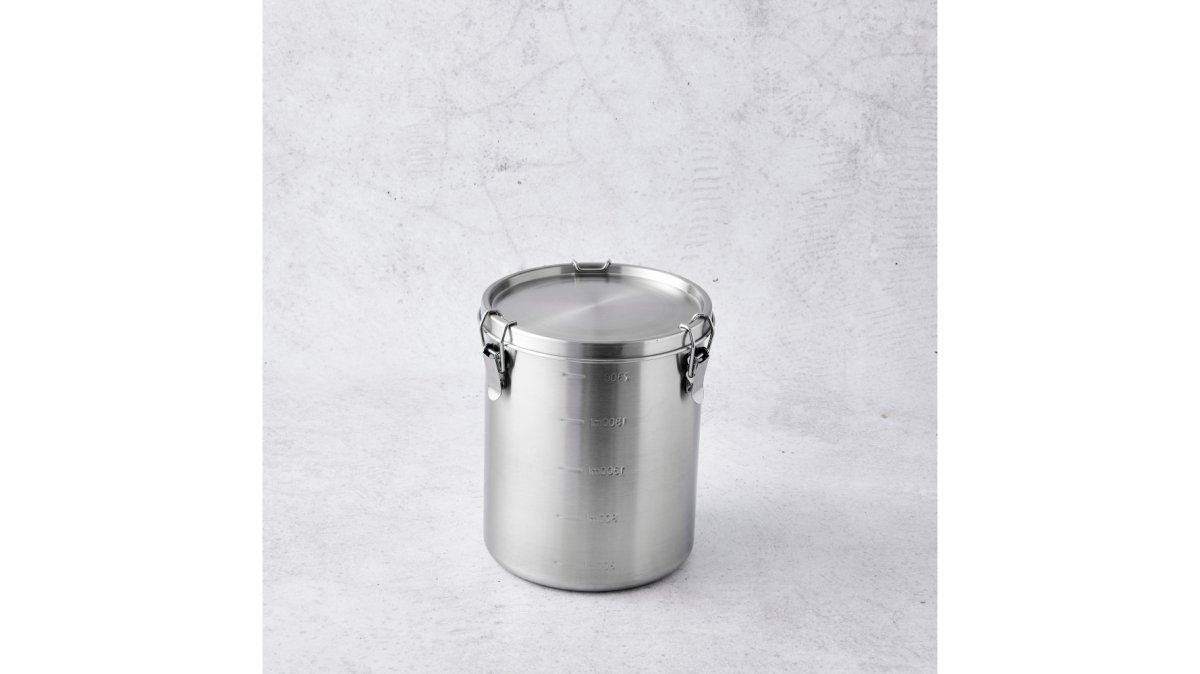
We’d start with what you buy most often. A 1,000 mL canister is a handy size for the coffee or tea you keep by the kettle. The 1,600 mL works well for oats, sugar or snacks. And if you bake regularly, the 2,500 mL gives you a wider opening for getting a scoop into the flour.
All three sizes are made from food-grade stainless steel with a brushed finish and a fitted silicone seal.

Our stainless steel pantry containers
We keep our range deliberately small: three sizes that cover most pantries without clutter. Each is made from food-grade stainless steel with a brushed finish and a silicone seal, and each is designed for everyday use.
|
Canister |
Capacity |
Price |
Best For |
|---|---|---|---|
|
1000ml |
$37.00 |
Coffee, tea, spices |
|
|
1600ml |
$40.00 |
Sugar, oats, snacks |
|
|
2500ml |
$45.00 |
Flour, rice, pasta |

Stainless Steel Canister 1000ml
The smallest of the three suits coffee, tea, sugar, spices and nuts. The brushed finish resists smudges and stains, and the BPA-free silicone seal keeps the lid tight. Best for: coffee and tea drinkers who want a tidy worktop.
Stainless Steel Canister 1600ml
This is the middle size, and for many kitchens it's the one you'll reach for most. It handles larger quantities of coffee, sugar, grains and dry snacks, and the seal protects against air, moisture and odours. Best for: everyday staples.
Stainless Steel Canister 2500ml
Built for bulk storage, the largest canister takes flour, rice, pasta, cereals and snacks. It's rust-resistant and designed for daily use, with a generous opening for scooping. Best for: families who bake and cook often.
If you buy rice in a 5 kg bag, the larger canister is a handy way to keep a few meals’ worth ready to scoop and top it up as you go. Before choosing a size, check your shelf height and depth and leave a little room to lift the canister out comfortably.
How to care for your stainless steel canisters
Wash with warm water, mild dishwashing liquid and a soft cloth to look after the brushed finish. Rinse away any crumbs around the lid and seal, then let everything dry fully before refilling. Check the care instructions for your specific canister and lid before putting either in the dishwasher.
If you'd rather mix your own cleaner, our guide to a DIY stainless cleaning spray walks through a simple recipe that avoids the buildup some commercial cleaners leave behind.
Building a pantry set that fits your kitchen
Start with what you cook, not with a matching set. Most households do well with one large canister for flour or rice, one medium for sugar or oats, and one small for coffee or tea.
Measure your shelf, decide your three core staples, and choose sizes that leave a little breathing room. A clutter-free shelf is easier to keep clean. When you're ready to build your set, you can browse the lunch and storage collection to see the full range in one place.
Give your everyday staples an easy-to-reach spot
Think about what you reach for most when you’re cooking. If you’re looking for ideas beyond the usual flour, rice and oats, this guide to gourmet pantry staples has a few suggestions.
Once you know what you’re storing, give heavier canisters of flour or rice a spot on a sturdy lower shelf where they’re easy to lift out. Smaller canisters of tea and spices can sit higher up, ready to grab when you need them.
Frequently Asked Questions
Are stainless steel canisters good for pantry storage?
They work well for dry goods such as flour, rice, sugar, coffee, tea, pasta and nuts. Food-grade stainless steel is non-reactive, so it won't pick up flavours or hold onto odours the way some materials can, and it resists rust and staining with normal care.
Are stainless steel canisters airtight?
They can be, but it depends on the lid rather than the metal. Airtight stainless steel food storage containers use a fitted silicone gasket that presses against the rim to limit airflow. Ours use a precision-fit BPA-free silicone seal on all three sizes.
How do you choose the right pantry canister sizes?
Start with what you buy most and how fast you use it. A 1000ml canister suits coffee, tea, spices, sugar and nuts, where you want a smaller amount within reach. The 1600ml size handles grains, dry snacks and larger coffee or sugar buys. The 2500ml is built for bulk staples such as flour, rice, pasta and cereal. Before ordering, measure your shelf height and depth, and remember that a full canister is heavy, so keep the biggest one at waist or chest height rather than overhead.
Can stainless steel canisters go in the dishwasher?
Check the care instructions that come with your specific product rather than assuming every stainless item behaves the same. Hand washing the silicone seals is the safer habit, since heat and harsh detergents can shorten a gasket's life. Skip abrasive scourers and steel wool on the brushed finish, and dry the canisters fully before refilling so no moisture gets trapped under the lid with your flour or rice.
Are stainless steel canisters better than glass for pantry storage?
Neither wins outright. Glass lets you see exactly what's inside and how much is left, which is handy for baking. Stainless steel is lighter, won't shatter if it's knocked off a shelf, blocks light that can fade spices and oils, and travels better in a caravan or camper. If you like a visual inventory, glass has the edge. If you want something that survives kids, tight shelves and being packed into a box, stainless steel canisters are usually the more forgiving choice.